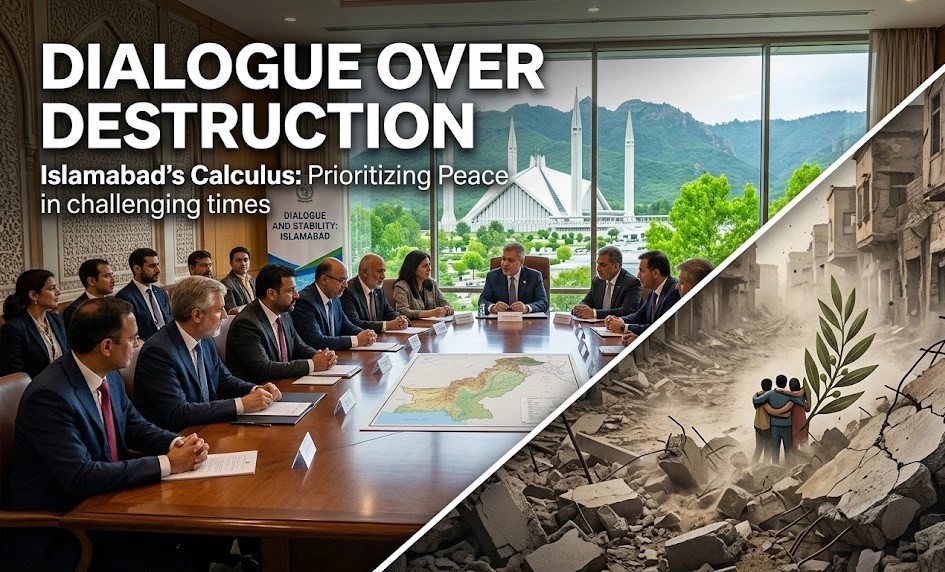
With US forces’ withdrawal and the increasing chances of a peaceful political settlement with the Taliban, the regional states Pakistan, Afghanistan, and the Central Asian States are looking forward towards an era of peace and stability. The South Asian states acknowledge that peace and stability in Afghanistan means peace and stability in the region.
Permanent peace and stability in Afghanistan is a guarantee card of development in two particular regions. These include the Central Asian Republic States (CARS) and the South Asian regions. Several countries are using this vital moment to initiate development projects. Projects that will not only benefit themselves but the whole region.
South Asia has the potential to bring about massive economic developments due to its strategic location and untapped natural resources. In particular, two mega projects – Kabul Corridor and TAPI Gas Pipeline, can transform the region into a financial hub. These projects will also play an important role in bringing about peace in Afghanistan.
AbdulAziz Kamilov’s Visit
The first one is a transport project starting from the Central Asian Republic States and ending in the South Asian ports as it passes through Afghanistan. Uzbek Foreign Minister Abdulaziz Kamilov visited Kazakhstan, Turkmenistan, and Tajikistan in February to discuss and take them into confidence for this project.
Such a shift came after the events on December 29th. This was when Uzbek President Shavkat Mirziyoyev announced in his parliament that peace in Afghanistan and cooperation between Uzbekistan and South Asian states will be Uzbekistan’s priority. Keeping this in mind, the objective behind the transport project becomes more clear. For Central Asian Republics States, Afghanistan might serve as a springboard to reach towards the outer world. Through Afghanistan, they can reach the navigable waters of the Persian Gulf or the Arabian Sea.
From Termez to Peshawar
This project mostly focuses on the proposed ‘Kabul Corridor’. The project is based on a railroad system that will extend from Termez in Uzbekistan. It will pass through Mizar-e-Sharif and Kabul in Afghanistan, and reach the city of Peshawar in Pakistan. After completion, the route will carry around 20 million tons of cargo every year. Out of the whole projected rail route from Termez to Peshawar, the rail route between Termez and Mizar-e-Sharif is already operational.
Uzbekistan, Afghanistan, and Pakistan have jointly requested financial assistance from international financial institutes for the project. An estimate of $5 billion would be required to construct a railroad from Mizar-e-Sharif to Kabul. This railway track can also have the electricity supplied from the Uzbek-Tajik power plants. As it crosses Kabul and is along the planned railway route.
From Peshawar to Ports
Furthermore, once the goods reach Peshawar, they will be transported to two prominent ports of Pakistan; Karachi and Gwadar. The ‘Kabul Corridor’ will also connect Russia, China, and Europe to the same route, leading to the ports of South Asia. If this project gets its practical form in the years to come, then Pakistan will serve as a ‘Corridor of Prosperity’ for CARS. Pakistan has contributed its best despite having economic limitations during the 1990s (that is when CARS got independence). Meanwhile, India has also pledged its support for the project. Hence, the region can collectively capitalize on the resourcefulness of this project.
Earlier, CARS would transport its goods and commodities to the port of Bandar Abbas in Iran. However recently it has become unpopular as it is expensive and takes more time to transport than compared to that of the Karachi route. Transporting a container from Tashkent to Karachi costs between $1,400 and $1,600, while the Tashkent-Bandar-Abbas road costs between $2,600 and $3,000. In addition, taking the route to Karachi would reduce the time it takes to ship a container from 30 to 15 days.
Also See: Indian Oppression Continues; Kashmiri Leaders Jailed During COVID
TAPI Gas Pipeline
The other project that will be beneficial is the TAPI (Tajik-Afghan-Pak-Indo) Gas pipeline project. This $8-10billion project will extend from the Galkynysh gas field in Turkmenistan to the Fazilka in India. Construction on the project started in Turkmenistan on December 13th, 2015. Likewise, construction on the Afghan section began in February 2018, and work on the Pakistani section was scheduled to initiate in December 2018, as the project is bound to be completed by December 2023.
It will pass through Herat and Kandahar in Afghanistan and the Pakistani cities of Quetta and Multan. The route will be able to carry approximately 33 billion cubics of gas every year. The gas pipeline is 1,814 km long and is planned to be installed alongside the Kandahar-Herat highway. In support of this project, for managing finances, Asian Development Bank stepped in to fund the project. Turkmenistan has already received $700 million from the Islamic Development Bank in 2016.
Impediments for TAPI
Unfortunately, the biggest hurdle to materialize this project is the pressing security issues present on the designated pipeline tracks. At the time of the project’s initiation, Afghanistan was in the middle of a devastating war. However, seeing the Peace Process in progress, things seem to be looking better. The major driving forces of TAPI are the USA and the Taliban. The Taliban have also subscribed to this idea during their recent visit to Turkmenistan.
Future of The Projects and The Region
Subsequently, with all these projects in the making, one must realize the worth and importance of this region. If the Peace Process becomes successful, then these projects can overnight turn the developing economy of the region into one of the fastest-growing economies, provided the potential this region has. Most of all, it can also facilitate the post-war developments in Afghanistan and facilitate the transitioning of a war-like situation to a peaceful and prosperous era in Afghanistan.
However, keeping in view the slight fluctuation and turbulence that is being observed in the ongoing Peace Talks, one might pray that these projects do not get affected. Even though the Taliban showed support for the project and the US has thrown its weight behind it, only time will tell if these projects become a reality or not.