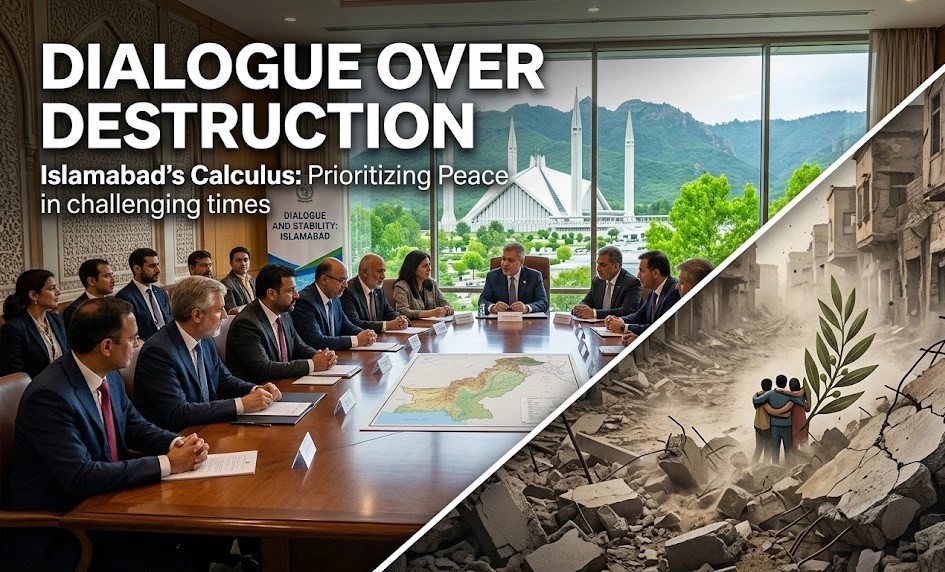
Amid growing turbulence in the global world order, Pakistan has ended up at the crossroads of increasing geopolitical rivalries and rising tensions. Gabbard, American Director of National Intelligence (DNI), listed Pakistan among possible threats to the homeland of the US alongside such countries as North Korea, China, Russia, and Iran. That is not just the misconception of the dynamics of deterrence of South Asia, but a deadly attempt to generate a threat and a possible other to justify sanctions, coercion, and strategic blackmail. When a senior US official invokes Pakistan in the same breath as major powers and traditionally adversarial states in the context of long-range missile threats, the framing appears less an objective assessment and more a politically inflected narrative. It echoes a familiar pattern, where threats are amplified, generalized, and stretched to such an extent that their analytical coherence ultimately begins to erode.
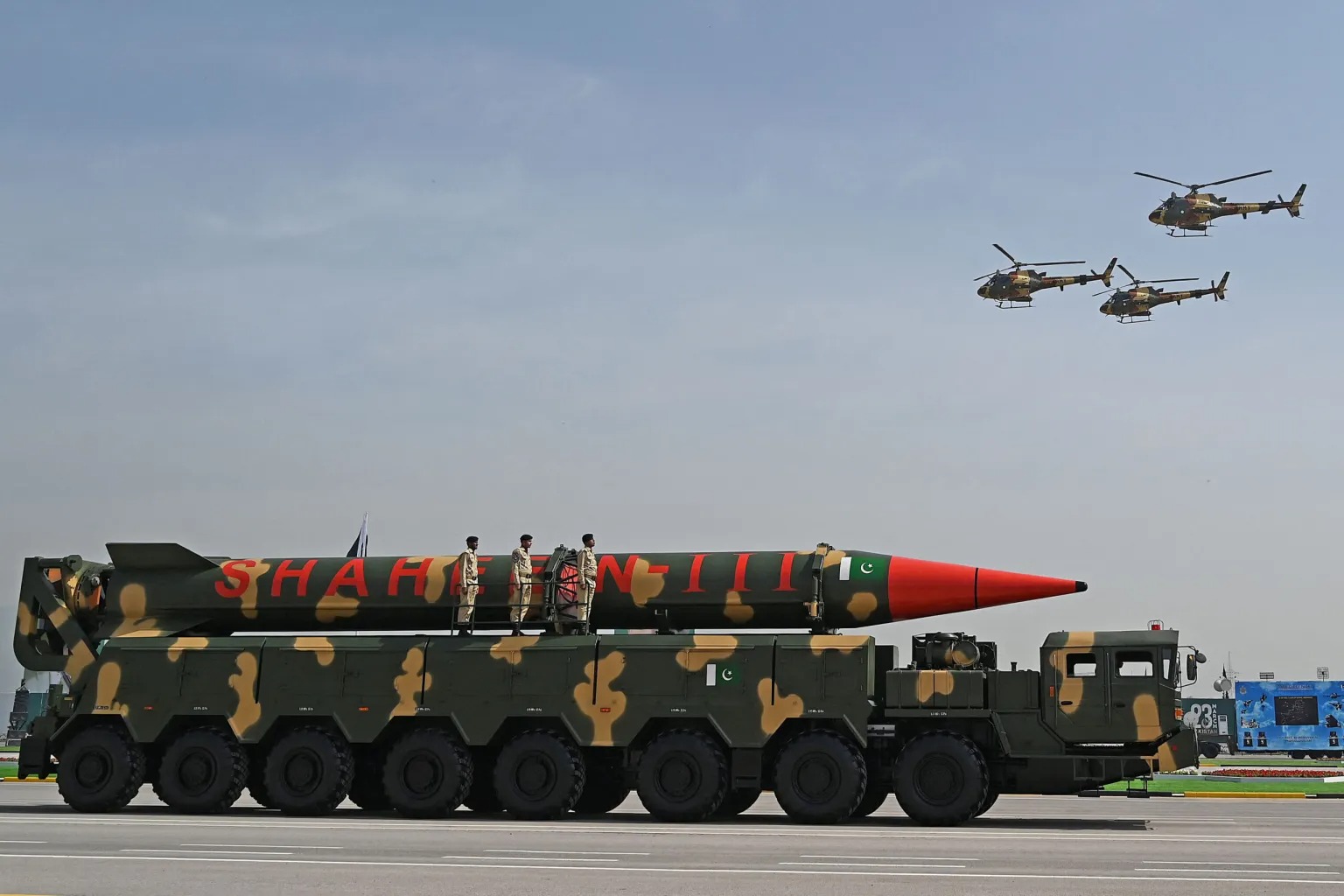
Let us begin with some facts. Pakistan has neither demonstrated an intent to pursue intercontinental ballistic missile (ICBM) capabilities nor articulated any doctrinal requirement for such an undertaking. Its strategic missile development remains constrained by a posture oriented toward credible minimum deterrence within a regional context. The Shaheen-III, Pakistan’s longest-range ballistic missile, has an estimated range of approximately 2,750 km, enabling coverage of the entire Indian mainland as well as its peripheral island territories where critical military infrastructure is located. Even under the most expansive technical speculation, Pakistan’s missile inventory remains regional in scope and is designed to deter potential Indian adventurism. There exists no tested, deployed, or doctrinally signaled Pakistani ICBM capable of reaching the United States; missile range alone renders such claims untenable.
When viewed in conjunction with the preceding discussion, a broader pattern begins to emerge, one shaped not only by technical realities but also by the asymmetries of international political treatment. Washington’s long-standing dual approach, which is characterised by relative silence toward India’s strategic advancements and persistent restraint directed at Pakistan, has been evident over time. In 1998, sanctions were imposed on Pakistan following its reciprocal nuclear tests in response to India’s detonations, yet this posture shifted markedly in 2005 when the US entered into a civil nuclear agreement with New Delhi. That arrangement, widely debated for its implications, effectively enabled nuclear cooperation with a state outside the framework of the NPT, which formally restricts such transfers to non-signatories. This divergence underscores the extent to which strategic considerations, rather than uniform non-proliferation principles, have informed policy choices.
Within this context, the trajectory of Pakistan’s missile program remains anchored in its regionally confined deterrence posture. Any marginal extension in range, while theoretically conceivable, appears neither necessary nor consistent with its doctrinal orientation, which is calibrated specifically to address the strategic balance vis-à-vis India. The evolving capabilities on the Indian side, which include the development of longer-range systems such as the Agni-V, the induction of multiple independently targetable reentry vehicles (MIRVs), and the expansion of submarine-launched ballistic missile (SLBM) platforms, are reshaping the deterrence landscape in South Asia. These advancements introduce complexities related to counterforce targeting and second-strike stability, thereby influencing regional strategic calculations. In such an environment, any prospective adjustments by Pakistan would likely constitute measured and reactive calibrations aimed at preserving deterrence equilibrium, rather than any shift toward transcontinental force projection or global strike ambitions.
A clear contradiction emerges from this framing. Pakistan, whose operational posture remains rooted in defensive deterrence, whose doctrine is explicitly India-centric, and whose missile capabilities are regionally confined, is at times portrayed as a latent threat to the United States homeland. By contrast, India, which is actively advancing longer-range systems, exploring MIRV capabilities, and consolidating a nuclear triad—does not elicit comparable concern. Indeed, Washington has, at various junctures, extended either tacit acceptance or active support for India’s strategic modernization. Such disparity suggests that the issue is less about objective threat assessment and more about the selective application of strategic judgment.
At a broader level, the question is not the existence of missile capabilities, these are a standard feature of all nuclear-armed states, but rather how similar capabilities are interpreted and framed. When comparable technologies generate alarm in one case and acceptance in another, the distinction lies not in the systems themselves but in the political context surrounding them. In this sense, concerns appear to stem less from technical parameters such as range and more from questions of alignment and strategic autonomy. Pakistan’s deterrent posture, operating outside the framework of US strategic integration, is thus more readily cast within an expanded threat narrative, transforming what is fundamentally a regional deterrent into a subject of global concern.
If the concern were genuinely centered on homeland vulnerability, the debate would rest on measurable criteria such as capability thresholds, deployment patterns, and clearly articulated doctrinal intent. Instead, it is often shaped through association and amplification, an approach that blurs important distinctions between states with fundamentally different technological capacities and strategic orientations.
Such framing risks undermining the credibility of intelligence assessments themselves. The dissonance between political rhetoric and intelligence evaluations has, at times, been openly questioned within the United States, including by lawmakers highlighting gaps between executive claims and the findings of the intelligence community—for instance, on issues such as Iran’s nuclear intentions and long-range missile capabilities. When disparate actors are collectively cast as systemic threats, the analytical precision of the term begins to erode, diminishing its utility in serious strategic discourse.
Pakistan’s relevance in strategic calculations does not hinge on any capacity to reach the United States. Its deterrent posture is calibrated for a specific adversary, within a defined geography, and in pursuit of a particular regional balance. To suggest otherwise is not a measured warning, but a mischaracterization of both intent and capability.