
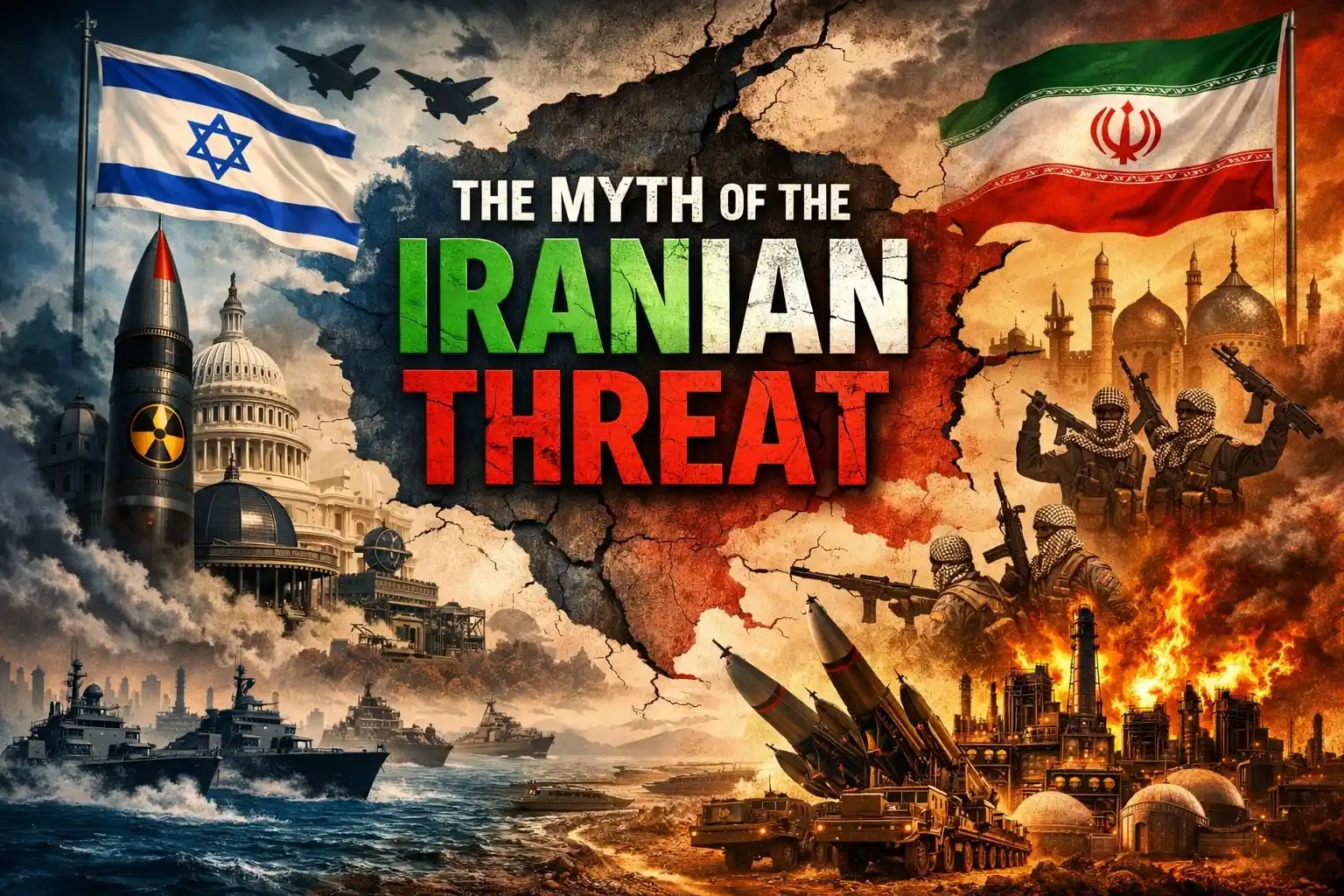
For decades, Iran has been cast as the Middle East’s central menace. Iran, in fact, is not a threat as it’s been perceived by the region and the west. Rather, it can be understood as a strategically constructed narrative, largely advanced by the United States to justify its sustained military presence in the Gulf and to safeguard Israel’s security interests. Iran’s support for Palestine and the Axis of Resistance led the US and Israel to cast Iran as a regional menace. This constructed narrative has had the effect of aligning the security priorities of Gulf monarchies with those of the United States and Israel, effectively integrating their survival strategies into a shared security framework.
Against this backdrop, stripped of its constructed complexity, the geopolitical reality of the Middle East appears more straightforward: the US-led security architecture in the Gulf, ostensibly designed to contain Iran, has frequently contributed to cycles of insecurity rather than fostering durable regional stability. In this sense, the perpetuation of Iran as a central threat has functioned less as a mechanism for peace and more as a structural driver of enduring instability in the region.
Manufacturing the Threat
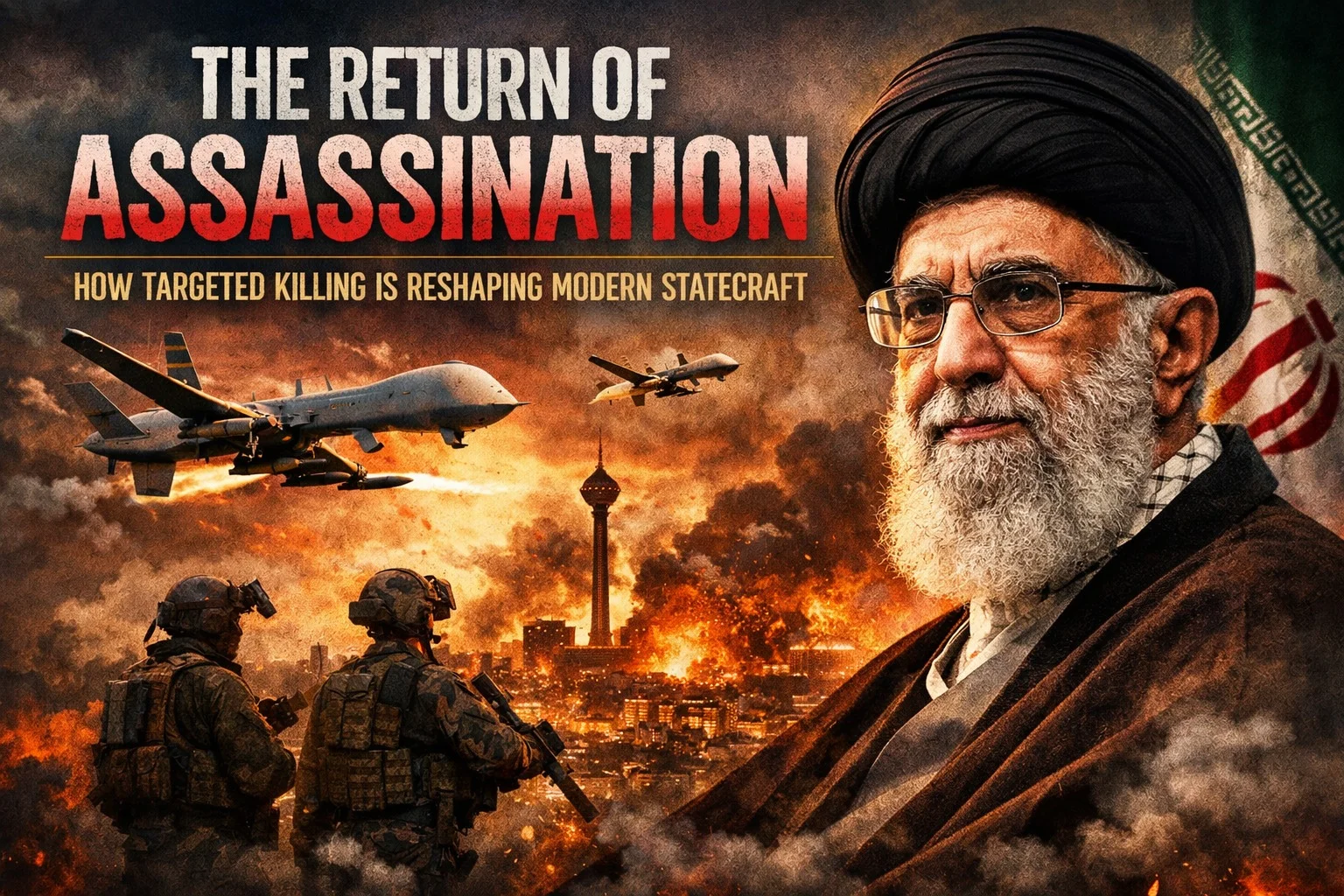
Threat in international politics is rarely self-made but constructed through narratives and interpretations by the states. For decades, Washington and Tel Aviv have framed Iran as an existential danger to the Middle East. Since the 1979 revolution, Iran’s foreign policy has largely been shaped by defensive concerns, responding to external pressures and wars imposed on it, rather than by a desire to pursue hegemonic ambitions. The series of events since February 2026 is being framed through the same narrative, with strikes on Iran’s senior military and political leadership, in which the Iranian Supreme Leader has been martyred, presented as necessary responses to an alleged Iranian threat, once again imposing war on Iran.
Israel has played a pivotal role in constructing and projecting Iranian capabilities as an existential threat, not only to its own security but also to the broader stability of the Middle East and, by extension, to US strategic interests. This framing spans the spectrum from conventional military balances to the realm of nuclear deterrence, thereby elevating Iran from a regional competitor to a systemic challenge. Consequently, successive US administrations have, at various junctures, reinforced and institutionalized this narrative, using it to legitimize a sustained military presence in the Gulf, deepen defence partnerships with Arab monarchies, and advance wider strategic objectives tied to regional primacy and the protection of allied states.
The establishment of the Gulf Cooperation Council (GCC) in 1981 illustrates the early institutionalization of such threat perceptions, as it was significantly shaped by anxieties stemming from post-revolutionary Iran and the dynamics of the Iran–Iraq War. However, this portrayal of Iran as an overarching regional menace does not reflect a uniformly shared or empirically consistent reality across the Middle East. Rather, it is more accurately understood as a politically constructed perception, cultivated and reproduced through discourse and alliance politics.
The US Security Architecture in the Gulf
The United States has, over time, constructed an extensive network of military bases, naval deployments, and defence partnerships across the Gulf, ostensibly aimed at containing Iran. However, the logic of containment is inherently dependent on the persistence of a credible adversary. In this context, Iran’s portrayal as a continual and escalating threat has evolved into a structural necessity, one that underpins and legitimizes the enduring US military presence in the region. US security architecture in the Middle East includes the headquarters of the US Fifth Fleet, central to naval operations in the Persian Gulf in Bahrain, while Qatar hosts Al Udeid Air Base, the largest US military facility in the Middle East, serving as a critical hub for air operations.
On the other hand, the military base in Kuwait performs its job as the main logistical support center to US Army deployments and operations in Iraq and Syria. In the United Arab Emirates, American forces operate from Al Dhafra Air Base, further extending US air power in the region. Meanwhile, Saudi Arabia remains a cornerstone of this architecture through long-standing defense cooperation agreements and extensive arms partnerships with Washington. These security arrangements are set for the US strategic priorities in the Gulf region not for the security of the Gulf states but its own presence as a hegemon in the region and project the power.
In February 2026, Iranian missiles and drones reportedly targeted US military infrastructure in the Gulf. The resulting damage in Gulf States was not a reflection of hostility toward those countries, but rather a consequence of their hosting American military installations. In reality this system has turned the region into the most militarized region and spending on offense-defense armament.
The Myth of Iranian Threat
Four recurring narratives have been central to the construction of Iran as a persistent threat: the nature of its political regime, its nuclear programme, its missile and drone capabilities, and its network of regional proxies. The character of the Iranian regime, in particular, has frequently been securitized in Western discourse, where ideological divergence and political rhetoric are reframed as indicators of hostility rather than unique expressions of domestic political reality.
Among these dimensions, the nuclear issue has emerged as the cornerstone of threat perception. Notably, Iran had entered into a multilateral agreement with the P5+1 under the Joint Comprehensive Plan of Action (JCPOA), through which it accepted significant constraints on its nuclear activities in exchange for sanctions relief. Assessments at the time indicated a degree of Iranian compliance with its obligations. However, the unilateral withdrawal of the United States from the JCPOA during the Trump administration disrupted this framework, reintroducing uncertainty and reinforcing the narrative of Iran as an unrestrained nuclear actor.
In the aftermath of the June 2025 strikes, Iran curtailed cooperation with the International Atomic Energy Agency (IAEA). Consequently, it restricted the inspections at key nuclear facilities. This development effectively marked the collapse of the JCPOA framework and prompted the E3 (United Kingdom, France, and Germany) to invoke the “snapback” mechanism in September 2025, thereby reinstating previously lifted sanctions. Within prevailing discourse, Iran’s civilian nuclear programme has consistently been portrayed as an acute danger, often without due consideration of the broader regional nuclear asymmetry,most notably the longstanding ambiguity surrounding Israel’s nuclear capabilities.
A similar pattern is evident in assessments of Iran’s missile and drone programmes, which are frequently characterized as inherently destabilizing. However, such portrayals tend to overlook the fact that these capabilities are not exceptional in the international system but rather constitute instruments of deterrence that many states maintain as part of their defensive posture. Likewise, Iran’s reliance on regional proxies can be understood as a form of forward or asymmetric deterrence, or a reaction to persistent regional instability and the consolidation of US led security architectures in the Gulf.
Who Pays the Price?
The consequences of this security framework are far-reaching, both for the Middle East and the broader international system. Economically, the prioritization of defence spending diverts substantial resources away from development, which constrained investment in critical sectors and impedes long-term social and economic progress of the region. Strategically, reliance on external security guarantees fosters structural dependence, which limits the capacity of regional states to exercise autonomous agency in the formulation of their security policies. Politically, the continual reproduction of threat narratives deepens intra-regional divisions, exacerbates fragmentation, and undermines the prospects for cooperative, indigenous approaches to shared challenges among the regional states.
Beyond the region, the repercussions extend to major energy-dependent economies such as Japan, South Korea, China, Pakistan, and India, all of which bear significant costs in the form of market instability and supply disruptions. At the societal level, it is the populations of the Gulf that endure the most immediate human consequences, as strikes on critical infrastructure, including airports, ports, power plants, and oil facilities, disrupt livelihoods in states that are not direct protagonists in these conflicts. In this sense, the prevailing security architecture produces a systemic “lose-lose” outcome, the burdens of which are distributed globally, ensuring that the costs of instability are neither localized nor contained.




![A view of Islamabad, as evolving regional dynamics reshape Pakistan’s security environment. [Image via Wikimedia].](https://southasiatimes.org/wp-content/uploads/2026/03/Islamabad_top_view.webp)