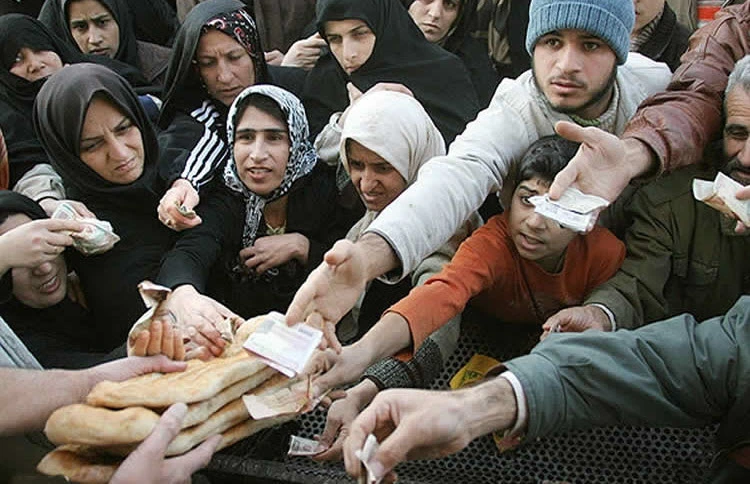
For millions of families across South Asia, food prices are not an abstract economic indicator. They are felt every day at the kitchen table, in local markets, and in the fields where farmers calculate the cost of fertilizers and fuel before deciding what they can afford to plant. When the price of wheat rises or fertilizer becomes scarce, the consequences are felt immediately as harvests shrink, household budgets tighten, and anxiety about the months ahead begins to grow.
Yet the forces shaping those prices often originate far beyond South Asia’s borders. Today, one of the most consequential pressures is unfolding thousands of kilometers away in the waters of the Gulf.
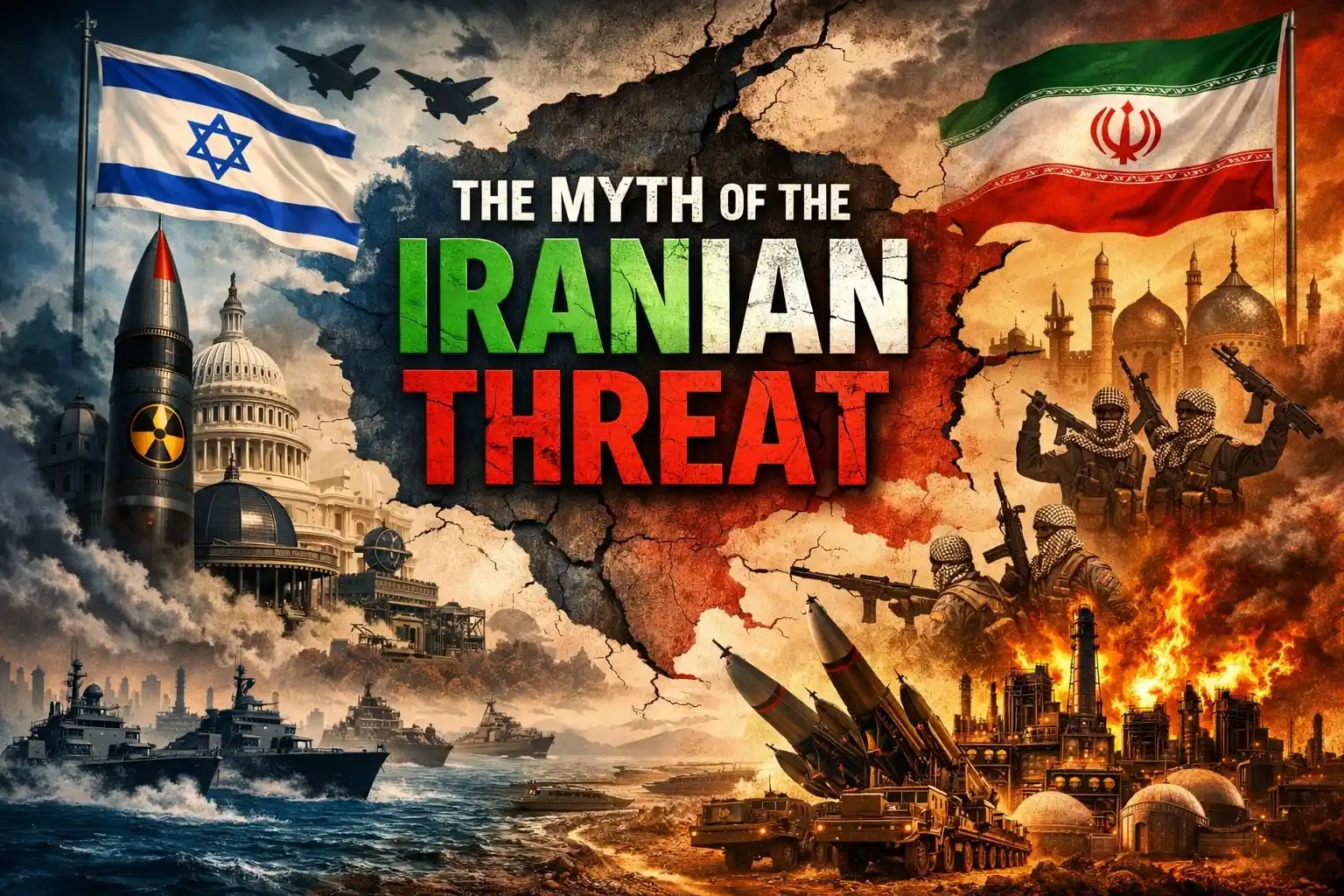
When it comes to the recent Middle East crisis in the wake of the Iran-Israel-United States confrontation, international assessments are typically focused on the ability to launch ballistic missiles, oil price movements, and military alliances; however, the current confrontation with Iran has demonstrated yet another, possibly more dangerous front, that is the strategic vulnerability of food, water, and fertilizer systems. These domains increasingly function as strategic assets capable of shaping humanitarian stability across the region and beyond.
The Middle East and North Africa are among the most import-dependent regions in the world when it comes to food security. Countries in the Gulf are also dependent on the importation of rice, corn, soybeans and vegetable oils; a temporary disruption in the supply chains is quickly reflected in the form of high food prices and the prevalence of insecurity. Iran itself already faces drastic price inflation of basic goods, with certain food products already recording several-digit rises over the last year; in the event of the hostilities and maritime routes are unstable, those shocks will spread to the international markets of commodities.
It has been shown historically that food crises in the area are often the impetus to political crises; and a case in point is the skyrocketing bread prices, which were one of the main drivers of the Arab Spring uprisings of 2011. Food insecurity weakens the already weak social contract between the governments and the citizens, especially in economically unstable societies. Presently, with over 670 million individuals already suffering because of hunger globally, any further interruption enhances the chances of driving at-risk groups into famine.
Another hidden aspect of this conflict is water security. Gulf countries are highly reliant on desalination facilities to provide drinking water and almost 100 million people are dependent upon these facilities, which produce about 40 percent of the global desalinated water. Recent attacks near desalination infrastructure in the Gulf highlight how vulnerable these life-sustaining systems have become. A single strike on a major water facility could trigger a humanitarian crisis within days.
The Gulf region is also facing the fertilizer crisis which is also alarming. Almost a quarter of the world fertilizer production passes through the Strait of Hormuz, making the waterway not only an energy corridor but also a critical artery for global agriculture. As shipping routes face growing threats, the cost of fertilizer is already showing signs of volatility, and even small increases can skyrocket the global food production costs, especially in the developing economies where the agricultural margin is already slim.
Yet the consequences of such disruptions do not remain confined to the Gulf. The shockwaves travel eastward into South Asia, a region home to nearly two billion people whose agricultural systems remain closely tied to Gulf fertilizer and energy supply chains. South Asia’s farms depend heavily on nitrogen-based fertilizers produced using natural gas from the Gulf. Countries such as Pakistan, India, and Bangladesh import significant quantities of urea and other fertilizers linked to Gulf production networks.
In Pakistan alone, fertilizer accounts for roughly 25–35 percent of crop input costs for key staples such as wheat, rice, and cotton. Any sustained increase in fertilizer prices can therefore translate directly into higher food prices across domestic markets. The stakes are particularly high given that agriculture still employs around 37 percent of Pakistan’s workforce and contributes close to one-fifth of the national economy.
The vulnerability extends beyond fertilizer. Nearly 75-80 percent of Pakistan’s oil imports originate from Gulf states and transit through the same maritime corridors that now face heightened geopolitical risk. Instability in these shipping lanes would therefore not only raise energy costs but also increase transportation expenses for agricultural inputs, food distribution, and domestic markets.
The implications are even more severe for landlocked and frontier economies connected to South Asia. Countries such as Afghanistan and Nepal rely on regional trade corridors through Pakistan and India to access fertilizer, fuel, and food imports. Disruptions in Gulf shipping routes can therefore cascade through ports such as Karachi and Mumbai before reaching inland markets, amplifying supply shocks across multiple layers of regional trade networks.
The crippling outcome of disrupted food exports of fertilizers in the Russia Ukraine war is already being experienced in the international economy where shortages of food pushed costs of production dramatically up, and also led to an increase in food prices worldwide. The current clash risks causing the same crisis to be repeated- if not, escalate even higher.
The fact that the essential resources are gradually weaponized is what makes the present state of affairs particularly concerning. Conflicts in the current time tend to attack the food systems, agricultural infrastructure, and water in order to demise the societies and strain governments. It is a larger explanation of the trend to become more strategic with basic needs as seen in Gaza to Yemen and Sudan where food has become the instrument of political bargaining and survival.
The Iran war poses a risk of a sequence of consequences on global food systems and destabilizes the maritime routes, threatens the desalination infrastructure, and disrupts markets of fertilizers.
High military spending leads to the allocation of resources towards defense spending at the expense of development assistance and humanitarian spending; with governments spending more on defense, less on food security, climate resilience and poverty alleviation, the most at-risk population groups are increasingly exposed to the effects of geopolitical battles.
But in reality, the actual impact of the Iran-Israel conflict is not limited only to the skies or seas over the Gulf; it is located in the fields where crops are left short of fertilizers, in the cities where water supply is still uncertain, and in the markets where the prices of food are already increasing to the brink of making families hungry.
Any disregard of these dimensions would be a serious malpractice. During the modern warfare, food, water and fertilizer have become peripheral issues to center strategic assets that can ascertain the stability of whole regions.
For South Asia, where hundreds of millions depend on stable agricultural production and affordable food supplies, the stability of Gulf shipping lanes and fertilizer markets is not a distant geopolitical concern but a direct economic and humanitarian necessity.
Unless the policymakers combine efforts to overcome these weaknesses, the Israel-Iran conflict could be recalled not only as a geopolitical clash but also as the defining moment when a regional conflict resulted in a worldwide food and humanitarian shock.