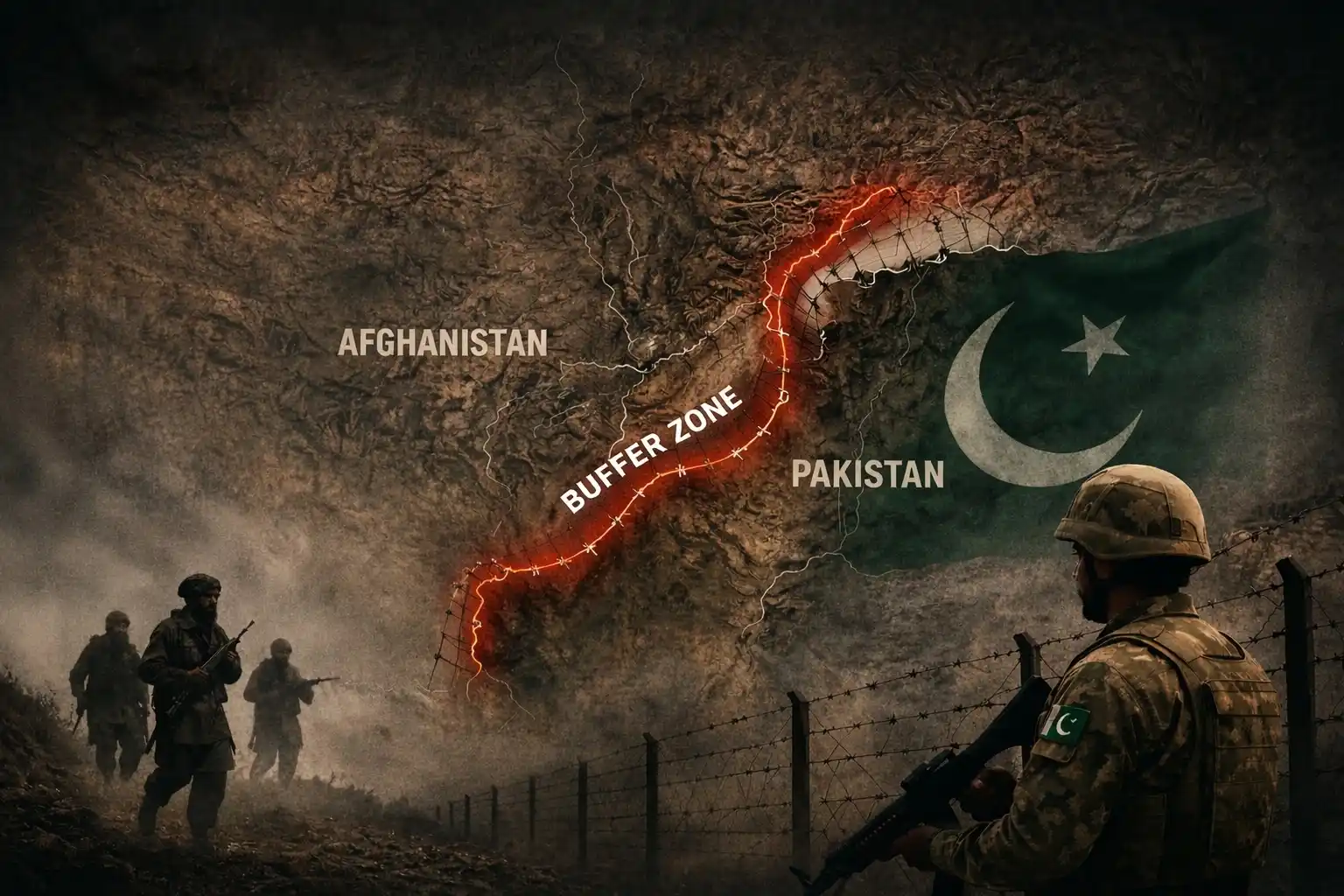
Since the fall of Kabul in August 2021, the relationship between Pakistan and the Afghan Taliban has spiraled from cautious optimism to open hostility. The Afghan Taliban frequently allege that Pakistan is acting as an adversary, citing border skirmishes and deportation policies. However, this narrative obfuscates a critical distinction: the Pakistani state holds no grievance against the Afghan people, nor the rank-and-file Taliban, but rather clashes with the specific policy decisions of the interim government in Kabul.
The central source of friction is the presence of the Tehreek-e-Taliban Pakistan (TTP) on Afghan soil. While modern international law explicitly forbids states from harboring non-state actors that launch cross-border attacks, the situation is perhaps better understood through the indigenous legal and moral framework of the region: Pashtunwali. This unwritten socio-ethical code, which governs the lives of Pashtuns, places immense weight on honor (Nang), hospitality (Melmastia), and asylum (Nanawatai).
However, Pashtunwali is not a suicide pact. It functions on a logic of reciprocity and balance. The Afghan Taliban’s protection of the TTP, an entity waging war against Pakistan, constitutes a breach of the traditional obligations owed to a neighbor that has served as a host for over forty years. By sheltering the enemy of a benefactor, the Taliban are inadvertently defining themselves as the enemy, according to the very logic of the tribal code they espouse.
The Socio-Historical Weight of Pashtunwali
To understand the gravity of the Taliban’s actions, one must first appreciate the role of Pashtunwali in Afghan society. In a landscape where central governance has historically been weak or nonexistent, Pashtunwali serves as the primary mechanism for conflict resolution, social cohesion, and identity formation. It is not merely a set of customs but a rigorous legal theory that dictates how an honorable man must interact with friends, enemies, and strangers.
Three pillars are particularly relevant to the current crisis. First, Melmastia (Hospitality) mandates the unconditional obligation to host guests, providing them with food, shelter, and protection. Second, Nanawatai (Asylum/Sanctuary) requires giving protection to anyone who requests it, even an enemy, provided they come as a supplicant. Third, Badal (Justice/Revenge) obliges individuals to seek justice for wrongs committed, ensuring a balance of power is restored.
In traditional society, breaking these codes results in Peghor (shame/taunt) and social ostracization. The Afghan Taliban, who frame their legitimacy not only on religious grounds but also on their identity as indigenous sons of the soil, are expected to embody these virtues. Yet, their current foreign policy reveals a stark deviation from the spirit of these laws.
The Debt of Melmastia
If relationships between nations can be viewed through the lens of Melmastia, Pakistan has arguably performed one of the most extensive acts of hospitality in modern history. Since the Soviet invasion of 1979, Pakistan has hosted millions of Afghan refugees. This was not a temporary arrangement; it was a generational commitment. Afghans were integrated into Pakistan’s economy, their children were born in Pakistani hospitals, and their leadership often found shelter in Pakistan during times of turmoil.
In the context of Pashtunwali, the host-guest relationship creates a bond of moral indebtedness. While the host gives without explicitly demanding payment, the guest is bound by an implicit code of honor to respect the host’s household. To harm the host, or to allow others to harm the host from within the guest’s quarters, is an act of profound ingratitude.
The Afghan Taliban’s current posture ignores this historical reality. Instead of acknowledging the decades of sanctuary provided by Pakistan, the leadership in Kabul has adopted a tone of grievance. By failing to reciprocate the goodwill of the past, or at the very least, maintaining a stance of benign neutrality, the Taliban are violating the social contract that underpins regional stability.
The Violation of Sanctuary
The crux of the current conflict lies in the interpretation of Nanawatai (asylum). The Afghan Taliban justify their refusal to expel the TTP by citing their cultural obligation to protect those who have sought their sanctuary. They argue that handing over TTP militants to Pakistan would be a violation of Afghan tradition and sovereignty.
However, this is a flawed and selective reading of Pashtunwali. Under tribal law, granting asylum comes with strict conditions. The recipient of Nanawatai loses their autonomy, they must abide by the rules of the host. Crucially, a guest is strictly forbidden from using the host’s home as a firing position against the host’s neighbors. To do so brings war to the host’s doorstep and violates the sanctity of the sanctuary.
The TTP acts as an aggressor against Pakistan, launching attacks on Pakistani security forces and civilians from bases inside Afghanistan. This creates a clear causal chain within the logic of tribal law: if the Taliban shelter the TTP, and the TTP uses that shelter to attack Pakistan, then the Taliban are complicit in the attack. Pashtunwali is explicit regarding such complicity.
By allowing the TTP to operate with impunity, the Afghan Taliban have transitioned from being a neutral neighbor to an active facilitator of aggression. They have effectively adopted the TTP’s war as their own. This is not the noble protection of a supplicant; it is the strategic harboring of a proxy. In doing so, they have laid the foundation for enmity with Pakistan, validating Pakistan’s defensive measures as a necessary form of Badal (justice/retaliation) to protect its own sovereignty.
Irredentism and the Rejection of Modern Statehood
Compounding this betrayal of hospitality is the resurgence of irredentist rhetoric among Taliban leaders regarding the Durand Line. Despite Pakistan’s advocacy for engagement with Kabul on the world stage, Taliban officials frequently issue statements rejecting the international border and claiming Pashtun territories within Pakistan.
This irredentism is analytically significant for two reasons. First, it reveals a calculated ethnic pragmatism rather than a principled stance against colonial borders. It is notable that the Taliban do not extend similar irredentist claims to their northern neighbors, Uzbekistan, Tajikistan, and Turkmenistan. Challenging the legitimacy of the northern borders would be counterproductive to the Taliban’s internal power structure. Erasing those borders would theoretically integrate millions of ethnic Uzbeks and Tajiks into Greater Afghanistan, thereby diluting Pashtun demographic dominance. In contrast, erasing the Durand Line aims to incorporate Pakistan’s Pashtun population, reinforcing Pashtun hegemony. Thus, the rejection of the border is not about historical justice; it is about ethnic consolidation.
Second, it further erodes the possibility of a brotherly relationship. In Pashtunwali, disputes over land (Zan, Zar, Zameen — Women, Gold, Land) are the primary causes of generational feuds. By reactivating the dormant dispute over the Durand Line while simultaneously hosting anti-Pakistan militants, the Taliban are engaging in a total spoiler approach. They are not acting as grateful former guests or responsible neighbors; they are acting as rivals.
Conclusion
The friction between Pakistan and the Afghan Taliban is often analyzed through the cold calculus of security studies, but it is deeply rooted in a failure of social ethics. The Afghan Taliban claim to be the guardians of Afghan culture and Islamic values, yet their policy toward Pakistan represents a deviation from both.
By sheltering the TTP, the Taliban have violated the conditions of Nanawatai, allowing their “guests” to attack a neighbor. By ignoring decades of Pakistani Melmastia, they have displayed a lack of gratitude that sits uneasily with Pashtun notions of honor.
The axiom remains: The friend of my enemy is my enemy. The Afghan Taliban, through their decisions and attitudes, have chosen to align themselves with those who spill Pakistani blood. Until Kabul recognizes that the duties of a state, and the duties of an honorable host, require preventing one’s soil from being used against a neighbor, the relationship will remain trapped in a cycle of mistrust. The Taliban must realize that in the eyes of Pashtunwali, they stand accused of biting the hand that, for forty years, fed them.