Russia supplies $13 billion worth arms to India in last 5 years: Reports

Russia supplies arms to India

Russia supplies India with $13 Billion in Arms, New Delhi plans to order $10 billion more

Russia supplies arms to India worth around US$13 billion during the past five years, and New Delhi has orders placed with Moscow for weapons and military equipment exceeding US$10 billion, Russian state news agencies reported late on Sunday (Feb 12).

India is the world’s biggest buyer of Russian arms, accounting for around 20 per cent of Moscow’s current order book, and New Delhi has not explicitly condemned Russia’s invasion of Ukraine. Indian Prime Minister Narendra Modi has called for dialogue and diplomacy to solve the conflict, now in its 12th month.

Scores of Western countries imposed sanctions on Russia, including on arms, in response to the invasion, which Moscow calls a “special military operation”.

Dmitry Shugayev, head of Russia’s Federal Service for Military-Technical Cooperation, reported that India, China, and several Southeast Asian countries remain interested in purchasing Russian arms. This continued interest highlights the demand for Russian military products in these regions.

“Despite the unprecedented pressure on India from Western countries led by the United States in connection with Russia’s special operation in Ukraine, it continues to be one of Russia’s main partners in the field of military-technical cooperation” Interfax agency quoted Shugayev as saying.

Annual arms exports were about US$14-15 billion, and the order book has remained steady at around US$50 billion, Interfax reported.

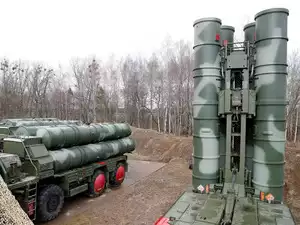
Asian customers, particularly, show interest in Russian S-400 Triumf missile defense, short-range missile systems, Su-30 warplanes, MiG-29 helicopters, and drones, Shugayev noted.

Russia’s TASS state news agency reported that at the 14th international aerospace exhibition Aero India 2023 in Bengaluru, Russia will showcase approximately 200 samples of weapons and military equipment.

India is seeking to acquire military planes worth billions and is finalizing deals for jetliners to meet civilian demand. The country is also urging global manufacturers to produce locally.

Original Source: Reuters

News Desk

Your trusted source for insightful journalism. Stay informed with our compelling coverage of global affairs, business, technology, and more.

Recent

Afghanistan’s Trade Boycott: Strategic Miscalculation With Fiscal Consequences

Afghanistan’s Trade Boycott: Strategic Miscalculation With Fiscal Consequences

Afghanistan’s 2025 trade boycott of Pakistan exposes a strategic miscalculation. Despite efforts to shift toward Iran and Central Asia, Kabul remains structurally dependent on Pakistan’s mature trade corridors, customs revenue, labour mobility, and logistical efficiency. Alternative routes carry higher costs, sanctions risks, and operational delays, leaving the Taliban with mounting fiscal losses and regional constraints.

Read More »
The Defund Taliban Campaign

The Defund Taliban Campaign

The Defund Taliban Campaign examines how indirect US funding and a $7 billion abandoned arsenal have turned the Taliban into a regional force multiplier for militant groups.

Read More »
The Taliban’s new fatwa banning foreign militancy signals a shift in doctrine, but rising regional attacks and ideological fractures raise questions about its enforceability.

Doctrine vs Reality: Can the Taliban Enforce Their Ban on Foreign Militants?

The Taliban’s new fatwa banning foreign militants has been hailed by officials in Kabul as a decisive theological shift. But rising attacks in the north, continued TTP operations, and mounting pressure from Washington expose a widening gap between doctrine and reality. As regional powers demand proof of enforcement, the decree risks becoming another symbolic gesture unless it translates into measurable action on the ground.

Read More »
Deconstructing the Pakistan-Afghanistan Economic Crisis

Deconstructing the Pakistan-Afghanistan Economic Crisis

The Pakistan-Afghanistan trade freeze is widely framed as a punitive economic move, yet its roots lie in a severe security breakdown emanating from Afghan territory. Pakistan’s transit closures are reactive, not aggressive, and Afghanistan’s deep logistical dependence on Pakistani routes exposes the crisis as geopolitical, not commercial.

Read More »
Criminalising Dissent: How New Laws and “Public Order” Politics Are Shrinking Democratic Space in India

Criminalising Dissent: How New Laws and “Public Order” Politics Are Shrinking Democratic Space in India

India is witnessing a steady erosion of democratic freedoms as broad security laws, digital surveillance, and administrative restrictions redefine dissent as a threat rather than a constitutional right. From expanded use of UAPA and IT Rules to routine protest crackdowns and shrinking academic space, the cumulative impact is a quieter and increasingly constrained civic sphere.

Read More »