
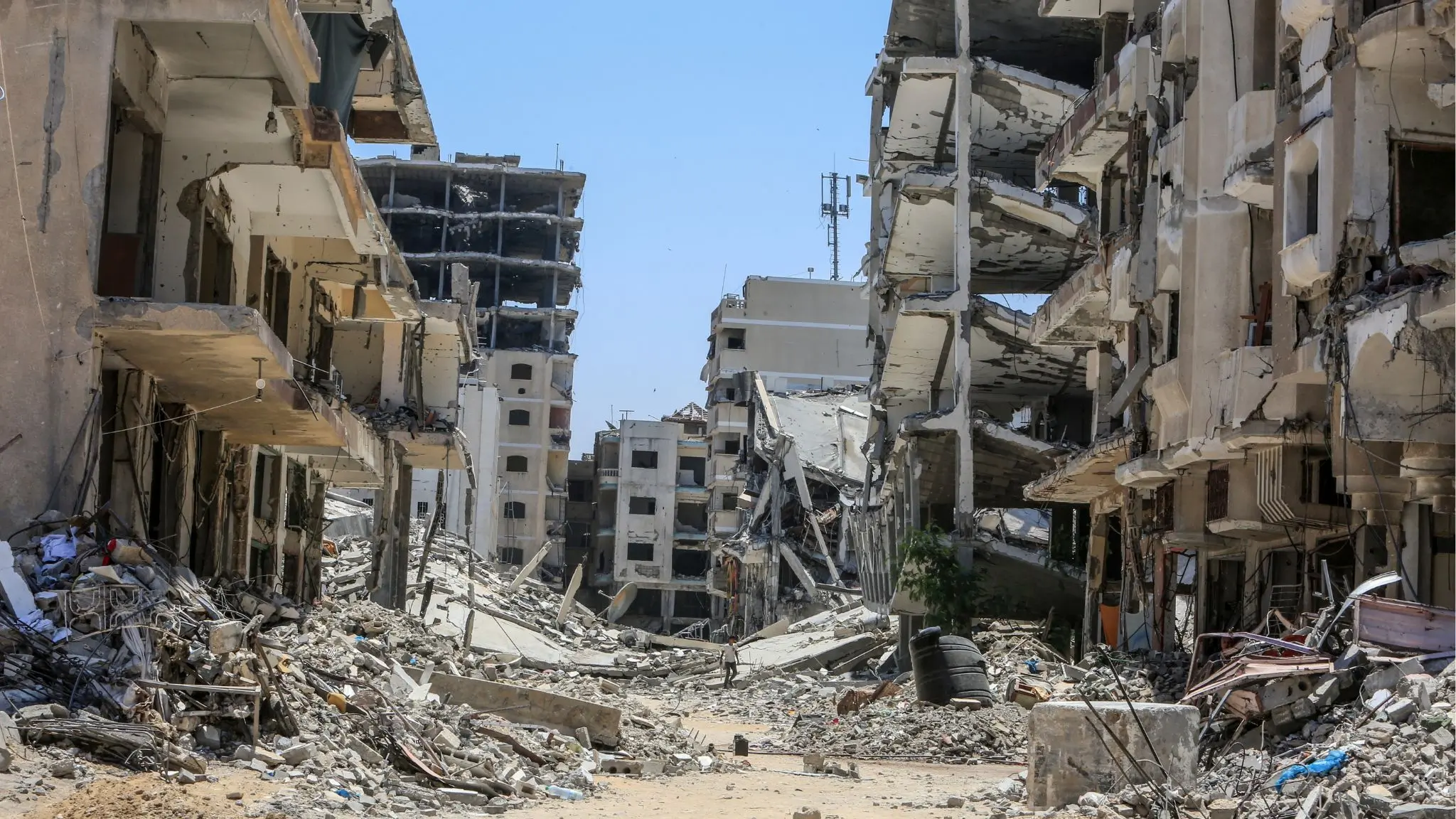
A few recent developments have sparked as much internal debate within Pakistan as the recent decision to join the Board of Peace (BoP) for Gaza. Facilitated by the United States under the framework of the Trump administration’s 20-Point Comprehensive Plan to End the Gaza Conflict, the BoP represents a radical departure from traditional multilateralism.
However, a glaring omission in this framework is the exclusion of Hamas from the formal agreement. Despite a genocidal campaign spanning two years, facts on ground prove that Israel has failed to fully dislodge Hamas from the social and political fabric of Gaza. They remain a grounded reality that the Board must eventually reckon with, even if they are not currently a signatory to the deal.
For Pakistan, a country that has historically tethered its foreign policy to the principle of non-recognition of Israel and unwavering support for Palestinian self-determination, the decision to sit at a table alongside Benjamin Netanyahu and pro-Israel hawks is a move fraught with both strategic risk and potential utility. This historical commitment is rooted in decades of active support. Pakistan has a storied history of standing with the Palestinians, most notably during the 1967 and 1973 Arab-Israeli wars, where Pakistani pilots famously participated in combat against the Israeli Air Force. This legacy of military and diplomatic solidarity forms the backdrop of the current domestic unease.
The Architecture of the Board
The Board of Peace, formally established in January 2026 following the fragile ceasefire of late 2025, is not a typical UN-led initiative. It is an executive body designed to oversee the transitional administration of Gaza, manage a $1 billion reconstruction fund with a unique buy-in model for permanent membership, and supervise the International Stabilization Force (ISF). The primary goal of the BoP is to create a stabilized, de-radicalized, and commercially viable Gaza, shifting the focus from political sovereignty to technocratic management. The Board wields significant executive powers, including the authority to approve all infrastructure projects, control the flow of dual-use materials, and vet the civil servants of the interim administration. By centralizing these functions, the BoP aims to ensure that no reconstruction efforts can be diverted for military purposes, effectively making it the supreme administrative authority over the strip.
The power structure is markedly hierarchical. Unlike the UN Security Council, the BoP is steered by an exclusive Executive Board. This inner circle includes figures like US Secretary of State Marco Rubio, Jared Kushner, and former UK Prime Minister Tony Blair, alongside regional intelligence and diplomatic chiefs. The mandate extends beyond mere relief, seeking to implement a top-down economic transformation that critics fear might prioritize foreign investment over the indigenous political aspirations of the Palestinian people.
Invitations to join this new order were extended to approximately 60 nations, serving as a litmus test for global alignments. A significant bloc of adopters”has emerged, including Pakistan, Turkey, Qatar, Saudi Arabia, Egypt, the UAE, Jordan, and Indonesia, alongside other diverse signatories like Argentina and Vietnam. Conversely, refusers led by France and Norway have declined, arguing the Board undermines the United Nations. Meanwhile, hesitant powers like China, and Russia remain cautious of departure from international legal norms.
To understand the BoP, one must look at historical parallels. The most immediate comparison is the Quartet on the Middle East, established in 2002. While it aimed to mediate the roadmap for peace, it was criticized for being a tool of hegemony that failed to halt settlement expansion. The BoP echoes this history but with a more corporate lean that prioritizes reconstruction over political enfranchisement.
Another parallel is the Coalition Provisional Authority (CPA) in post-2003 Iraq. Like the CPA, the BoP is an extra-legal body operating outside the direct command of the UN General Assembly, focusing on technocratic governance while questions of sovereignty remain unresolved. Historically, such boards prioritize regional security and commercial redevelopment over self-determination. This history of managed mandates looms large over the Gaza project, suggesting that without strong advocacy, the Board could become a vehicle for a peace that ignores fundamental rights.
The Pakistani Dilemma
Critics argue that by joining the BoP, Pakistan provides a muslim cover for a framework that enables the continued marginalization of Palestinian voices. The presence of Benjamin Netanyahu on the board, a leader facing international scrutiny for actions described as genocidal, is seen as a bridge too far. The argument is that the BoP is a peace of the victors. By participating, Pakistan risks legitimizing a structure where Israel retains a de facto veto, while the Palestinian Authority is relegated to a technocratic committee. For a country that does not recognize Israel, sitting on this board feels like a surrender of a 75-year-old principled stance.
The counter-argument is rooted in the realities of global power. If states with a history of vocal Palestinian support refuse to join, the Board will be left entirely to pro-Israel interests. By taking a seat, Pakistan can exercise a soft veto to ensure reconstruction funds are not used for political blackmail.
Furthermore, Pakistan’s extensive UN peacekeeping experience allows it to monitor the security architecture of the International Stabilization Force (ISF), ensuring it does not become an extension of the Israeli security apparatus. Engagement allows these states to insist on a time-bound political process leading to a sovereign Palestinian state based on 1967 borders. In this view, waiting for an ideal UN-led solution while the UN is being sidelined is a luxury Pakistan cannot afford.
The potential for meaningful influence within this lopsided power structure rests on the combined weight of Islamabad, Ankara, and Doha. Qatar, as the long-standing home for the leadership of Hamas, serves as the primary conduit between the group and the global community. Turkey has also maintained open channels and diplomatic relations with Hamas, while in Pakistan, significant sections of the political class share deep historical and ideological ties with the movement. This unique positioning allows these three nations to act as a vital bridge. Even though Hamas is not a formal party to this deal, its continued presence in Gaza is an unavoidable reality. These middle powers can translate that reality into diplomatic leverage, ensuring that the Board’s decisions are not made in a vacuum that ignores the actual political forces on the ground.
By acting in concert, these states can prevent the Riviera of the Middle East vision from overwriting Palestine for Palestinians. They can serve as the guardians of the mandate, ensuring that funds are used for genuine civilian relief rather than as a tool for a new type of managed blockade. While the presence of controversial actors and the bypass of traditional frameworks are problematic, the alternative of total exclusion would leave the fate of 2.3 million Gazans entirely in the hands of those who have spent decades dismantling their aspirations. The challenge for these nations is to remain participants without becoming collaborators, proving that in a world of imperfect choices, the most effective path to defending rights is to stay in the room and force the conversation toward justice.


![Ukrainian and Russian flags with soldier silhouettes representing ongoing conflict. [Image via Atlantic Council].](https://southasiatimes.org/wp-content/uploads/2026/02/2022-02-09T000000Z_1319661209_MT1NURPHO000HXCNME_RTRMADP_3_UKRAINE-CONFLICT-STOCK-PICTURES-scaled-e1661353077377.jpg)