For decades, Pakistan has remained an indispensable, though often underappreciated, pillar in America’s regional strategy. From post 9/11 counterterrorism coordination to logistical access in Afghanistan, Washington has long relied on Islamabad for strategic balance. But now, that relationship is being redefined. The United States now views Pakistan not only through the prism of security but also as a critical partner in global resource competition, a source of rare minerals, energy potential, and regional connectivity.
From its geography, bridging energy-rich Central Asia with the Indian Ocean to its role as a counterterrorism partner, Pakistan sits at the crossroads of multiple U.S. interests. In Washington’s evolving grand strategy, marked by competition with China, energy diversification, and supply chain security, a stable Pakistan is not optional; it is imperative. The U.S. increasingly views Pakistan through a lens of strategic interdependence, as a gateway for regional connectivity, a bridge between South and Central Asia, and a pivotal partner in maintaining balance amid China’s expanding regional influence.
Strategic Geography: The Mineral Core of Engagement
At the heart of Pakistan’s growing significance lies its immense natural resource wealth, valued at roughly $6 trillion. From the gold and copper reserves of Reko Diq and Saindak to lithium, antimony, and rare earth elements scattered across Balochistan and Khyber Pakhtunkhwa, Pakistan holds one of the richest untapped mineral bases in the world. These resources are central to the technologies defining the future, electric vehicles, renewable energy systems, and advanced defense manufacturing, sectors where the U.S. urgently seeks to reduce its dependence on China.
Reflecting this strategic shift, a landmark $500 million Memorandum of Understanding (MoU) was signed between U.S. Strategic Metals (USSM) and Pakistan’s Frontier Works Organisation), aimed at developing, refining, and exporting critical minerals to the United States. Following the agreement, on October 6, 2025, Pakistan dispatched its first shipment of rare earth elements to the USSM facility in Missouri. The consignment included antimony, copper concentrate, and rare earth elements such as neodymium and praseodymium, essential components in electric motors, wind turbines, and defense technologies. “This is the first step in our exciting journey with Pakistan’s FWO to provide critical minerals to the United States,” said Stacy W. Hastie, CEO of USSM.
Complementing this initiative, the recent $3.5 billion financing package, backed by the U.S. EXIM Bank, IFC, ADB, and EBRD for the development of Reko Diq, further underscores the scale of international confidence in Pakistan’s mineral sector and its potential to anchor long-term economic cooperation.
For Washington, this partnership goes beyond trade. It represents a strategic investment in supply chain diversification, reducing China’s dominance in the global rare earth market while strengthening Pakistan’s role as a stable, resource-rich partner in the energy transition. By investing in Pakistan’s minerals capacity, from exploration to refining, the U.S. secures reliable access to resources critical for its clean-energy and defense industries, while enabling Islamabad to achieve sustainable growth and industrial modernization
Corridors of Connectivity: Expanding Economic Stakes
Beyond mineral resources, Pakistan’s geostrategic location enhances its value as a connectivity hub linking Central Asia, the Middle East, and South Asia. Its road and port infrastructure provides the most direct route between landlocked Central Asian states and the Arabian Sea, making it integral to any long-term U.S. economic and logistical vision for the region.
A prime example is the $482.75 million Khyber Pass Economic Corridor (KPEC), launched in collaboration with the World Bank and the Government of Pakistan. The project integrates into the Central Asia Regional Economic Cooperation (CAREC) corridors 5 and 6, connecting Peshawar to Torkham and onward to Afghanistan and Central Asia. Financed through $22.15 million in domestic contribution and $460.60 million in concessional World Bank loans, KPEC aims to create over 100,000 jobs, cut travel time by nearly 40%, and enhance trade access to ports like Gwadar and Port Qasim.
For the U.S., such connectivity projects align perfectly with its goals of promoting regional trade integration, economic resilience, and non-Chinese infrastructure pathways in Asia. The success of these initiatives is tightly linked to Pakistan’s internal stability, a prerequisite for sustainable growth and secure investment.
Security Challenges: A Fragile Landscape
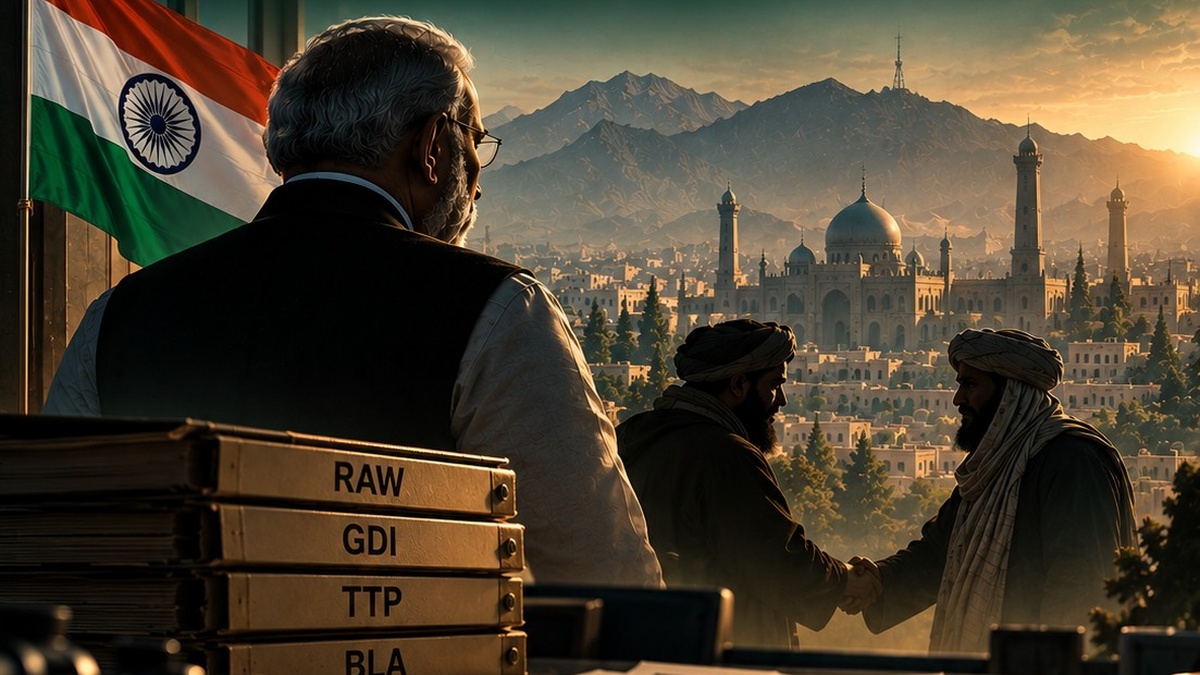
While the economic promise is immense, it remains inseparable from Pakistan’s internal security. The Taliban’s return to power in Afghanistan in 2021 has reinvigorated militant activity across the border, particularly by the Tehreek-i-Taliban Pakistan (TTP). Estimating its strength at around 6500 fighters now operate across the Pak-Afghan frontier. Armed with advanced weaponry left behind in the aftermath of the withdrawal of US’ troops in August 2021 and emboldened by shifting dynamics, these militants have intensified attacks on security personnel and civilians inside Pakistan.
Simultaneously, the Balochistan Liberation Army (BLA), once fractured by internal divisions, has reconstituted itself with greater operational sophistication, increasingly targeting infrastructure and investment projects in the resource-rich province of Balochistan. The human toll has been devastating: coordinated attacks on passenger transport, schools, and energy installations have claimed dozens of lives, undermining both public confidence and foreign investment sentiment.
Islamabad’s policy response has combined diplomacy and deterrence: outreach to Kabul through official delegations and tribal mediations, alongside punitive measures such as border closures and operations against TTP hideouts. Yet despite these efforts, Kabul’s reluctance to act decisively against anti-Pakistan groups has deepened security pressures, undermining regional stability and complicating projects central to U.S. strategic and economic interests.
Strategic Imperative: Why Washington Needs a Stable Pakistan
For Washington, Pakistan’s stability has evolved into a strategic necessity. Once viewed primarily through a counterterrorism lens, Pakistan now stands at the intersection of America’s broader goals, ensuring access to critical minerals, maintaining trade connectivity, and sustaining regional balance amid intensifying global rivalries.
Any prolonged instability in Pakistan risks disrupting mineral supply chains, trade corridors, and development routes that underpin broader U.S. objectives in South and Central Asia. The stakes extend beyond immediate security concerns, they touch the continuity of economic access, humanitarian logistics, and the steady flow of strategic resources vital to American industries.
This understanding has encouraged Washington to redefine its engagement with Islamabad, prioritizing stability over transactional cooperation. Through economic partnerships, institutional support, and sustained dialogue, the U.S. seeks to strengthen Pakistan’s internal capacity to manage security challenges while fostering an environment conducive to long-term development.
Ultimately, a stable Pakistan ensures predictability, secure trade, and strategic continuity, outcomes that align directly with U.S. economic and geopolitical interests. Stability in Pakistan, therefore, is not a regional preference for Washington; it is a strategic necessity.
Conclusion
As the U.S. recalibrates its global posture amid great-power competition, Pakistan’s stability remains a strategic constant, a linchpin for economic connectivity, regional peace, and the global energy transition. From the mineral-rich region of Balochistan to the trade routes of Khyber, the stakes are high for both nations. A secure, economically resilient Pakistan does not just serve its own national interest; it anchors U.S. strategic objectives across Asia. Whether in supply chains, resource security, or regional balance, Pakistan’s stability is not merely desirable, it is indispensable.
The views expressed in this article are the author’s own. They do not necessarily reflect the editorial policy of the South Asia Times.

Alisha Zahra is a young International Relations scholar with a keen interest in South Asia’s political landscape, regional security and diplomacy.