![Pakistan condemns US sanctions on its ballistic missile programme, citing discrimination and risks to regional stability [Image Time Line News]](https://southasiatimes.org/wp-content/uploads/2024/12/sava-1.webp)
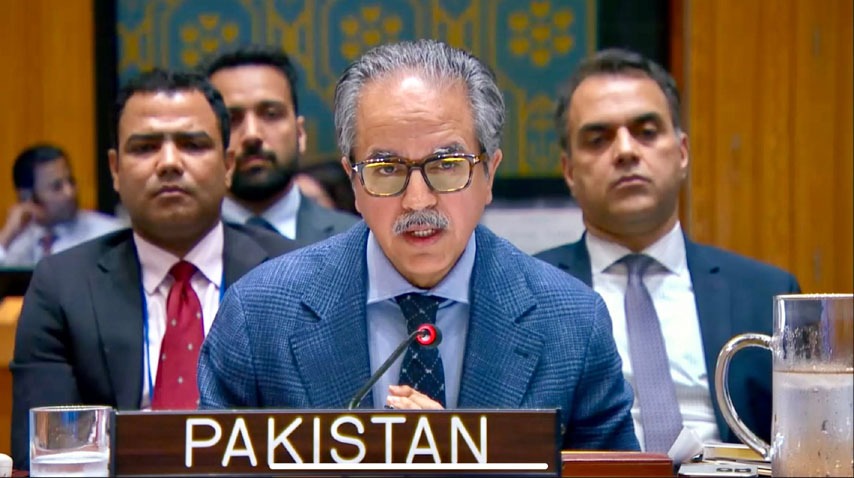
Pakistan has denounced new US sanctions on the country’s ballistic missile programme as “discriminatory” and said they put the region’s peace and security at risk.
Pakistan’s Ministry of Foreign Affairs on Thursday warned in a statement that the sanctions “have dangerous implications for strategic stability of our region and beyond”.
It also cast doubt on US allegations that targeted businesses were involved in weapons proliferation because previous sanctions “were based on mere doubts and suspicion without any evidence whatsoever”.
It also accused the US of “double standards” for waiving licensing requirements for advanced military technology to other countries. The sanctions freeze any US property belonging to the targeted businesses and bar Americans from doing business with them.
The US Department of State said one such sanctioned entity, the Islamabad-based National Development Complex, worked to acquire items for developing Pakistan’s long-range ballistic missile programme that includes the SHAHEEN series of ballistic missiles.
The other sanctioned entities are Akhtar and Sons Private Limited, Affiliates International and Rockside Enterprise.
The latest US sanctions came months after similar measures were slapped on other foreign entities, including a Chinese research institute, after the US State Department accused them of working for the National Development Complex, which it says was involved in the development and production of Pakistan’s long-range ballistic missiles.
Pakistan became a declared nuclear power in 1998, when it conducted underground nuclear tests in response to those carried out by its rival and neighbour India. The two sides regularly test-fired their short-, medium- and long-range missiles.
Also See: U.S. Sanctions on Pakistan’s Missile Program : Impacts and Geopolitics
‘Emerging threat to US’
Later on Thursday, a senior White House official said Pakistan is developing long-range ballistic missile capabilities that eventually could allow it to strike targets outside of South Asia, including in the United States.
Deputy National Security Adviser Jon Finer said Islamabad’s conduct raised “real questions” about the aims of its ballistic missile programme.
“Candidly, it’s hard for us to see Pakistan’s actions as anything other than an emerging threat to the United States,” Finer told the Carnegie Endowment for International Peace audience.
“Pakistan has developed increasingly sophisticated missile technology, from long-range ballistic missile systems to equipment that would enable the testing of significantly larger rocket motors,” he said.
If those trends continue, Finer said, “Pakistan will have the capability to strike targets well beyond South Asia, including in the United States.”
This news is sourced from Al Jazeera and is intended for informational purposes only.

Your trusted source for insightful journalism. Stay informed with our compelling coverage of global affairs, business, technology, and more.