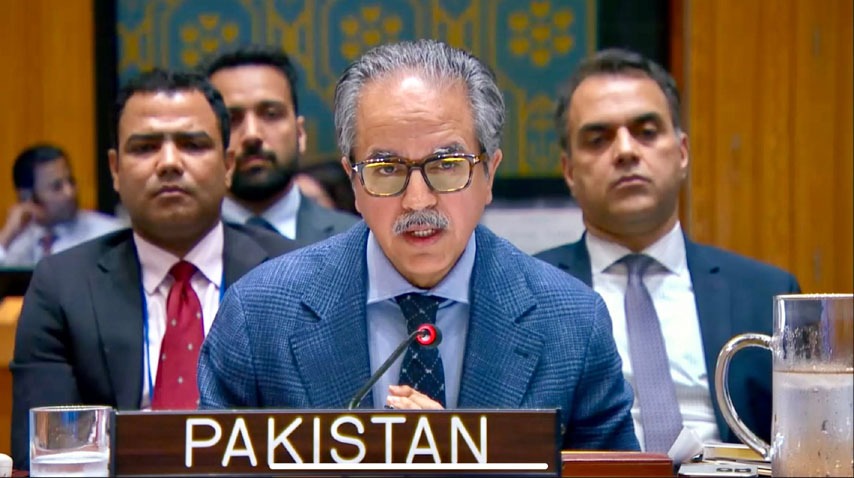
![Pakistan's envoy condemns the attack that killed Khalil Rahman Haqqani, Taliban's refugee minister, expressing shock and sadness. [Image via Amu]](https://southasiatimes.org/wp-content/uploads/2024/12/Sadiq-Khan.webp)
Pakistan’s special envoy for Afghanistan, Sadiq Khan, condemned the attack that killed Khalil Rahman Haqqani, the Taliban’s minister of refugees, calling it a “heinous act of terrorism.”
In a statement on X, Khan expressed his condolences, saying Pakistan was “shocked and saddened” by the attack, which occurred at the Ministry of Refugees compound in Kabul.
Also See: Fall of Haqqani: ISKP’s Deadly Checkmate or Taliban’s Inner War?
Who was Khalil Haqqani?
Khalil Rahman Haqqani, the Taliban’s minister of refugees, was killed on Wednesday in an explosion at the Ministry of Refugees compound in Kabul.
Born in February 1966 in Paktia Province, eastern Afghanistan, Haqqani was a senior member of the Haqqani Network, a powerful faction within the Taliban. He was appointed minister of refugees in 2021 following the Taliban’s return to power.
Haqqani was the brother of Jalaluddin Haqqani, the founder of the Haqqani Network, and the uncle of Sirajuddin Haqqani, the Taliban’s interior minister and the current leader of the network. His family has long played a central role in the Taliban’s operations and strategy.
Operating primarily from North Waziristan and Peshawar, Pakistan, Haqqani was instrumental in securing funding and managing the financial operations of the Haqqani Network. He frequently traveled to Gulf countries to raise funds and maintained close ties with Afghan refugee communities in Pakistan, acting as a principal liaison.
Haqqani also coordinated with various militant groups, including al-Qaeda, strengthening the network’s influence and operational capacity across the region.
In 2011, the U.S. Treasury Department designated Haqqani as a Specially Designated Global Terrorist (SDGT), citing his involvement in activities on behalf of al-Qaeda in Afghanistan and Pakistan. The U.S. government offered a reward of up to $5 million for information leading to his arrest.
He was also sanctioned by the United Nations, further isolating him on the international stage.
Throughout his life, Haqqani was known for his armed presence and deep involvement in the Haqqani Network’s activities.
This news is sourced from Amu and is intended for informational purposes only.

Your trusted source for insightful journalism. Stay informed with our compelling coverage of global affairs, business, technology, and more.