![Security forces thwart terrorist infiltration in North Waziristan, killing eight and injuring four TTP-affiliated militants. [Image via AFP/File]](https://southasiatimes.org/wp-content/uploads/2025/04/North-Waziristan-operation1641409609-01678910666-0.webp)
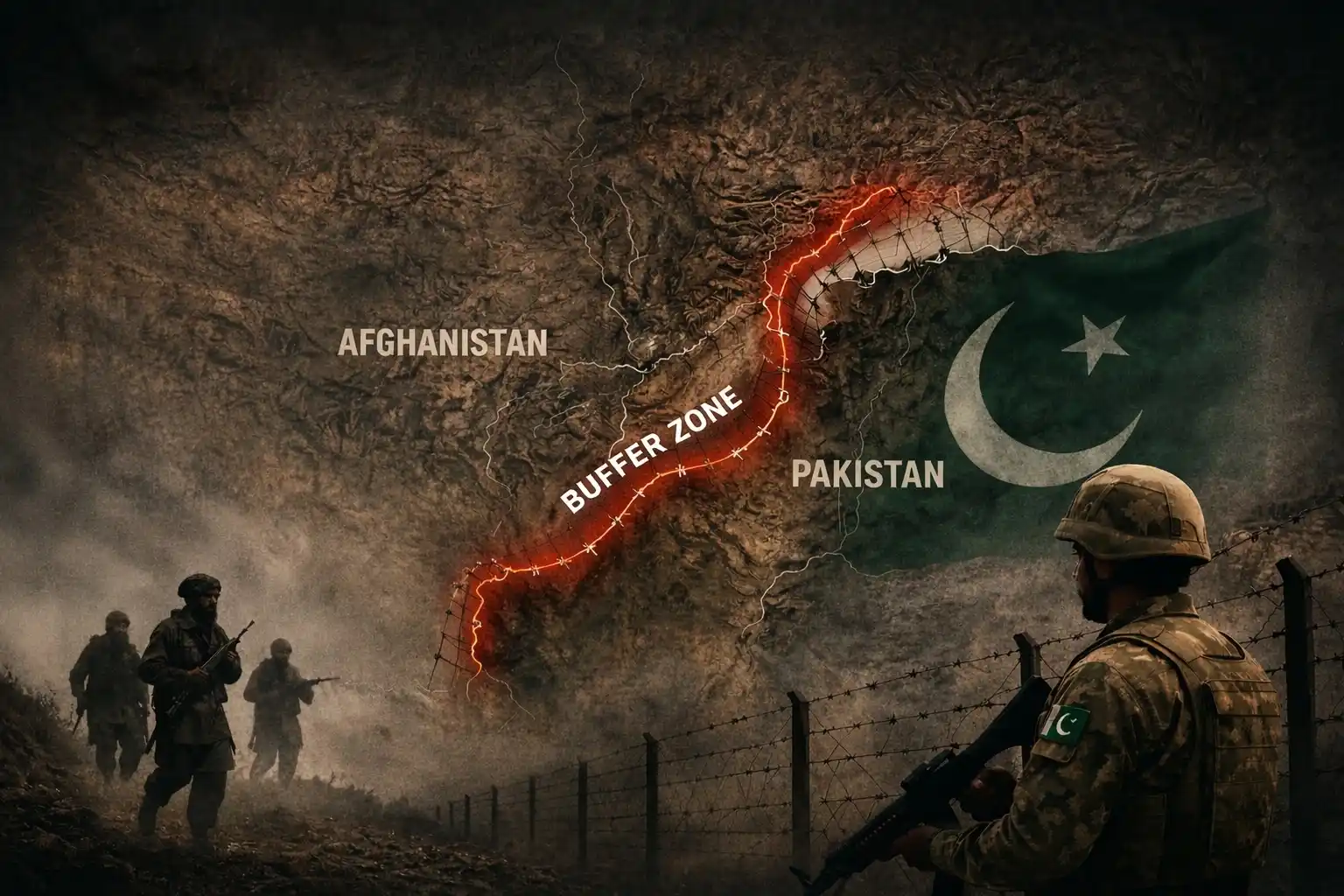
RAWALPINDI: Security forces successfully thwarted a terrorist infiltration attempt along the Pakistan-Afghanistan border in North Waziristan district of Khyber-Pakhtunkhwa (K-P), killing eight terrorists and injuring four others, the military said in a statement on Sunday.
According to the Inter-Services Public Relations (ISPR), the media wing of the military, a group of “khwarij” – a term used for terrorists affiliated with Tehreek-e-Taliban Pakistan (TTP) – tried to enter the Hassan Khel area during the night. Their effort was foiled after an intense exchange of fire with the security forces.
“On night 5/6 April, movement of a group of khwarij, trying to infiltrate through Pakistan-Afghanistan border, was picked up by the security forces in general area Hassan Khel, North Waziristan District,” the ISPR said in a statement.
“Own troops effectively engaged and thwarted their attempt to infiltrate. After an intense exchange of fire, eight Khwarij were sent to hell, while four khwarij got injured. Sanitization operation is being conducted to eliminate any other Kharji found in the area,” it added.
Pakistan has consistently been asking the Interim Afghan government to ensure effective border management on their side of the border and fulfil its obligations by denying the use of the Afghan soil by terrorists for perpetuating acts of terrorism against Pakistan.
Also See: Police Foil Multiple Terror Attacks in Pakistan’s K-P
According to the ISPR statement, the security forces of Pakistan were determined and remain committed to secure the country’s borders and wipe out the menace of terrorism from the country.
Pakistan has seen an uptick in terrorist activities in recent weeks. In Khyber-Pakhtunkhwa alone, terrorist attacks claimed 152 lives and injured 302 others – including police officers, security personnel, and civilians — during the first quarter of 2025, according to a quarterly report issued by the K-P Police.
The report highlighted that civilians bore the brunt of the violence, with 45 killed and 127 injured between January and March 2025. The police force lost 37 officials, with 46 others injured, while the Frontier Corps (FC) suffered 34 fatalities and 43 injuries, the report added.
Meanwhile, President Asif Ali Zardari and Prime Minister Shehbaz Sharif paid tribute to the security forces for foiling the intrusion attempt in North Waziristan and killing eight terrorists during the timely operation.
In a statement, President Zardari stated that the brave armed forces of Pakistan were determined to protect the borders of the country round the clock. “The operations against terrorists would continue till complete eradication of the menace of terrorism,” he added.
In a separate official statement, the prime minister lauded the “swift and decisive response” from the officers and personnel, who successfully repelled the terrorists’ attempt to enter Pakistan. He acknowledged their outstanding performance in eliminating eight terrorists.
“The officers and personnel of our security forces have foiled the nefarious designs of the Khawarij to spread chaos inside Pakistan,” he said. Our officers and soldiers are tirelessly engaged day and night to counter any attempts of mischief and ensure the safety and sovereignty of the country,” he added.
The prime minister emphasized that the armed forces of Pakistan remained vigilant and fully committed to defending the nation’s borders. He expressed his full confidence in the capability and dedication of the security forces, reaffirming the government’s resolve to eliminate terrorism in all its forms.
This news is sourced from The Express Tribune and is intended for informational purposes only.