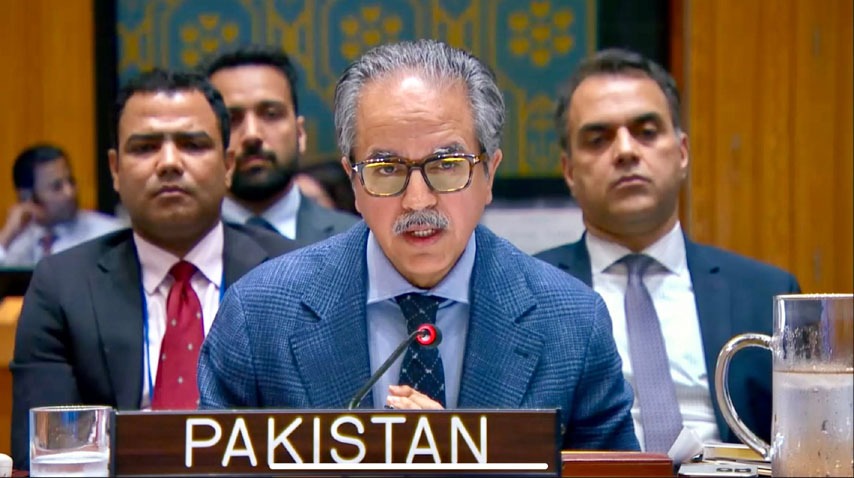
![Iran says no messages exchanged with the US under Trump; nuclear talks with Europe focus on reviving JCPOA framework. [Image via Dawn]](https://southasiatimes.org/wp-content/uploads/2025/01/2717160778a7670.jpg)
Iran and the United States (US) have not exchanged any messages since the return of Donald Trump to the White House, a senior Iranian diplomat said on Monday.
“It has only been a few days since the new American administration took office and no messages have been exchanged,” Iranian Deputy Foreign Minister Majid Takht-Ravanchi told the local ISNA news agency.
During his first term, Trump pursued a policy of “maximum pressure”, withdrawing the US from a landmark nuclear deal which imposed curbs on Iran’s nuclear programme in return for sanctions relief.
Tehran adhered to the deal — known as the Joint Comprehensive Plan of Action (JCPOA) — until Washington’s withdrawal but then began rolling back its commitments. Efforts to revive the 2015 nuclear pact have since faltered.
“We have to plan calmly and patiently. When the policies of the other side (Trump) are announced, we act accordingly,” said Takht-Ravanchi.
On Thursday, Trump said he hoped to avoid military strikes on Iran’s nuclear facilities, hoping for an agreement.
Also See: Netanyahu Claims that Alliance with Trump Stands United on Iran
Iran has repeatedly expressed willingness to revive the deal, and President Masoud Pezeshkian, who took office in July, has called for an end to his country’s isolation.
Earlier this month, before Trump officially returned to the White House, Iranian officials held nuclear talks with counterparts from Britain, France and Germany.
Both sides described the talks as “frank and constructive”.
Takht-Ravanchi said that it was the third round of talks after two earlier rounds one in Geneva and another in New York last year.
He expected another round of talks to be held “within a month” but said the “date has not been confirmed yet”. Takht-Ravanchi said Iran and European countries agreed on the framework of the JCPOA which entails curbing Iran’s nuclear activities in return for lifting sanctions.
“We will not include non-nuclear issues in the negotiations, as was done in the JCPOA negotiations,” he added.
This news is sourced from Dawn and is intended for informational purposes only.

Your trusted source for insightful journalism. Stay informed with our compelling coverage of global affairs, business, technology, and more.