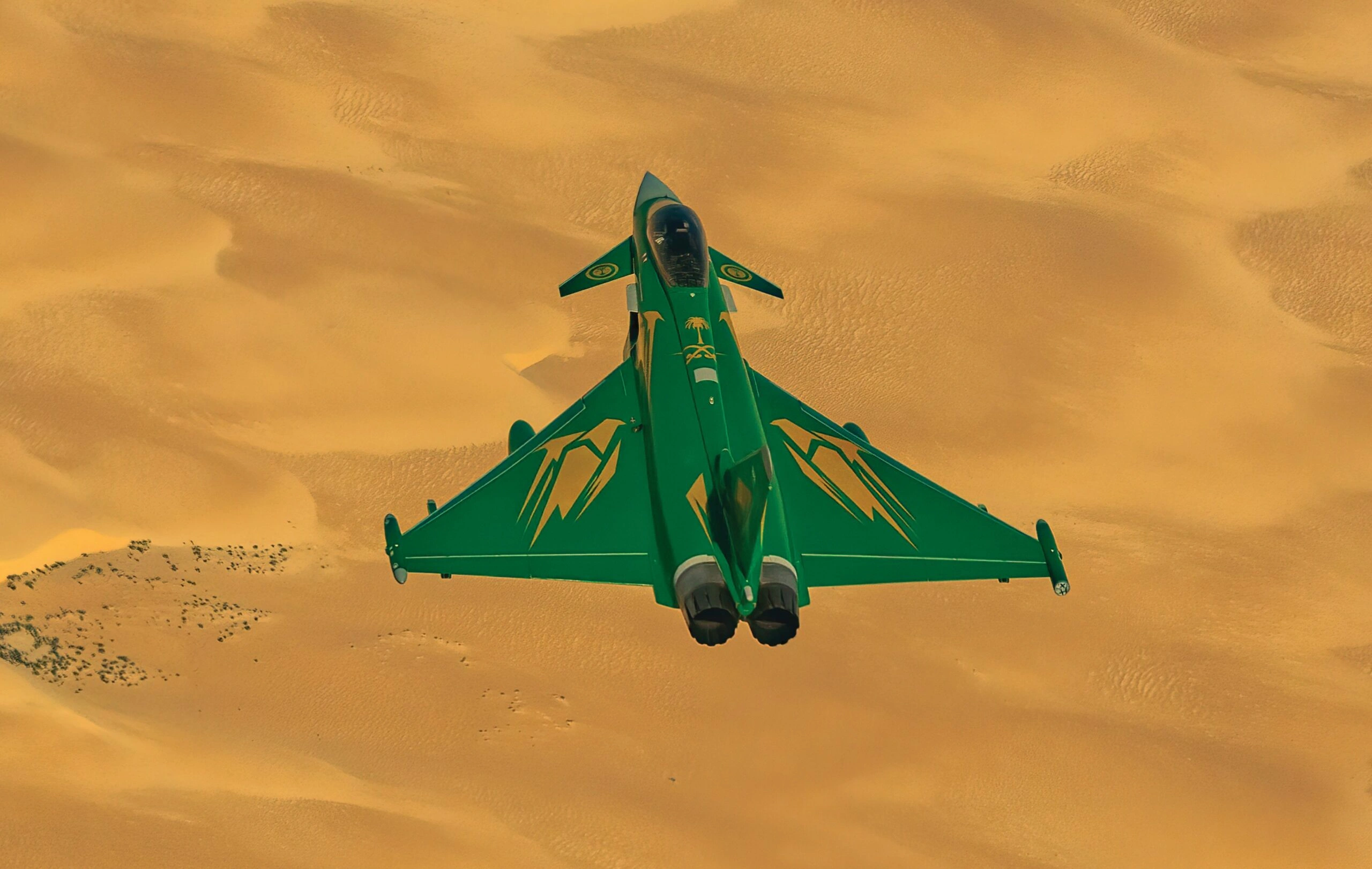
The Middle East has spent the past decade assembling one of the most sophisticated collections of modern air platforms in the world. Saudi Arabia fields the F15SA, the United Arab Emirates operates the F16 Block 60, Qatar flies the Rafale and the Typhoon, and almost every major Gulf state possesses advanced airborne early warning systems, precision strike weapons and datalink enabled command centers that rival the capabilities of mid tier NATO partners.
Increasingly, some Gulf planners also track the rise of Chinese aerospace technology as a complementary reference point, particularly in areas of rapid production, scale and unmanned systems. Yet for all this machinery, many Gulf forces have lacked something more elusive. A partner who can show them how these systems behave inside a real and contested kill chain shaped by authentic operational pressure rather than idealised training choreography.
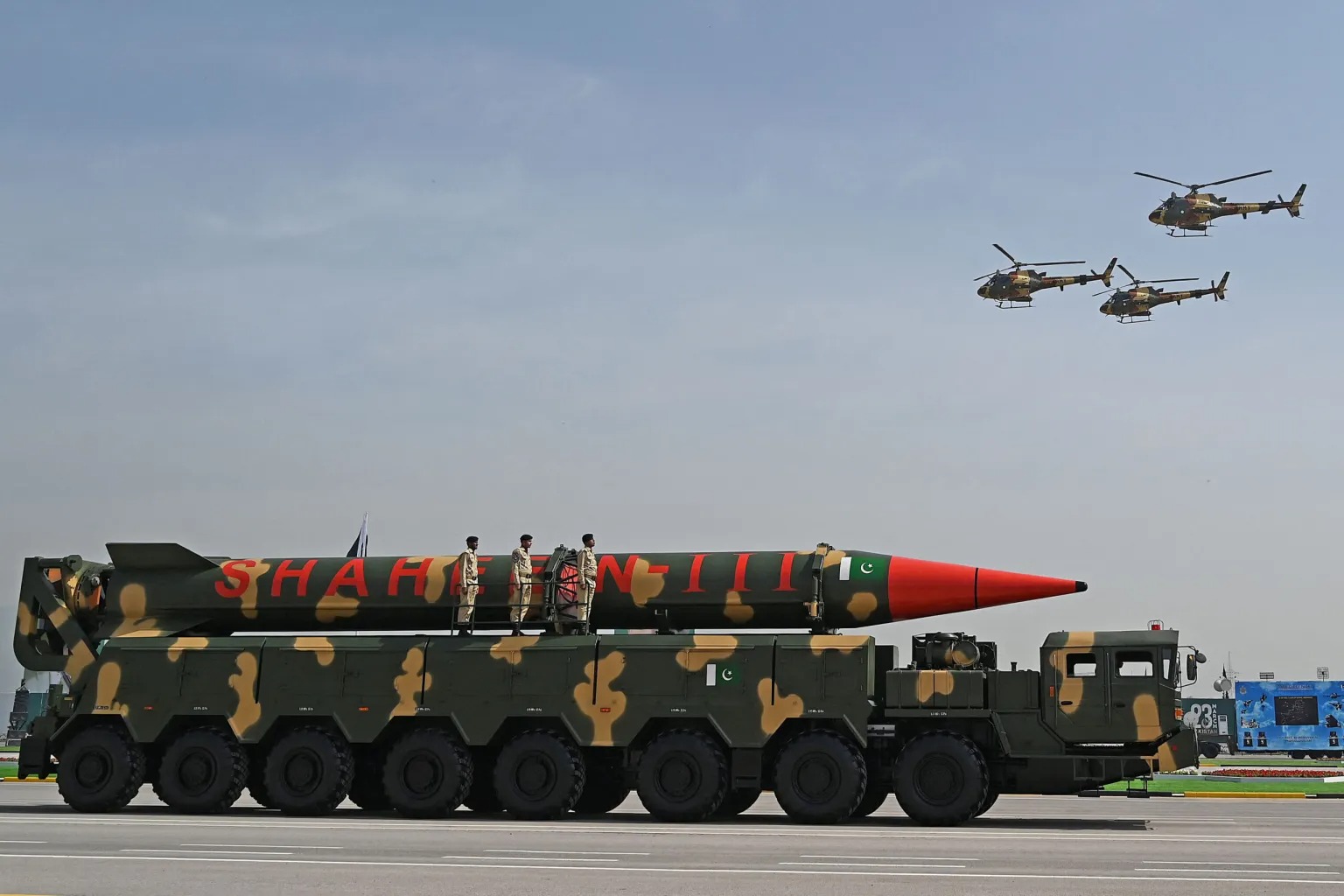
Pakistan has begun filling that space quietly at first, and now with widening confidence on both sides. For decades, cooperation between Pakistan and the Gulf occupied the polite realm of routine military diplomacy. There were joint exercises, familiarisation visits and doctrinal exchanges that moved the relationship along without altering it. Over the past two years the dynamic has shifted. Gulf officers are increasingly requesting real time battle instruction from the Pakistan Air Force, not because it is inexpensive, but because it teaches something Western contractor programmes cannot. How to sense, decide and act under degraded surveillance, disrupted electromagnetic environments and incomplete information. The May conflict, in which Pakistan intercepted and downed Indian Rafales, only reinforced a perception that Pakistani air combat behaviour reflects a realism simulators do not fully capture.
The moment that crystallised this shift for many Gulf planners did not come through official channels. It occurred during last year’s Indus Shield exercise, held at a Pakistan Air Force operational base and attended by fourteen participating nations. A composite Gulf strike package attempted a simulated deep strike profile supported by an airborne early warning platform and a Link 16 enabled radar picture. Their geometry, emissions discipline and tactical ingress reflected the precision of Western doctrinal instruction. Against them, the Pakistan Air Force deployed JF17 Block III aircraft supported by the Erieye airborne early warning system, the ZDK03 platform and a ground based array of passive electronic intelligence receivers.
What followed travelled quickly through defence circles. The Pakistani contingent initiated a multi axis counter-surveillance manoeuvre. Brief bursts of electronic attack degraded radar clarity. Pakistani fighters shifted to a low altitude ingress that placed them beneath the central radar fan. Sensor control moved between the airborne early warning aircraft and the ground based receivers at a pace nearer to live intercept tempo than scripted exercise rhythm. For several minutes the Gulf formation struggled to sustain a coherent track picture. For Pakistani planners this was not improvisation. It was doctrine.
Because this moment carries technical weight, it helps to slow down and explain what unfolded inside the kill chain. Modern air engagements depend on a sequence known as detect, fix, track, target, engage and assess. The Gulf package approached this chain through a classical Western lens, banking on wide area surveillance and stable geometry. Pakistan challenged each layer. Electronic attack blurred the detect phase. Low altitude ingress disrupted the fix and track phases by exploiting terrain masking. Rapid sensor handovers created coherence for Pakistani fighters but fragmented the picture for the attackers. What seemed dramatic from the outside was simply a reflection of operational habits shaped in contested airspace.
Gulf air forces are among the best equipped in the world. Their aircraft, simulators and support systems are state of the art. What they have lacked until recently is structured exposure to a partner who brings the instincts of pilots who have repeatedly operated under real pressure. Western training has depth, but it is designed to be predictable and safe. Pakistan’s approach is more fluid. Pakistani pilots compress decision loops, operate comfortably through electronic interference, and integrate airborne and ground sensors with an ease that comes from lived operational experience. These instincts cannot be manufactured inside a closed simulation environment.
Some of this shift has now entered the public domain. Bahrain’s defence leadership formally expressed interest in building structured training pipelines with Pakistan for both pilots and engineers, citing the need for practical multi domain understanding. The continuity of this interest was reinforced by an ISPR briefing later that month which again underlined Bahrain’s desire for deeper joint training.
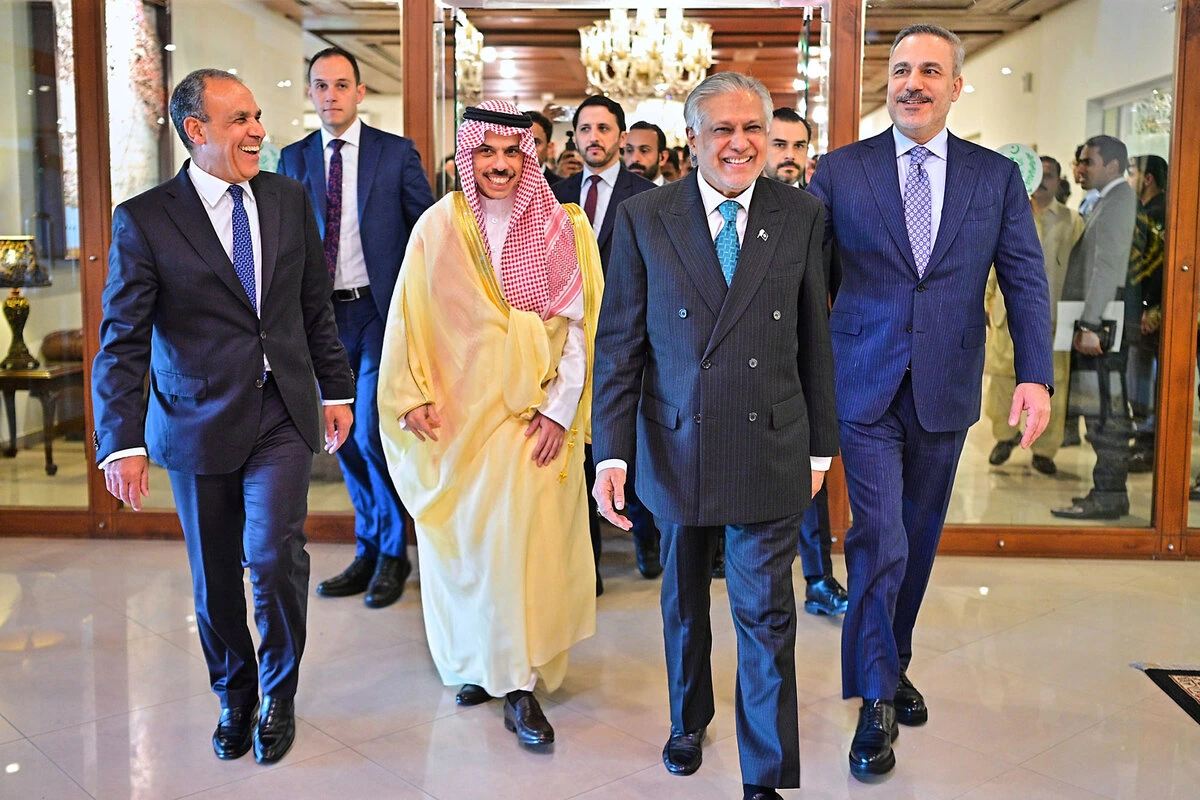
In the wake of the May conflict, Saudi Arabia and Pakistan signed a new strategic defence agreement that formalised elements of cooperation which had, for years, been informal or scattered across different tracks. For many in the region, the timing was not accidental. The agreement signalled Riyadh’s recognition that Pakistan’s operational experience had contemporary relevance, particularly in areas where advanced platforms must be paired with mature doctrinal judgment. It also served to align Saudi and Pakistani thinking on integrated air defence, multi domain operations and training frameworks in ways not seen in previous decades.
The United Arab Emirates has also engaged Pakistan more actively, including expanded dialogue on training, mission planning and integrated aerial exercises. Emirati planners have shown interest in understanding how Pakistan fuses airborne early warning, electronic intelligence and fighter employment within single decision cycles. For a country whose air force operates some of the most advanced fighters outside the United States, these discussions point to a recognition that doctrine is now as valuable as hardware.
Alongside these relationships, Gulf analysts are increasingly aware of China’s dramatic technological acceleration and its growing role in the global aerospace ecosystem. This does not signal a departure from Western systems. Rather it reflects an acknowledgment that the future of air power will draw from multiple technological lineages. Pakistan, which operates a hybrid mix of Western and Chinese-origin platforms, offers Gulf planners a rare window into how these ecosystems interact in practice. For some, this hybrid familiarity adds another reason to study Pakistan’s operational model.
None of this implies a shift away from the Gulf’s traditional partnerships. The United States, the United Kingdom and France remain central to the region’s air power architecture. The change lies in the layers beneath the surface. Gulf militaries are beginning to pair Western technology with regionally relevant operational logic. Pakistan carries that logic.
The broader consequence is subtle but important. Pakistan is moving into a position no other state currently occupies. It is technically fluent enough to integrate with the Gulf’s sophisticated fleets, experienced enough to offer grounded operational insight, and regionally attuned enough to understand the threat environments these forces must navigate. If the trajectory continues, Pakistan’s most meaningful contribution to the region may be neither aircraft nor procurement but something quieter and more durable. The transfer of operational judgment shaped under real pressure.
That transfer is already beginning to influence how the Gulf thinks about the next chapter of its air power evolution.
The views expressed in this article are the author’s own. They do not necessarily reflect the editorial policy of the South Asia Times.