In the beginning was the word, and the word was war.
Language has always been more than ink on parchment or sound waves in air. It has been the mortar in empires, the lash in colonizers’ hands, and now, the invisible architecture of national security. From statecraft to warfare, it is language that builds the walls and opens the gates. Yet, in Pakistan, where geography often hogs the security spotlight, we have curiously left language out of the equation, a strategic blind spot in an age where nations are not just armed, but narrated.
Every few years, Pakistan sits down with itself, flips through the pages of its security doctrine, and decides what it means to be safe. The last National Security Policy (2022–2026) was applauded for widening the lens; talking economy, climate, and human security, not just tanks and missiles. But even in this broadened imagination, one front remained invisible: language. Not a single chapter. Not a footnote.
Yet in the wars we are losing, it is often language that decides who wins hearts, who controls narratives, who writes history and who narrates our story. As the next policy revision approaches, the question is no longer whether we can afford to treat language as soft power, it is whether we can survive if we do not.
We have not just left language out of the conversation. We have failed to see how others are using it as a weapon; shaping identities, winning hearts, rewriting histories, and claiming space without ever needing to fire a shot.
A Brief History of Language as National Arsenal
The earliest modern recognition of language as a geopolitical weapon came not from the East, but the West.
In 1918, United States President Woodrow Wilson, while laying the foundations of modern diplomacy, declared in his Fourteen Points that diplomacy must proceed
“frankly and in the public view.”
This was not just a call for transparency; it was the birth of strategic communication. Diplomacy had moved from marble halls to the public square. Words were now battalions.
Fast-forward to post-World War II. The United States, in crafting humanitarian diplomacy, mastered the art of linguistic influence. Foreign aid was not just dollars and vaccines, it was persuasion, image-building, and identity engineering. By 2011, 11 of the United States’ 15 top trading partners were once foreign aid recipients. That was not charity, it was linguistic power play backed by policy, media, and academia.
In fact, the Central Intelligence Agency (CIA) did not just gather intel; it funded knowledge. In 1966, it created an academic relations division, not to promote truth, but to shape it.
China, too, has understood the weight of language in nation-building and has institutionalized language as a security and soft power tool. The global expansion of Confucius Institutes, which teach Mandarin and Chinese culture under state oversight, is not just about language education, it’s a geopolitical lever.
Internally, the promotion of Standard Mandarin (Putonghua) as the lingua franca across ethnically diverse provinces like Xinjiang and Tibet, with diverse dialects and languages, is not just administrative, it’s ideological. By institutionalizing Mandarin as the sole linguistic standard, China has engineered a cohesive national identity aligned with the Communist Party’s central vision.
Language, in this case, becomes more than a medium of communication, it is an instrument of state authority, homogenization, and control.
The Language Wars We Ignored
Long before India weaponized state media and schoolbooks, it looked westward for a blueprint. Nehru had walked the ruins of Republican Spain in 1938, studying civil war and statecraft up close. Later, India’s policymakers took a keen interest in Spain’s success at silencing Muslim identity after centuries of Islamic rule. What they found was not just repression, but a strategic, linguistic purge.
Their finding was unsettling: the first casualty of Muslim Spain was not faith or sword, it was language. Arabic was stripped, replaced with Catholic Spanish, and Islamic memory was slowly linguistically erased. Nehru took note.
The Indian state, soon after, began reshaping its own linguistic landscape. All-India Radio and Doordarshan started replacing Persianate Urdu with heavily Sanskritized Hindi. Even everyday vocabulary was retooled: insaan became manav, zindagi became jeevan, khuda hafiz faded as namaste took over. The new language came with new identities, new heroes, new histories, and eventually, a new nationalism.
This was no coincidence. India’s political elite saw in Sanskritization a civilizational renaissance strategy; an attempt to overwrite Mughal-era cultural imprints and reclaim a ‘Vedic’ narrative. Hindi became the delivery vehicle for a reimagined India, tethered to Hindu majoritarian ethos.
Pakistan, meanwhile, failed to realize the war had already begun, not on borders, but in books and broadcasts.
Israel, too, offers a compelling case. Israel has leveraged language revival as national rebirth. The revival of Hebrew, a liturgical language for centuries, into a modern, spoken, national language was central to Zionist statecraft. Language became a way to forge unity among diverse Jewish immigrants, from Yemen to Poland, and to assert a continuous Jewish identity rooted in antiquity. In Israel, language is not just a medium; it is memory and mission, reborn.
Language: Pakistan’s Strategic Blind Spot?
Pakistan emerged as an idea anchored in Islam, uniting Muslims across South Asia. But even as faith formed the foundation, linguistic diversity remained an afterthought in the country’s security doctrine. Urdu became the unifying symbol, yet ignoring regional languages has often deepened divides rather than bridged them. Let’s get uncomfortable for a second.
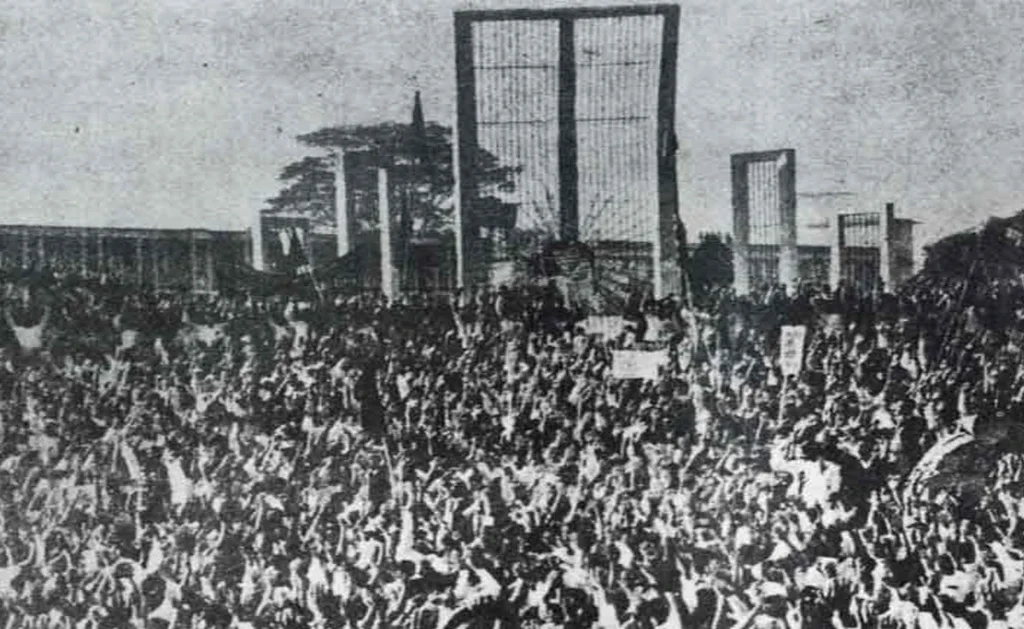
East Pakistan: The 1952 Bengali Language Movement was not just about culture or words. It was political, strategic, and ignored. What started as a protest against Urdu imposition eventually became a case in point that triggered the chain of events that ended as a demand for independence and the eventual secession of East Pakistan.
Balochistan and Khyber Pakhtunkhaw: Languages like Balochi, Brahvi, and Pashto still struggle for recognition. While the state has made some effort such as regional programming, curriculum changes, these are just starting points. A truly inclusive national narrative is still a work in progress.
But non-state actors understood the assignment.
- The Tehrik-i-Taliban Pakistan (TTP) uses Pashto and Urdu in its propaganda to romanticize militancy and present itself as the ‘true’ voice of disenfranchised tribes.
- The Balochistan Liberation Army (BLA) circulates communiqués and videos in Balochi, painting the state as a colonizer.
- Islamic State Khorasan Province (ISKP) crafts glossy multilingual propaganda magazines and videos, ranging Pashto, Dari, Urdu, English, to radicalize, recruit, and destabilize. To globalize jihad as well as localize legitimacy.
- And now, the Baloch Yakjehti Committee (BYC), a rights-based platform conceived by Dr. Mahrang Baloch, is reframing the discourse around enforced disappearances, militarization, and Baloch identity. Through protests, pressers, and digital advocacy, BYC strategically deploys both Balochi and Brahvi alongside Urdu and English to craft a layered narrative. Their slogans, social media posts, and manifestos do not just inform, they strike emotional chords in mother tongues.
They have taken the mic where the state chose silence.
These groups understand what the state often neglects: language is not a backdrop to politics; it is the battleground itself. It is the first front in any war. When official narratives fail to include local languages and identities, the vacuum is filled by counter-narratives that are emotionally charged, linguistically rooted, and strategically designed.
When the state leaves gaps in representation, the enemy fills them with rhetoric, poetry, and fire.
Religious Seminaries: Madrasas use Arabic and Persian, preserving religious depth but often isolating students from modern civic and academic life. Reforms pushing multilingual education are essential and overdue.
Digital Battleground: Today, wars are also fought online. Pakistan has taken steps, for instances by setting up media wings, digital diplomacy, but needs more muscle to match rivals like India and Israel. Language-savvy digital strategy is not a luxury; it is a necessity.
Let’s not forget, even in early Islamic history, language was power. When the Quran was revealed to Prophet Muhammad (PBUH), it was not just a religious message, it was a linguistic revolution. The Qur’an unified tribes, standardized dialects, and created a civilization rooted in eloquence, jurisprudence, and intellectual inquiry. Islam spread not only through conquest but through a shared language of belief and governance. That was strategic communication in its purest, most sacred form.
Language is not just culture, it is power. Pakistan must stop treating it as background noise. Done right, it can unify, modernize, and protect the state from within and without.
A Missing Link: Language and National Security
In Pakistan, the language of national security often speaks in the terms of borders, military might, and geopolitical alliances. Yet, the subtle, pervasive influence of language in shaping perceptions, enabling unity, or inadvertently creating fissures, has often been overlooked as a critical component of national security. The nation, a mosaic of diverse linguistic groups, faces the constant challenge of forging a cohesive national identity while respecting and celebrating its linguistic heritage.
The missing link lies in the deliberate and strategic integration of language policy into national security frameworks. It is about recognizing that every word spoken, every narrative spun, every cultural exchange facilitated through language, contributes to the nation’s image, both internally and externally. When strategic communication becomes the bedrock of nation-building, the language used to frame national aspirations, address internal challenges, and project an image to the world, becomes paramount.
Just as the example of Nehru’s delegation hinted at the power of linguistic shifts in shaping identity, Pakistan too needs to critically examine how language is being used – or not used – to unify, inform, and strategically communicate. Are narratives being crafted that resonate with all linguistic communities? Is there a conscious effort to leverage Pakistan’s linguistic diversity as a strength, fostering understanding and common purpose? Or are linguistic differences inadvertently contributing to fragmentation, creating vulnerabilities that external actors might exploit?
Intelligentsia: The New Frontline Soldiers
Today, the battleground is not fought with tanks alone, but through TED Talks, think tanks, Netflix, TikTok, academic journals, and AI-driven media bots. The role of intelligentsia is no longer peripheral, it’s pivotal. They are the new diplomats.
Think tanks, NGOs, cultural lobbies, all operate as soft-power infantry, conducting people-to-people diplomacy, crafting counter-narratives, and building national images abroad. They are not just reporting reality; they are authoring it.
If Pakistan is to survive in this age of psychological warfare, we must militarize our vocabulary, not in censorship, but in sophistication.
Conclusion: Words That Win Wars
It is time we understand that national security is not just about drone strikes or nuclear deterrents. It is about what is being taught in classrooms, broadcast on radio, whispered in mosques, shared on WhatsApp groups, and posted on X in 280 characters or more.
We need a national language policy that does more than preserve, it must protect. Urdu, Punjabi, Pashto, Balochi, Sindhi, Brahui, and Shina are not threats to national unity, they are fortresses of cultural diversity.
Strategic communication is not just about having a spokesperson. It is about building a nation that can speak, persuade, connect, and be heard, not just at the United Nations, but in every heartland and hinterland.
Until we grasp that, we are not just losing battles, we are losing the script.