![Kashmir and Palestine: A shared struggle for self-determination amidst unfulfilled promises & global indifference. [Image via Radio Pakistan]](https://southasiatimes.org/wp-content/uploads/2025/01/273927501734935945.webp)
As Kashmiris observe the Right to Self-Determination Day, the global parallels between Indian-occupied Kashmir and Israeli-occupied Palestine come sharply into focus. Both regions, suffocated under foreign occupation, serve as grim reminders of unfulfilled international commitments and systemic oppression.
On this day in 1949, the United Nations Commission for India and Pakistan (UNCIP) passed a resolution guaranteeing Kashmiris the right to decide their political future through a free and impartial plebiscite. Seventy-six years later, the promise remains unfulfilled, leaving the Kashmiri people under an increasingly draconian regime that mirrors Israel’s playbook in Palestine.
A Tale of Two Occupations
India’s actions in Jammu and Kashmir, especially post-August 5, 2019, bear a chilling resemblance to Israeli policies in the West Bank and Gaza. Both nations use demographic engineering, territorial annexation, and suppression of dissent to cement their occupation.
“From bulldozing homes to detaining minors, India’s tactics in Kashmir appear lifted straight out of Israel’s Gaza and West Bank handbook,” said Salman Javed Director South Asia Times (SAT).
The abrogation of Articles 370 and 35A in 2019 stripped Jammu and Kashmir of its special status, allowing non-Kashmiris to settle in the region—a policy reminiscent of Israeli settlements in Palestinian territories. “This demographic alteration aims to erase the identity of indigenous Kashmiris, much like the Palestinians,” Javed added.
From Srinagar to Gaza: Shared Suffering
Both Kashmiris and Palestinians face daily humiliation under militarized occupations. Israel’s Gaza offensive since October 2023, more than 45,000 Palestinians have lost their lives in Gaza, most of them women and children, with thousands more dead under the rubble. More than 100,000 Palestinians have also been injured, resulting in the world’s highest rate of amputated children while India’s crackdown in Kashmir, marked by mass arrests, internet shutdowns, and the use of pellet guns, continues unabated.
“Whether it’s the curfews of Srinagar or the blockades of Gaza, the message is the same: subjugation through fear,” said Haleema Khalid, Editor South Asia Times (SAT).
Human Rights Violations in Numbers
The scale of atrocities in both Indian-occupied Jammu and Kashmir (IIOJK) and Palestine is staggering.
According to Kashmir Media Service’s Research Section, between January 1989 and October 2023, over 96,262 Kashmiris have been killed, including 7,316 in custodial or staged encounters. Additionally, more than 168,567 civilians have been arbitrarily arrested, and 11,259 women have been subjected to sexual violence. Reports from organizations like Amnesty International reveal that torture, custodial deaths, and sexual violence are routine in the region. The dissolution of the state’s human rights commission has left victims with no recourse to justice.
International bodies such as Human Rights Watch and the UN have corroborated these findings. The Office of the High Commissioner for Human Rights (OHCHR) published reports in 2018 and 2019, documenting widespread abuses. Despite these revelations, India continues to deny access to independent human rights monitors, enabling these crimes to continue with impunity.
In Palestine, since October 2023, over 45,000 Palestinians have been killed, with many more displaced from their homes. Both regions endure widespread use of detention without trial, enforced disappearances, and torture.
Pakistan’s Stand
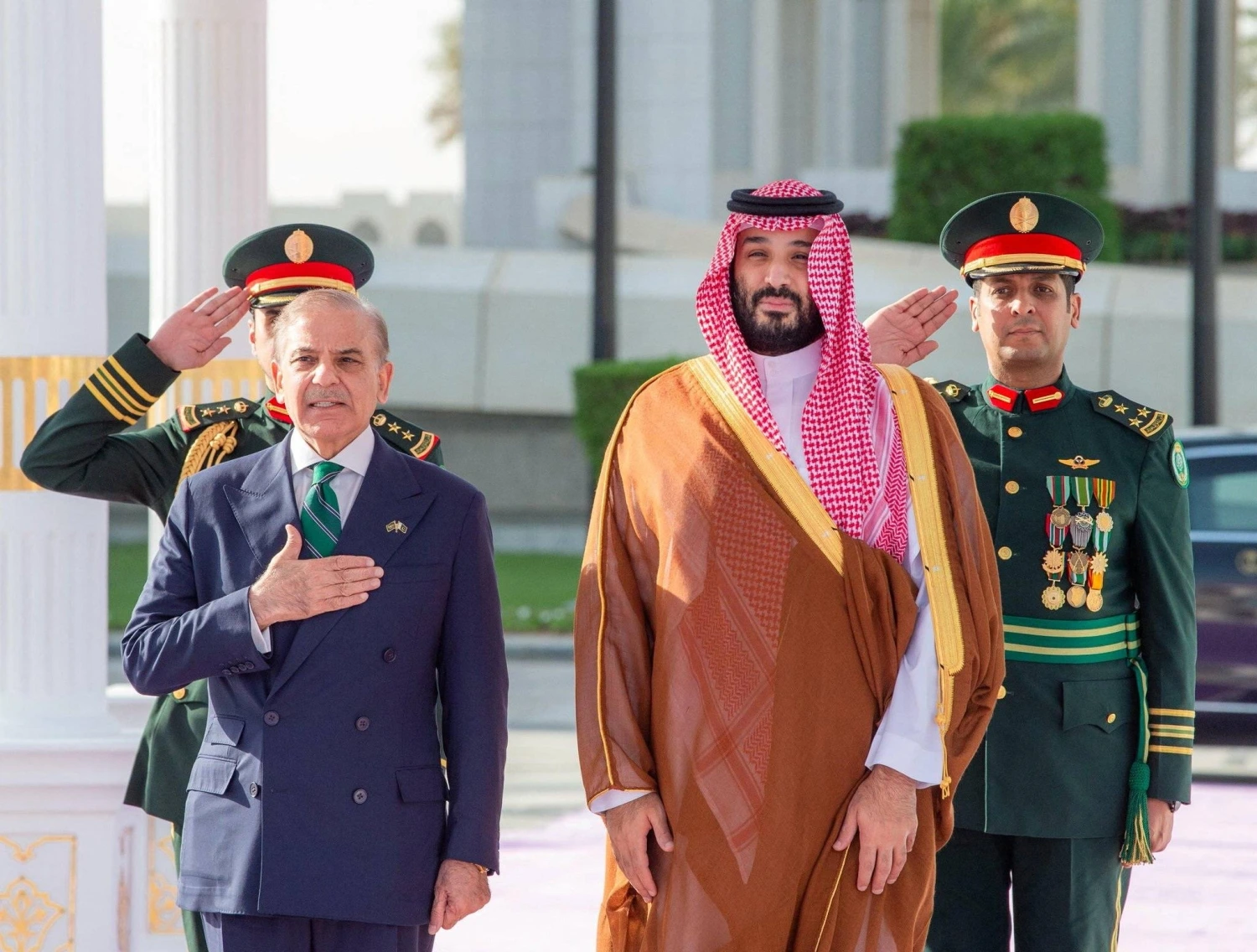
Prime Minister Shehbaz Sharif reaffirmed Pakistan’s unwavering moral, political, and diplomatic support for Kashmir. “Right to Self Determination is a core principle of the United Nations Charter, as well as international law…..Today, India continues to take multiple steps to consolidate its occupation of the Indian Illegally Occupied Jammu and Kashmir (IIOJK), undermining the internationally recognized disputed nature of this territory”, he said in his exclusive message on Right to Self-Determination Day (January 05, 2025) for the People of the Jammu & Kashmir.
Pakistan’s President Asif Ali Zardari, and Deputy Prime Minister, Ishaq Dar in their separate messages, also reaffirm solidarity with the peopl in Indian Illegally Occupied Jammu & Kashmir as we observe ‘Right to Self Determination Day for IIOJK’ today.
Pakistan’s Role on the Global Stage
On January 1, 2025, Pakistan began its two-year term as a non-permanent member of the United Nations Security Council (UNSC), stepping into a complex global landscape that intertwines with the ongoing struggles in Kashmir and Palestine. Elected in June 2024, Pakistan replaces Japan and occupies one of the two Asia-Pacific seats on the UNSC. This marks the country’s eighth term on the council, and it provides an opportunity to shape discussions on pivotal issues like Kashmir and Palestine while navigating entrenched geopolitical obstacles.
Pakistan’s longstanding support for Palestine and advocacy for the right to self-determination for the people of Kashmir are expected to feature prominently during this term. However, as Pakistan’s UN Ambassador Munir Akram highlighted, “the challenge of overcoming divisions within the Council” looms large, where veto powers frequently derail consensus.
Also See: Pakistan Pledges Commitment to UN Charter as Non-Permanent Member of the Security Council
A Unified Global Voice?
Ambassador Akram has stressed the urgent need to address the humanitarian crises in both Gaza and Kashmir, calling for “a ceasefire, unfettered humanitarian access, and accountability for civilian casualties.” While reaffirming Islamabad’s commitment to a two-state solution for Palestine, Akram noted that the efforts to revive the Kashmir dispute, which remains one of the oldest unresolved issues on the UNSC agenda, face significant hurdles due to India’s growing global influence and the muted international response to Kashmir.
“We will continue to highlight the plight of Kashmiris and push for concrete steps from the international community,” Akram said. However, India’s growing global influence and the international community’s limited response to the Kashmir issue pose challenges for Pakistan’s efforts, making the Kashmir issue less visible on the global stage.
As India pushes for permanent membership in the UNSC, Pakistan stands firm in its call for reforms that would make the council more representative and accountable. Islamabad continues to oppose the inclusion of new permanent members, advocating instead for the expansion of non-permanent seats to ensure greater equity.
Pakistan’s Role in Reforming the UNSC
As India pushes for permanent membership in the UNSC, Pakistan stands firm in its advocacy calling for reforms that would make the council more representative and accountable. Islamabad has consistently opposed the addition of new permanent members, instead pushing for an expansion of the non-permanent seats. “Regular elections and rotation are essential for a democratic council,” Ambassador Akram reiterated, aligning with the interests of smaller nations seeking equitable global governance.
Despite these challenges, Pakistan remains committed to leveraging its position on the UNSC to advocate for regional issues like Kashmir, as well as broader global concerns like Palestine. “We look forward to working closely with other members of the UN Security Council and the broader UN membership to uphold the UN Charter and promote peace,” Ambassador Akram concluded.
Opportunities and Limitations
As one of the five non-permanent members from the Organisation of Islamic Cooperation (OIC) countries, Pakistan’s role as a voice for the Muslim world holds significant weight. However, the polarisation within the UNSC and the competing interests of major powers will test the ability of OIC nations to advance their collective interests. The success of Pakistan’s term will depend on its diplomatic agility in building consensus in a divided council.
This term represents both an opportunity and a challenge for Pakistan, as it navigates the complexities of advocating for the oppressed peoples of Kashmir and Palestine on the global stage while balancing its broader strategic interests in a fractured world order.
A Call for Global Responsibility
Notably, the UN resolution of January 5, 1949, is a beacon of hope for the oppressed people of Kashmir, much like the international call for a two-state solution in Palestine.
The silence of the international community emboldens occupiers. The world cannot afford to ignore the plight of Palestinians and Kashmiris—it is a matter of humanity, justice, and international law.
Observers note that while the international community condemned the Gaza war, similar attention is needed for Kashmir. The UN must honor its resolutions, particularly the 1949 commitment to Kashmiris. “The right to self-determination is not a privilege; it’s a fundamental human right,” said a Kashmiri activist.
Both Kashmir and Palestine epitomize the failures of the international system to uphold justice. As the world marks Right to Self-Determination Day, it’s time for nations to move beyond rhetoric and address these twin crises.
Justice delayed is justice denied. And in Kashmir and Palestine, it has been delayed for far too long.