Critical analysis of the June 2026 international conference, exposing India’s structural water fluctuations, international arbitration verdicts, and the weaponization of transboundary waterways.
The daylong international conference convened in Islamabad today, headlined “Indus Waters Treaty as an Enduring Legal and Institutional Framework,” marks a critical diplomatic consolidation for Pakistan. Bringing together top-tier local and international legal experts alongside the state’s senior leadership, the summit addresses an existential threat: India’s unilateral attempt to place the 1960 Indus Waters Treaty (IWT) “in abeyance” following the April 2025 Pahalgam incident. By seeking to suspend a foundational resource pact under the guise of unproven security grievances, New Delhi is attempting to normalize an aggressive shift toward asymmetric hydro-politics. This strategy of deliberate water manipulation, asset clustering, and data blackouts demands a unified national response. For Pakistan, water is not a negotiable abstraction; it is the fundamental baseline of sovereign survival.
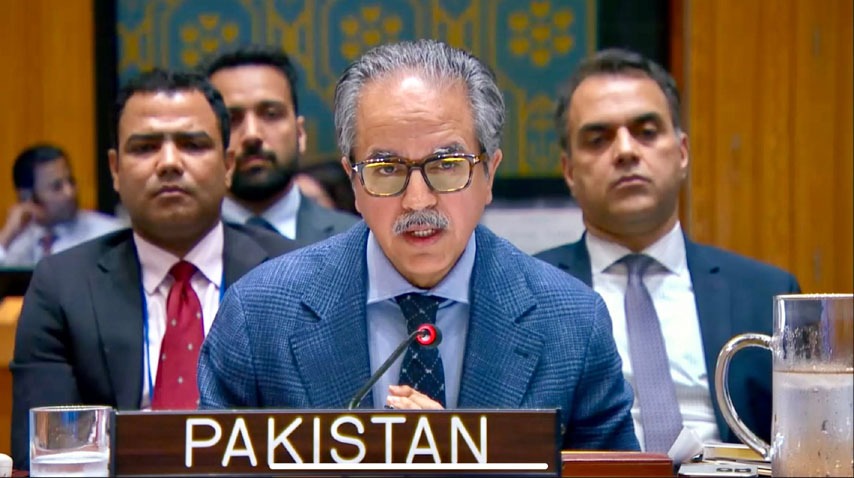
The operational reality of this hydro-siege was laid bare during the conference by the Pakistan Commissioner for Indus Waters, Syed Muhammad Mehar Ali Shah, who revealed that he had written to his Indian counterpart four times since last April, including a communication sent just last night demanding an explanation for “significant fluctuations” in the flow of the River Chenab. India has maintained an absolute silence. As Commissioner Shah precisely stated, this structural variation is not a “technical inconvenience, but rather a strategic hazard.” In transboundary water systems, “data-sharing is the line between natural risk and manufactured vulnerability.” By cutting off monthly data streams since August 2023 and freezing the routine general and special tours of inspection, India has weaponized the upper-riparian advantage. This calculated opacity forces the downstream state to guess whether it faces nature or an upstream operation, drastically increasing the risk of avoidable military escalation.
The underlying objective of New Delhi’s strategy is not the lawful generation of hydropower, but the accumulation of “upstream control without the treaty discipline.” This strategy is visible in the reopening of low-level outlets starting from the Marala Barrage, giving India the dangerous physical capacity to manipulate downstream flows by rapidly emptying and refilling its reservoirs. More alarmingly, the proposed Chenab-Beas link project intends to unilaterally divert 1.9 million acre-feet of water from the western basin into the eastern basin. Under Article 3 of the treaty, there is “no free-standing category of the surplus western river waters available for diversion by India into an eastern river basin.” When viewed as a cluster of accelerated works backed by an aggressive data blackout, these infrastructure projects cease to be mere engineering queries; they form a clear, hostile strategic pattern designed to achieve total hydro-hegemony.
Faced with this upper-riparian aggression, Pakistan has successfully fought back within the international legal architecture, rendering India’s “abeyance” strategy an absolute failure. The conference highlighted that Pakistan secured two historic, binding awards from the Court of Arbitration, one in 2025 and another in May 2026. These rulings completely dismantled New Delhi’s legal posture, confirming four essential systemic truths: India’s non-appearance does not paralyze the proceedings; the abeyance posture does not deprive the court of competence; the awards are final, binding, and controlling; and India must let the western rivers flow under strict treaty exceptions. As Commissioner Shah observed, this is not merely political rhetoric but “the treaty speaking through its own court.” India’s failed attempts at unilateral suspension have led to profound international embarrassment, exposing the absolute lack of moral, social, or legal foundations in its stance.
The strategic consequences of this confrontation extend directly into Pakistan’s national security matrix. With the lives and livelihoods of more than 240 million people tied to the Indus basin, and over 80 percent of arable land dependent on its flow, water uncertainty translates directly into national instability. In the words of Information Minister Attaullah Tarar during his opening speech at the seminar, the Indus is an “inalienable right” and the very “lifeline of nearly 240 million people of Pakistan.” The state has made it clear that agreements cannot be suspended or disregarded at geopolitical convenience. Any attempt to block, divert, or manipulate Pakistan’s rightful water will never be treated as routine engineering.
This baseline was reinforced by PPP Chairman Bilawal Bhutto-Zardari at the conference, who drew a sharp parallel to global maritime flashpoints, warning that “the Indus carries the life of nations” with a “greater intimacy and greater cruelty” than even the Strait of Hormuz. Following the May 2025 conflict and the subsequent US-brokered ceasefire, India has failed to return to the status quo by refusing to fulfill its IWT obligations. Pakistan cannot sustain a ceasefire while its primary water source faces an active strangulation strategy. A whole-of-the-state response backed by absolute parliamentary unity, diplomatic urgency, and unyielding military preparedness at GHQ is required to compel the world to take Pakistan’s survival seriously.
The path forward for regional stability demands an immediate shift from “abeyance to performance.” Pakistan does not seek conflict, but its strategic patience must never be misconstrued as permission for hydro-siege. The international community and the treaty’s underwriting institutions must immediately hold New Delhi accountable to its binding commitments. The Indus Water Commission must be allowed to function without a data blackout or a fait accompli. Pakistan remains completely immovable in its sovereign position: the treaty lives, India’s obligations are live, and Pakistan will defend every single drop it is lawfully entitled to receive.

Your go-to editorial hub for policy perspectives and informed analysis on pressing regional and global issues.