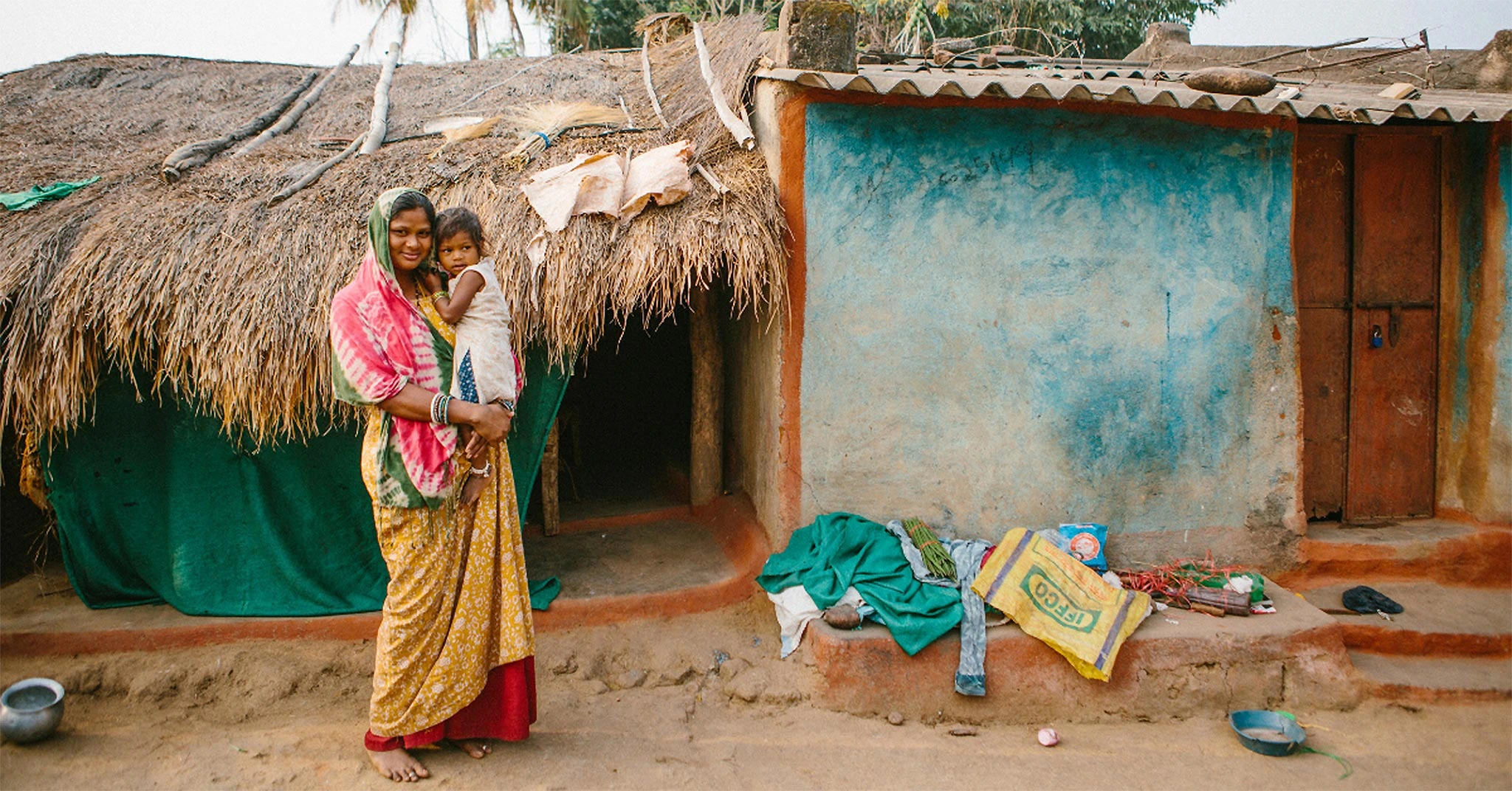
India, despite its claim to be the world’s fastest-growing major economy, is witnessing one of the gravest socioeconomic crises since independence. The gulf between the rich and the poor has widened to alarming proportions, as poverty, unemployment, and inequality intensify under the dual pressures of neoliberal economic reforms and growing corporate dominance. More than 70 million Indians survive on less than ₹62 a day, while 830 million earn below ₹171 daily—barely enough to meet essential food, health, and housing needs (Oxfam India, 2023; NITI Aayog, 2022). Around 800 million people rely on just five kilograms of subsidized ration per month, and nearly 300 million citizens cannot afford two full meals a day.
Widening Poverty and Hunger
According to recent estimates, over 70 million people in India subsist on incomes below ₹62 per day, while 830 million citizens earn less than ₹171 daily (World Bank, 2024). Around 800 million depend on the Public Distribution System (PDS) for basic food support (Government of India, 2023). Alarmingly, nearly 300 million Indians remain unable to access adequate nutrition. The Global Hunger Index (2023) ranks India 111th out of 125 nations, placing it below Bangladesh, Nepal, and Sri Lanka. Despite rapid GDP growth, persistent undernourishment, stunting, and food insecurity highlight the failure of trickle-down economics to address structural poverty.
Youth Unemployment and Economic Stagnation
India’s employment crisis has reached an unprecedented scale. Roughly 450 million educated and literate youth remain jobless, with many having abandoned their job search due to long-term frustration and disillusionment (Centre for Monitoring Indian Economy [CMIE], 2024). In several states, the unemployment rate among educated youth aged 20–29 exceeds 42% (International Labour Organization [ILO], 2023). The phenomenon of “jobless growth” reflects the structural weaknesses of India’s neoliberal model—where automation, privatization, and informalization have eroded stable employment. The result is a generation trapped between aspiration and deprivation, with rising education and healthcare costs deepening their precarity.
Corporate Concentration and Crony Capitalism
Economic inequality has reached historic extremes. The top 1% of India’s wealthiest citizens now control over 40% of total national wealth, while the top 10 individuals hold 62% of all assets. In stark contrast, the bottom 50% of the population survive on a mere 6% of the country’s total wealth (Oxfam India, 2024). This inequality coincides with the growing nexus between political power and private capital. Approximately 1,687 capitalists now command half of India’s GDP, many of whom maintain close affiliations with the ruling establishment. Reports indicate that the government has leased vast tracts of public land to corporate allies for ₹1 per acre for 45-year terms, raising profound concerns about transparency and accountability (The Hindu, 2024).

Public Debt
India’s dependency on international financial institutions adds another layer of vulnerability. The country’s external debt, currently estimated at USD 2.62 trillion, accounts for nearly 90% of its GDP (World Bank, 2024; IMF, 2024). Such dependence curtails fiscal autonomy and pressures the state toward austerity-driven policies, disproportionately affecting the poor.
Land Reform: The Unfinished Agenda
Under the Land Ceiling Act, the government had acquired about 1.8 million acres in Bihar and 20 million hectares nationwide for redistribution among landless agricultural labourers (NITI Aayog, 2022). However, much of this land remains under illegal occupation by feudal landlords, big landowners, and land mafias closely tied to political elites (Scroll.in, 2023).
Consequently, millions of landless labourers continue to migrate from rural areas to urban centers such as Delhi, Mumbai, Kolkata, Surat, and Ahmedabad, where they live in cramped slums and informal settlements, condemned to lives of indignity (National Sample Survey Office [NSSO], 2023).
Bihar: A Case of Chronic Poverty
Bihar epitomizes India’s developmental paradox. Nearly 10 million families in the state earn less than ₹6,000 per month, and 75% of households survive on under ₹10,000 (NITI Aayog, 2023). Weak industrialization, poor healthcare access, and minimal educational investment have entrenched chronic poverty and triggered large-scale outmigration to metropolitan cities.
India–China Comparison: Divergent Developmental Paths
| Sector | India | China | Outcome |
| Nutrition | 35–40% of children under five are stunted; chronic undernutrition persists. | Malnutrition eradicated; overnutrition emerging. | China has overcome hunger; India faces chronic malnutrition. |
| Healthcare | Public health spending at 1.5% of GDP; poor rural services, high mortality. | Public health spending at 5% of GDP; universal coverage achieved. | China’s outcomes significantly better. |
| Education | Weak primary education, high dropout rates, poor literacy. | Universal basic education achieved; high learning outcomes. | China far ahead in literacy and schooling. |
| Urban Housing | Persistent large-scale slums; informal labour markets. | Slum clearance and rehousing projects implemented. | China has fewer urban slums. |
| Sanitation | Weak infrastructure; open defecation still prevalent. | Strong sanitation and waste management. | China’s hygiene and sanitation are superior. |
India’s lag behind China across critical social indicators underscores the failure of market-led growth to deliver inclusive development.
The Road Ahead
India’s economic paradox—high GDP growth amid mass poverty and unemployment—poses a grave threat to both its social fabric and democratic foundations. Without structural reforms emphasizing equitable land distribution, job creation, universal healthcare, quality education, and the dismantling of crony capitalism, the promise of inclusive growth will remain unfulfilled. As the nation approaches another electoral cycle, it is imperative that public discourse shift away from identity and religious polarization toward the real issues of livelihood, education, healthcare, and employment—the true pillars of social justice and national progress.
References
- Centre for Monitoring Indian Economy. (2024). Unemployment data and youth participation rate in India. CMIE Reports.
- Government of India. (2023). Public Distribution System (PDS) Annual Report 2022–23. Ministry of Consumer Affairs, Food & Public Distribution.
- International Monetary Fund. (2024). World Economic Outlook: Debt and Growth in Developing Economies. Washington, D.C.
- International Labour Organization. (2023). India Employment Report 2023: Youth Employment Challenges.
- National Sample Survey Office. (2023). Periodic Labour Force Survey, 2022–23. Ministry of Statistics and Programme Implementation.
- NITI Aayog. (2022). Land Reforms and Rural Development in India. New Delhi.
- Oxfam India. (2024). Survival of the Richest: The India Inequality Report 2024. New Delhi.
- World Bank. (2024). Poverty and Inequality Platform: India Data Overview. Washington, D.C.
The views expressed in this article are the author’s own. They do not necessarily reflect the editorial policy of the South Asia Times.

Dr. Akhilesh Chandra Prabhakar is an International Professor of Economics and Director of Global South Social Networks. His research focuses on sustainable economic development and the political economy of the Global South.