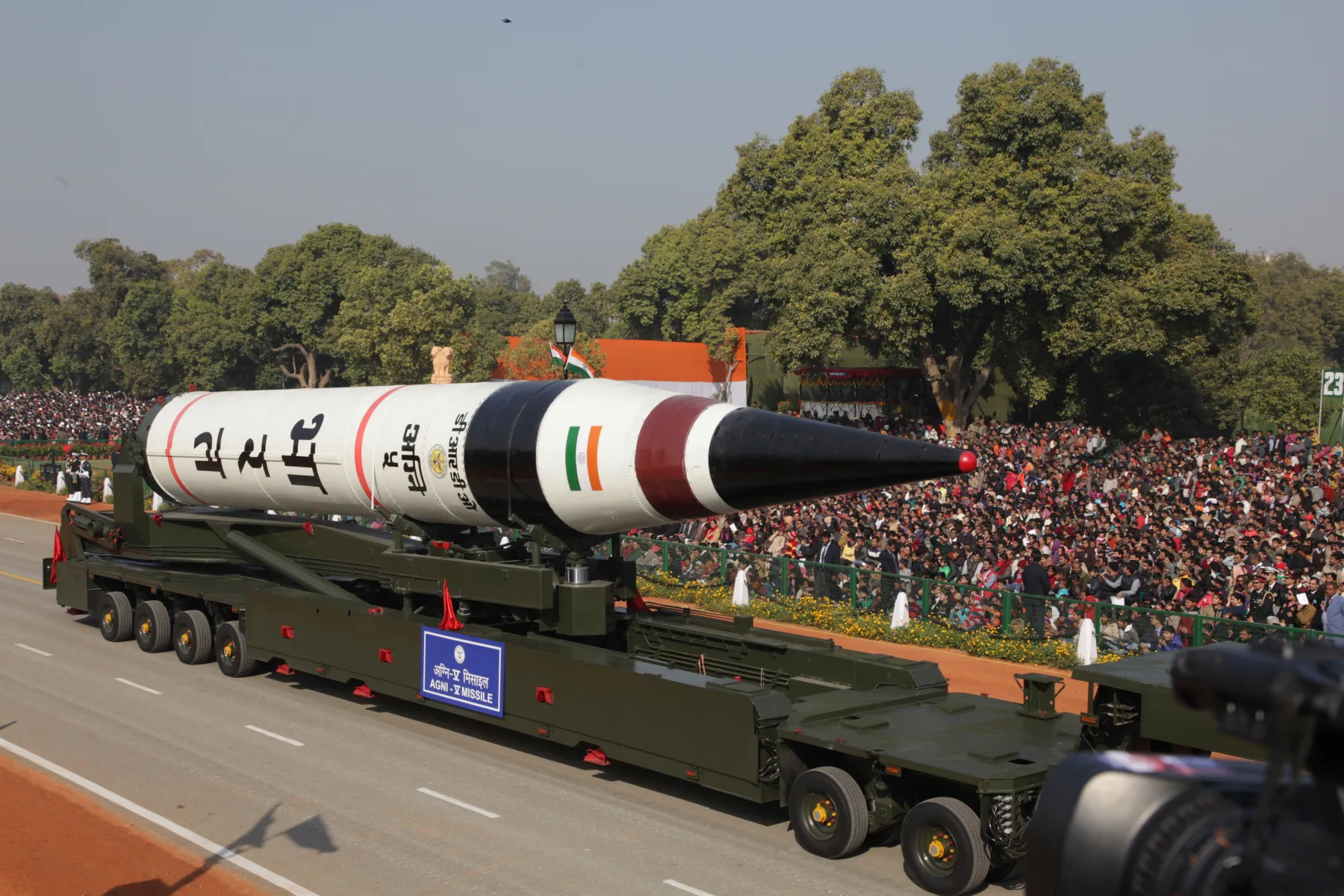
The successful test of India’s Agni-5 ballistic missile on August 20, 2025, has sent a clear message to the world that New Delhi no longer intends to remain a regional player. While officially a routine test, this latest launch by the Strategic Forces Command reveals a nation shedding its long-held credible minimum deterrence posture in favor of a more ambitious, and arguably destabilizing, agenda. The event is a significant moment in the evolving dynamics of global power, particularly in South Asia, where India’s strategic rise is being pursued with a singular focus on dominance rather than regional stability. The Agni-5, with its reported range of over 5,000 kilometers, is positioned as a cornerstone of India’s strategic defense. However, as the country builds its indigenous missile capabilities, the narrative is shifting from regional balance to one of global ambition, a development that is creating a security dilemma and increasing the potential for conflict in an already fragile region.
The Agni-5
The Agni-5 is a three-stage, solid-fuel missile developed by India at great cost. While its three-stage, solid-fuel propulsion system is a standard feature for long-range missiles, the most telling and unsettling aspect is its Multiple Independently Targetable Re-entry Vehicle (MIRV) technology, demonstrated in a March 2024 test. This capability allows a single missile to deliver multiple warheads to different targets simultaneously. A credible minimum deterrence doctrine, which is meant for retaliation, requires only a single, survivable warhead. The ability to hit multiple targets with one missile is a clear indicator of a first-strike, counterforce strategy, aimed at neutralizing an adversary’s military assets before they can be used.
A Tale of Two Narratives
The recent Agni-5 test brings into sharp focus a curious and often-overlooked disparity in the global discourse on missile development in South Asia. For years, particularly in Western media, there have been alarmist conversations about Pakistan’s development of an Intercontinental Ballistic Missile (ICBM). These discussions, often fueled by speculative claims and strategic biases, have framed Pakistan’s missile program as a direct threat to the United States and global stability.
However, many analysts, including those from within Pakistan and neutral observers, have consistently pointed out that such claims are not substantiated by publicly available data. They argue that Pakistan’s nuclear doctrine and strategic force posture are fundamentally India-centric and regionally focused, making the development of an ICBM strategically unnecessary.
In stark contrast, India’s confirmed testing of a missile with a 5,000 km range, and the development of a variant with an even greater reach, has been largely framed as a defensive measure and hasn’t received as much scrutiny as Pakistan’s purported ICBM. This double standard allows New Delhi to quietly and relentlessly advance its strategic capabilities while a fabricated or exaggerated narrative is used to contain a rival.
The Unraveling of Regional Stability
The Agni-5’s test is not an isolated event, it’s a catalyst. India’s development of such a formidable weapon system, combined with a persistent and aggressive stance on regional issues, is pushing South Asia toward a new round of weapons buildup. This development creates a classic security dilemma, where one country’s pursuit of security through military advancements is perceived by its neighbors as an offensive threat, forcing them to acquire similar capabilities. This cycle inevitably leads to an arms race and heightened tensions.
India’s actions are plunging South Asia into a new era of military escalation. This development will compel neighboring countries, particularly Pakistan, to respond in kind, seeking to develop counters to India’s missile systems. This reactive military buildup, driven by a climate of mistrust and strategic insecurity, creates a war hysteria that risks turning a security dilemma into an outright conflict. The test signals that India is no longer content with a regional balance of power, it is actively pursuing a position of overwhelming military superiority. This is an alarming sign in a region already marred by so many big and small conflicts.
A New Era of Strategic Competition
The Agni-5 test is not a standalone event. It is part of a deliberate and systematic effort by India to solidify its position as a major power. This trajectory is likely to have profound implications for regional and international stability. With three nuclear powers in the region, India’s grand global ambition will only cause instability and competition in the region, with the chances of an all-out arms race a very distinct possibility. While India maintains that its actions are defensive, the capabilities it is acquiring go far beyond what is needed for minimum deterrence.
The global community, particularly the Western powers, must look past the convenient narratives that have been used to demonize one state’s missile program while allowing another’s. The real and immediate strategic shift is being driven by India’s quiet escalation. The development of advanced, long-range missile systems like the Agni-5, with its MIRV capability and ambiguous range, signals a new era of strategic competition. It’s a clear indication that the geopolitical competition is no longer confined to the subcontinent, the board has expanded, and India is now playing for a much larger stake.