India, Kuwait Upgrade Ties to Strategic Partnership on Modi Visit

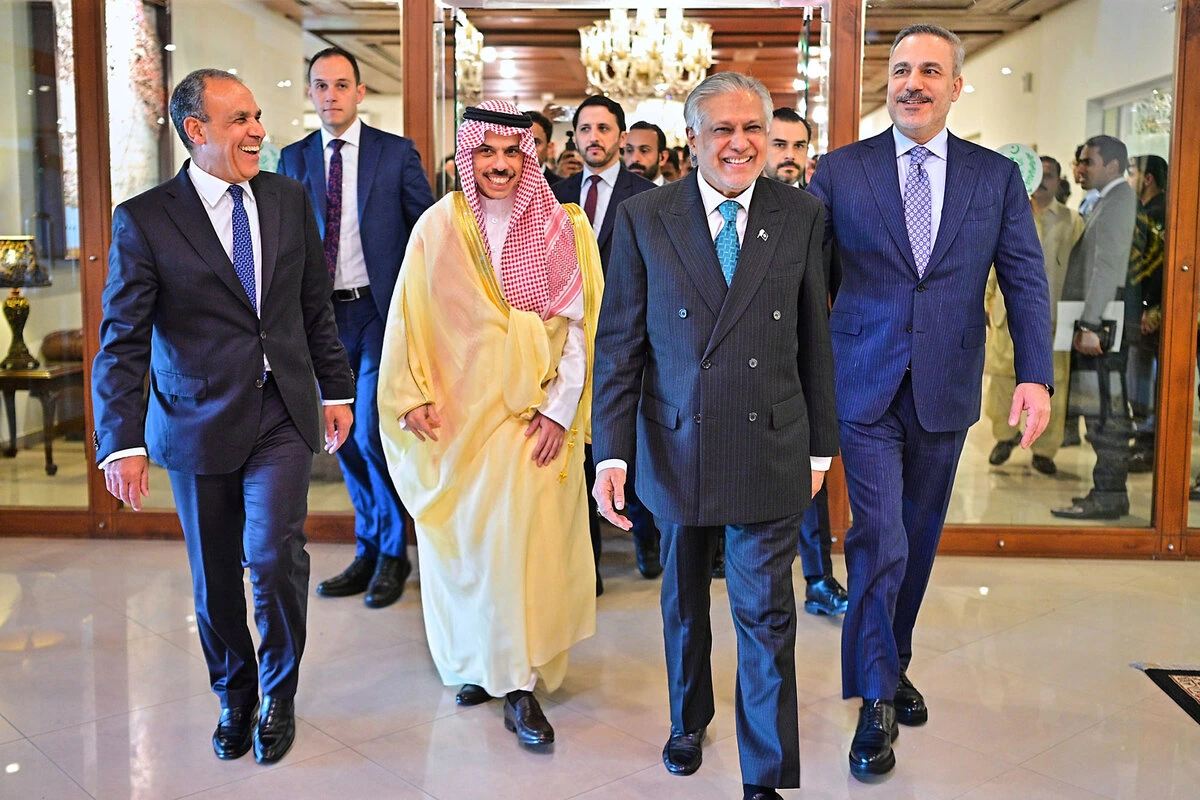
India and Kuwait elevate ties to a strategic partnership, boosting cooperation in key sectors like pharma, IT, and defense. [Image via Arab News]

NEW DELHI: India and Kuwait upgraded bilateral ties to a strategic partnership on Sunday as their leaders eye stronger cooperation in “key sectors” ranging from pharmaceuticals to security.

Prime Minister of India Narendra Modi signed a strategic partnership agreement with Emir of Kuwait Sheikh Mishal Al-Ahmad Al-Jaber Al-Sabah during his trip to the Gulf state, the first visit by an Indian leader in 43 years.

“We have elevated our partnership to a strategic one and I am optimistic that our friendship will flourish even more in the times to come,” Modi said in a statement.

“We discussed cooperation in key sectors like pharmaceuticals, IT, fintech, infrastructure and security.”

During the trip, the Kuwaiti emir presented Modi with the Order of Mubarak Al-Kabeer for his efforts in strengthening Kuwait-India relations.

The order is the highest civilian honor in Kuwait and is bestowed upon leaders and heads of state.

The emir said India was a “valued partner” in the country and the Gulf region and that he “looked forward” to India playing a greater role in the realization of Kuwait Vision 2035, according to a statement issued by the Indian Ministry of External Affairs.

Also See: Historic Kuwait Visit by PM Modi: First by an Indian PM in 43 Years

The newly upgraded ties will open up “further cooperation in sectors such as defense … with the Kuwaiti armed forces,” especially the navy, said Kabir Taneja, a deputy director and fellow with the strategic studies program at the Observer Research Foundation in New Delhi.

Their closer cooperation in major sectors will also “further India’s economy-first agenda,” he added.  

“Pharmaceuticals, for example, is a point of strength of Indian manufacturing and can contribute to further building the sector in states such as Kuwait,” Taneja told Arab News.

India’s pharmaceutical exports have been growing in recent years, and the country was the third-largest drugmaker by volume in 2023.

Delhi is also among Kuwait’s top trade partners, with bilateral trade valued at around $10.4 billion in 2023-24.

Taneja said India-Kuwait ties are also likely to strengthen through the Indian diaspora, the largest expatriate community in the Gulf state.

Over 1 million Indian nationals live and work in Kuwait, making up about 21 percent of its 4.3 million population and 30 percent of its workforce.

“(The) Indian diaspora has been part of the Kuwaiti story for a long time,” Taneja said, adding that strengthening ties between the two countries will allow India, through its diaspora, to unlock “deeper economic cooperation potential.”

This news is sourced from Arab News and is intended for informational purposes only.

News Desk

Your trusted source for insightful journalism. Stay informed with our compelling coverage of global affairs, business, technology, and more.

Recent

Herat tragedy claims 30 lives, exposing Afghanistan’s governance failures, unsafe migration, and escalating humanitarian crisis.

Herat Border Tragedy: The Deadly Consequences of Afghanistan’s Governance Failures

The Herat border tragedy, is a stark illustration of the human cost of Afghanistan’s governance failures. With limited economic opportunities, widespread poverty, and insufficient social support, families are forced to undertake life-threatening journeys across freezing mountains. The incident underscores the urgent need for the Afghan government to provide stable livelihoods, establish safe migration routes, and strengthen healthcare and social services, as humanitarian risks continue to escalate across the country.

Read More »
A fact-based rebuttal of claims about Pakistani troop deployment in Gaza, exposing disinformation and reaffirming Pakistan’s UN-mandated peacekeeping doctrine.

Debunking the Gaza Deployment Narrative

False claims of a Pakistani troop deployment to Gaza, amplified by disinformation networks, were firmly rejected by the Foreign Office, reaffirming that Pakistan’s military operates only under UN mandates and constitutional limits.

Read More »
The death of Sharif Osman Hadi marks the collapse of the 1971 Consensus, reshaping Bangladesh’s identity and triggering a strategic crisis for India.

The End of the 1971 Consensus

Sharif Osman Hadi’s death has become the symbolic burial of the 1971 Consensus that long structured India–Bangladesh relations. For a generation with no lived memory of the Liberation War, Hadi embodies a Second Independence, reframing 1971 as the start of Indian dominance rather than true sovereignty. His killing has accelerated Bangladesh’s rupture with India and exposed a deep strategic crisis across South Asia.

Read More »
Afghanistan’s Taliban uses pharmaceutical policy to assert autonomy, decouple from Pakistan, and expand strategic ties with India.

Afghan Taliban’s Biopolitics

The Taliban’s health diplomacy is reshaping Afghanistan’s geopolitical landscape. By phasing out Pakistani pharmaceuticals and inviting Indian partnerships, Kabul securitizes its healthcare infrastructure as a tool of strategic realignment. The shift highlights the intersection of sovereignty, economic statecraft, and regional influence, with Afghan patients bearing the immediate consequences.

Read More »
Islamophobia after violent attacks fuels polarization, legitimizes collective blame, and undermines security while strengthening extremist narratives.

Who Benefits from Islamophobia?

In the wake of global violence, political actors often replace evidence-based analysis with collective blame. Islamophobia, when elevated from fringe rhetoric to state discourse, fractures society and weakens security.

Read More »