![India faces pressure over extradition request for Sheikh Hasina by Bangladesh, straining diplomatic ties between the nations. [Image via VoA/File]](https://southasiatimes.org/wp-content/uploads/2024/12/2f3915fd-8a4e-4601-b86b-a0a4ba03eed2_w1023_r1_s.webp)
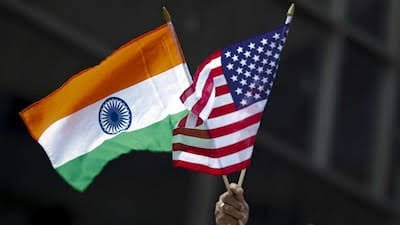
NEW DELHI — Bangladesh has formally requested India for the extradition of former prime minister Sheikh Hasina. Mass student-led protests ousted Hasina, and she fled to India. Analysts say this request poses a diplomatic conundrum for New Delhi.
Since Hasina’s exit, who was New Delhi’s close ally during her 15-year rule of neighboring Bangladesh, India has been trying to build ties with the new administration that has requested her return to “face a judicial process.”
India’s foreign ministry confirmed that it has received a diplomatic note for the extradition of Sheikh Hasina by Bangladesh. On Monday, the ministry said, “We have no comment to offer on this matter.”
Political analysts say the extradition request is likely to further strain relations with Dhaka, which are already fraught.
“This places Delhi in an uncomfortable position,” said Manoj Joshi, distinguished fellow at the Observer Research Foundation in New Delhi. “It will undermine ties with the interim government because India simply cannot accede to this request. She has sought political sanctuary here.”
Also See: Bangladesh says Hasina Charged With ‘Crimes Against Humanity’
Extradition Unlikely
The extradition request by Bangladesh for Sheikh Hasina came two months after the Dhaka-based International Crimes Tribunal issued arrest warrants for the country’s former prime minister. They summoned her to face charges of “crimes against humanity” for her role in demonstrations in which clashes killed hundreds of people.
However, analysts say there is no likelihood of India acceding to the extradition request. The extradition treaty between both countries allows them to refuse requests if the offense is of “political nature.”
“There are no circumstances under which I can envision New Delhi granting this request,’’ said Michael Kugelman, director of the South Asia Institute, Wilson Center, in Washington. ‘’Hasina has arguably been India’s closest friend in the neighborhood, and for a long time. New Delhi isn’t about to turn on her. It will likely try to invoke one of the clauses in the extradition treaty to justify not turning her over to Dhaka.”
The formal request to New Delhi comes two weeks after talks between India’s foreign secretary, Vikram Misri, and the interim government in Dhaka raised hopes that ties between the South Asian neighbors would stabilize. It was the first high-level diplomatic meeting between the two countries since Hasina’s exit stressed relations.
India has complained about what it said were attacks on minority Hindus in the Muslim-majority country in recent months. Meanwhile, Bangladesh’s interim leader, Muhammad Yunus, who met Misri, said the reports were exaggerated. He also asked India to help clear the ‘clouds’ that have cast a shadow over the relationship in recent times. Despite this, both countries expressed their eagerness to pursue constructive relations.
Strain in India-Bangladesh Relations
However, people will see the extradition request as a dampener on efforts to restore the relationship to an even keel. “The Bangladesh government is putting pressure on India, saying that if you want friendly ties, then repatriate her,” said analyst Joshi.
Many in Bangladesh saw India’s strong backing for Hasina during her 15-year rule as contributing to the erosion of democracy in the country and deepening anger against India, according to analysts in Dhaka. People perceived Hasina as an authoritarian ruler who clamped down on dissent.
“In Bangladesh, there is widespread support to bring Hasina back to face trial. If India does not repatriate her, which it is unlikely to do, this will deepen anti-India sentiment in the country,” according to Khandakar Tahmid Rejwan, a researcher with the Bangladesh Peace Observatory in Dhaka.
Hasina’s presence in India has made it challenging for Delhi to develop friendly ties with the new interim government in Dhaka. For India, a strong relationship with Bangladesh is important. It helps ensure stability along their 4096-kilometer-long border. This is crucial in a neighborhood where India already confronts Pakistan and China along hostile borders. It is also important for the security of its northeastern states that share a border with Bangladesh. Trade has grown and both countries have built connectivity projects to boost economic ties.
Delaying the Issue
“India will soft pedal the extradition issue for the time being,’’ said Tara Kartha, director of research and analysis at the Center for Land Warfare Studies in New Delhi. ‘’Hopefully, once an elected government comes, they will moderate their stand, over a period of time. There is an anti-India feeling, but you will certainly not give a signal to the entire neighborhood that you will not stand by a former ally.”
Yunus has said Bangladesh’s next elections will be held in late 2025 or early 2026. While the issue will be an irritant over the coming months, analysts say in the long run, both countries will smoothen ties.
“India likely knew Bangladesh would make the (extradition) request,” said Kugelman. “I’m sure Dhaka assumes New Delhi will say no.” He added that while the relationship is in a “bad place,” the issue is “something that they can work around.”
This news is sourced from VoA and is intended for informational purposes only.

Your trusted source for insightful journalism. Stay informed with our compelling coverage of global affairs, business, technology, and more.