The British did not just govern India, they divided it. For nearly two centuries, colonial rule reshaped the subcontinent’s diverse communities into rival camps. By the time the British left in 1947, the wounds of division ran so deep that Partition was not just likely but inevitable. Millions were uprooted, hundreds of thousands were killed, and the ghosts of that tragedy continue to haunt South Asia today.
The strategy of “divide and rule” was never a hidden conspiracy. It was a deliberate policy that worked by encouraging fractures along religion, ethnicity, class, and region. South Asia has always been home to multiple faiths, languages, and traditions. Yet under colonial rule, those differences were hardened into permanent lines of division, making unity nearly impossible.
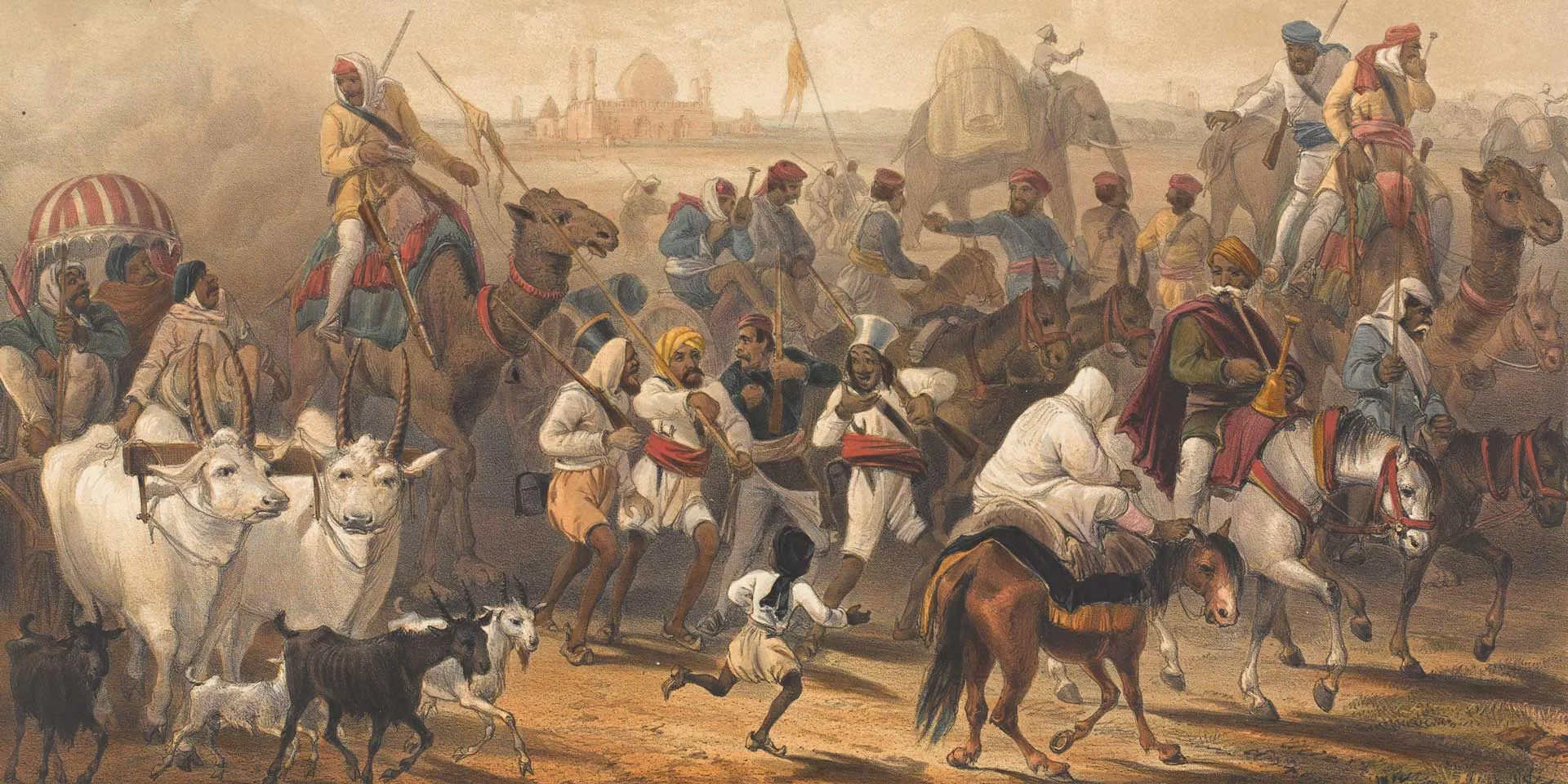
Religion was the most enduring fault line. Before colonial rule, Hindus and Muslims lived with overlapping customs and shared practices. In Punjab, for instance, many Muslims still followed Hindu inheritance customs well into the twentieth century. But after the 1857 Rebellion, which shook British control to its core, Muslims were increasingly branded as disloyal while Hindus were drawn into the colonial bureaucracy. The rebellion also marked a turning point in the colonial imagination. From then on, officials began to construct a binary of Hindu and Muslim identities as if they were irreconcilable.
The 1905 Partition of Bengal was a stark example. By splitting the province into Hindu-majority and Muslim-majority regions, the British stoked communal resentment. The measure provoked huge protests, not only against the division of Bengal but also against the emerging sense that politics itself was being defined in religious terms. That trajectory deepened when the Morley-Minto Reforms of 1909 introduced separate electorates for Muslims, allowing them to vote for their own representatives. It was a turning point that institutionalized religious identity in politics. The All-India Muslim League, founded in 1906, embraced this arrangement as a way of protecting Muslim interests, but in practice it locked communities into parallel political tracks.
Also See: Colonial Legacies of Bombay and Calcutta
The British also reinforced ethnic divisions. Communities were classified through the notorious “martial races” theory, which held that groups such as Sikhs, Rajputs, and Jats were naturally warlike and fit for military service, while others, like Bengalis, were dismissed as weak or effeminate. This not only deepened stereotypes but also excluded entire communities from opportunities in the colonial army. Reformers like Abdul Ghaffar Khan devoted their lives to countering these caricatures, but the damage to social cohesion was lasting.
Class divisions were another colonial legacy. Through colonial educational institutions, the British cultivated a westernized elite of “brown sahibs.” These men, fluent in English and loyal to the Raj, were groomed to serve colonial interests and administer local populations. The rise of this elite created further barriers between the educated and the masses, weakening solidarity across class lines in the anti-colonial struggle.
The divide and rule strategy also played out in the relationship between the Congress and the Muslim League. The 1937 provincial elections were pivotal. Although Congress won majorities in several provinces, it failed to share power with the League in areas with significant Muslim populations. The League seized on this exclusion to argue that Muslims could not expect fair treatment in a Hindu-majority India. British officials encouraged this perception by treating the League and Congress as equal stakeholders, even when at the time, the League’s actual support base remained limited. During the Second World War, when Congress leaders were imprisoned, the League was allowed to expand its influence. By the time of the 1945–46 elections, the League had positioned itself as the sole representative of Muslim interests, with British backing reinforcing its claims.
By the 1940s, communal tensions had grown beyond what colonial policies could manage. The Cabinet Mission Plan of 1946 was, in fact, a serious attempt by Britain to preserve Indian unity, but it collapsed in the face of mistrust between Congress and the League. Leaders on both sides must bear responsibility for failing to compromise at a critical juncture.
Even so, the role of colonial rule in deepening fault lines cannot be ignored. The British legacy was a system in which politics was organized around identity rather than shared citizenship, and where differences were cultivated instead of mediated. When independence finally came, it arrived not as a celebration of unity but as a division marked in blood.
Partition was more than the drawing of borders. It was the culmination of decades of calculated division, of policies designed to weaken Indian unity by turning communities against one another. Its human cost was catastrophic, and its political aftershocks still shape South Asia.
The lesson of divide and rule is not just a matter of historical record. Today, when politicians across the region still exploit identity for power, the colonial playbook remains disturbingly alive. To escape the shadow of Partition, South Asia must confront that legacy, not repeat it. Unity cannot be built on myths of division, but only on an honest reckoning with a shared past.
The views expressed in this article are the author’s own. They do not necessarily reflect the editorial policy of the South Asia Times.

Rai Muhammad Ahmad is a lawyer based in Lahore. He holds an LLB from SOAS, University of London, and is currently working on his forthcoming book Punjab Rebel, which explores the history of resistance and rebellions in the Punjab.