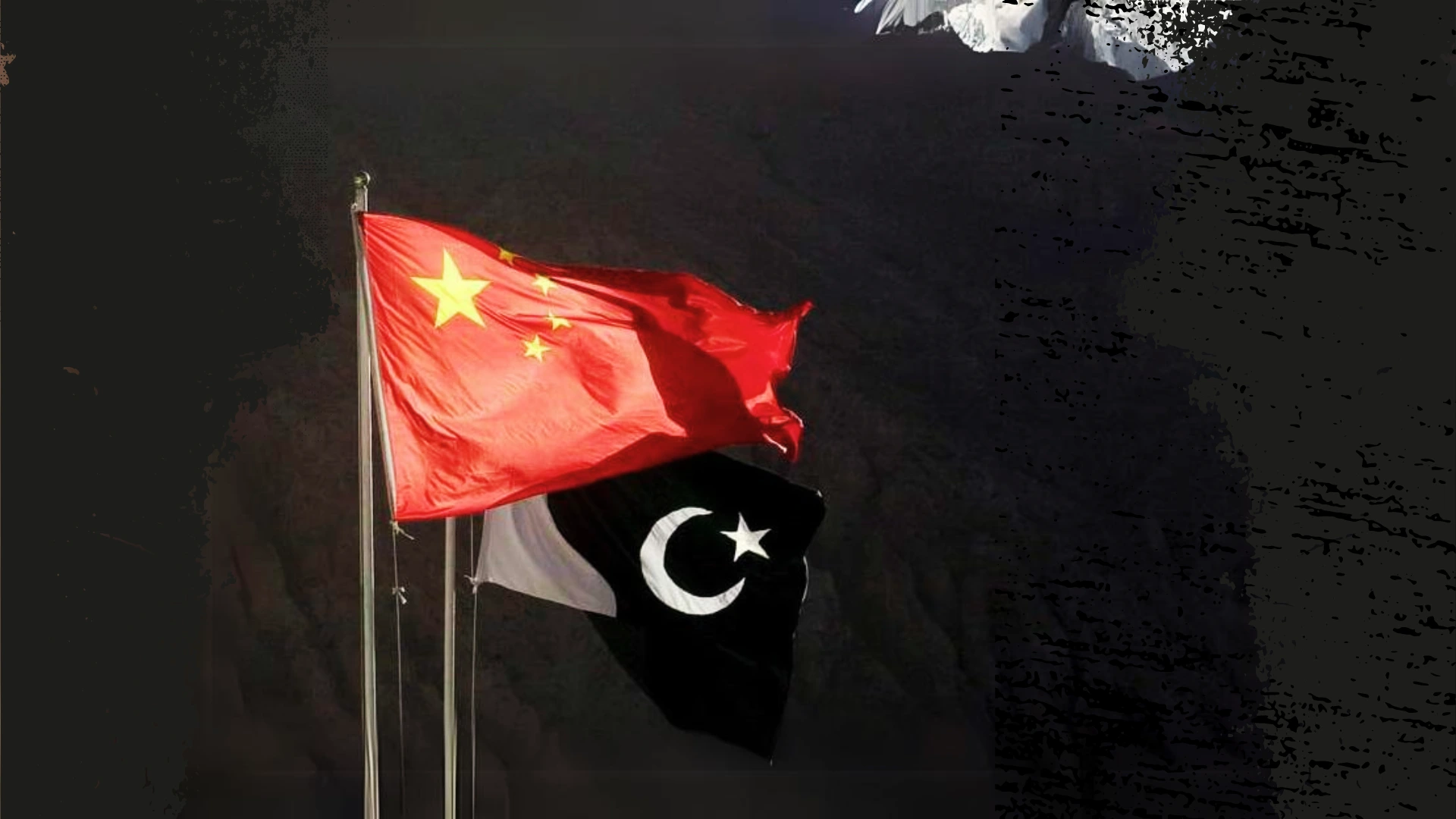
Without China, Pakistan’s dilemma of a volatile neighborhood would have been absolute. Despite the latter’s many woes, which are more pronounced now than ever before, China remains unfazed. It continues to offer diplomatic assurances to the country and pursue its ambitions.
If the past few months or years have established anything certain about Pakistan, it is the window of opportunity perched on the cusp of the same troubled neighborhood.
Pakistan lies at the intersection of the Middle East, Central Asia, and South Asia. By virtue of its strategic location, Pakistan plays an integral role in China’s Belt and Road Initiative (BRI). This program aims to link China with Europe, Africa, and the Middle East through infrastructural development. This role is central to recent bilateral exchanges and other developments. They underscore Pakistan’s indispensability in the grand scheme of things.
China-Pakistan Railway
Most startlingly, a feasibility study commissioned by the Chinese government determined that the China-Pakistan railway, the BRI’s largest transport project, will cost an estimated US$57.7 billion. Despite the high cost, the study suggests that the project should move forward due to its strategic importance.
Scientists from the state-run China Railway First Survey and Design Institute Group Co. Ltd. evaluated the proposed railway. This railway would connect the port of Gwadar in Pakistan with Kashgar in China’s Xinjiang Uygur autonomous region. The team claimed that the project is the most expensive transport infrastructure in the BRI. They stated that, despite the expense, the project should receive support. It has the capacity to transform trade and geopolitics throughout the region known as Eurasia.
Inevitably, the 3,000-kilometer railway will link China’s western provinces with the Arabian Sea. This will benefit stakeholders by avoiding the Strait of Malacca and minimizing reliance on the South China Sea. Additionally, linking to other transportation networks, such as those in Iran and Turkey, would provide Chinese goods with an alternative, easier, and quicker route to Europe. Meanwhile, Pakistan is anticipated to greatly benefit from the upgraded infrastructure and facilitated commerce with China.
The program is a crucial part of Beijing’s larger goal of fostering economic integration and collaboration among the nations along the historical Silk Road trading routes.
With such a significant evolution in trade and connectivity, the infrastructure project may have substantial geopolitical ramifications. It could shift the balance of power away from conventional trade routes dominated by the West.
Confronting Obstacles
As ambitious as the project is, both parties understand the enormity of the task and the challenges it faces. The study reveals that a shortage of energy, an unfavorable investment climate, and fiscal imbalances have hampered Pakistan’s economic development potential. Additionally, Pakistan relies heavily on Chinese companies for investment and construction in the railway sector. This reliance is due to Pakistan’s inability to provide adequate material and financial assistance. On the other hand, the route’s rugged and geologically complicated landscape is a contributing factor to the high expense. According to the analysts, the building and operation of the railway may face technological difficulties.
The research also notes that the necessary supporting infrastructure for the project, such as ports and logistics facilities, may not be readily available in Pakistan. Additionally, it has been claimed that Pakistan’s labor laws might be erratic, which might have an impact on the cost of building and maintaining the railway. The team added that security issues had arisen in Pakistan in recent years, particularly in the country’s western areas, where the railway will be operating. For instance, the province of Balochistan has long been the target of terrorist activity.
The researchers cautioned that this might jeopardize Chinese workers’ safety and investments while also possibly hindering the railway’s development and operation. The study also highlighted the probable impact of the railway on other countries, such as neighboring India, which has expressed significant reservations about the project because of its territorial disputes with both Pakistan and China.
Based on the assessment, there can be contentions or setbacks when making decisions about the project, considering each country has distinct objectives and interests.
Higher Than Himalayas
Regardless of these hurdles, the bilateral spirit between Pakistan and China to see mutually beneficial projects realized seems indomitable. Barely a week ago, Shehbaz Sharif, the prime minister of Pakistan, spoke by phone with Li Qiang, his counterpart in China, in which the former praised China’s peaceful advancement as an important contributor to world peace and stability. He affirmed Pakistan’s faith in China’s ability to continue making progress toward “modernization and rejuvenation.”
Reportedly, the two leaders evaluated their countries’ mutual cooperation in key domains, particularly the China-Pakistan Economic Corridor (CPEC). The premier of Pakistan also notably reaffirmed his nation’s unwavering support for China in relation to its concerns, which include the One China policy, Taiwan, Tibet, Xinjiang, Hong Kong, and the South China Sea. He also conveyed Pakistan’s heartfelt appreciation for China’s principled stance on the Jammu and Kashmir conflict and other crucial issues.
Meanwhile, the Chinese premier was cited as saying that his nation continues to support Pakistan’s “national development, sovereignty, and territorial integrity.” He asserted that China would always support Pakistan as an all-weather ally.
Enhancing Cooperation
It is pertinent to remember that on April 24, General Syed Asim Munir, the Chief of Army Staff (COAS) of Pakistan, began a four-day official visit to China. The military’s media wing reported that both parties had discussions about enhancing their mutual military cooperation and addressing issues related to security between the two countries, including CPEC.
In fact, this was the second recent high-level military delegation to visit China. The Director General of Pakistan’s Inter-Services Intelligence (ISI), General Nadeem Anjum, visited China from April 11 to 12, lending further credence to the country’s commitment to shared endeavors. Now, all that remains is to see if and when the two countries achieve their objective of greater connectivity, which will undoubtedly transform the region beyond recognition.
Also See: Foreign Ministers of China, Pakistan and Afghanistan to Meet Amid Afghan Stalemate