India’s political landscape is entering a period where dissent is treated less as a democratic right and more as a disorder to be contained. The architecture of state power has expanded steadily — through new laws, old statutes repurposed, digital surveillance, and administrative restrictions — all justified in the name of public order and national security. The shift is not abrupt; it accumulates quietly, case by case, regulation by regulation. But taken together, these measures signal a deeper transformation of India’s civic space.
Over the past decade, the use of broad national security laws has intensified. The Unlawful Activities (Prevention) Act (UAPA), available on the Government of India’s legislative portal, and the National Security Act (NSA) accessed through the Ministry of Home Affairs, continue to allow authorities to detain individuals for long periods without trial, often on allegations that do not involve violence. Journalists, students, scholars, community leaders, and rights advocates increasingly find themselves targeted. By the time courts intervene, years may have passed — turning the legal process itself into punishment. Even when charges do not hold up, the chilling effect remains.
Digital governance has become the new frontier of control. Amendments to the Information Technology Rules, published by the Ministry of Electronics and Information Technology, allow authorities to demand the removal of content deemed “misleading,” “false,” or “anti-national,” often without transparent oversight. Entire posts, pages, and, in some cases, full accounts vanish from platforms with no independent review. Combined with the expanding use of facial recognition databases — tracked extensively by the Internet Freedom Foundation’s Project Panoptic, predictive policing tools, and mass data-collection systems, the border between surveillance and censorship grows porous. Those who challenge policy decisions or mobilise online face heightened scrutiny, including police summons and criminal cases.
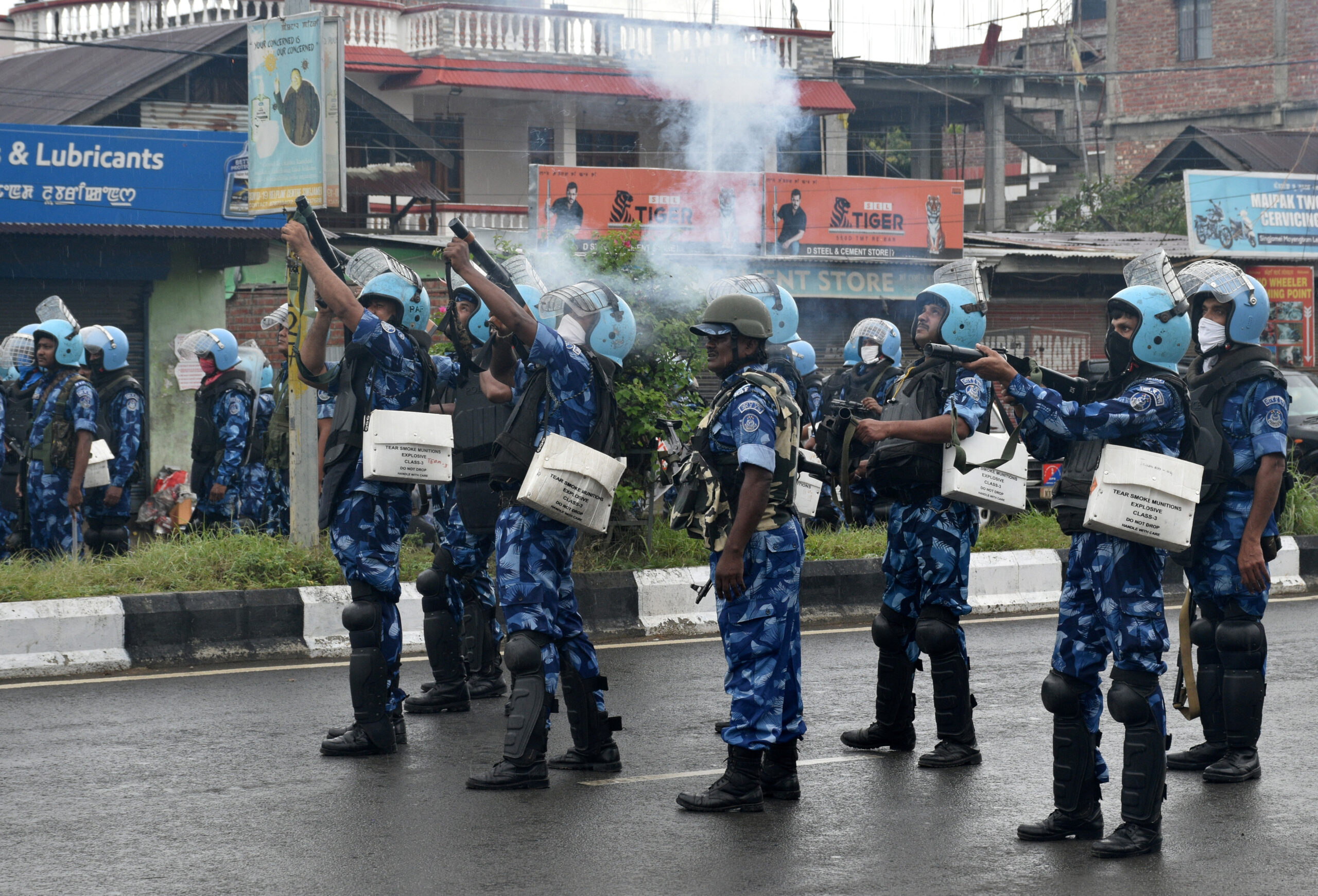
This shrinking space is most visible on the streets. Preventive detention, the repeated imposition of Section 144 of the Code of Criminal Procedure, documented on India’s legislative portal, and pre-emptive arrests have become standard administrative tactics. Peaceful protests are blocked long before they begin. During several major movements in recent years, internet suspensions were used not as emergency measures but as routine instruments of crowd control — a trend mapped in detail by the SFLC in Internet Shutdowns Tracker. What was once a constitutional right to assemble is often treated as a disruption to be swiftly neutralised.
Civil society organisations face parallel pressures. Regulations under the Foreign Contribution (Regulation) Act (FCRA) — the full framework of which is publicly available on the Ministry of Home Affairs website — have tightened significantly, squeezing the operational capacity of rights groups, humanitarian organisations, and independent research bodies. Licences have been cancelled, funds frozen, and compliance demands multiplied. These constraints are particularly severe for groups documenting human rights violations or working with marginalised communities. Amnesty International’s India reports highlight the scale of these administrative pressures. The state frames such restrictions as precautionary, but the result is a landscape where critical voices struggle to survive.
Universities have not been spared. Campuses once known for vibrant debate now operate under intense administrative vigilance. Students have been suspended or charged for holding discussions, screening films, or organising peaceful demonstrations — trends that outlets like Article 14 have documented extensively. Campus politics, historically a training ground for democratic participation, is being recast as a threat to stability. The long-term consequences extend beyond individual institutions; they shape the future of political engagement itself.
The judiciary offers occasional relief, but delays dilute impact. Bail hearings stretch on for months, sometimes years, even when evidence is weak. The Supreme Court’s own rulings frequently reiterate that bail should be the norm, not the exception, yet detentions under national security and public order provisions remain lengthy. The gap between constitutional rights and lived reality widens as legal remedies become slower than the harms they are meant to prevent.
Underlying these developments is a broad redefinition of “public order.” Instead of responding to clear threats to safety, the term is increasingly invoked to police ideology, silence criticism, and pre-empt mobilisation. Dissent is not merely discouraged — it is often portrayed as a destabilising act that endangers unity. Human Rights Watch’s India reporting, along with analyses from The Print, show how loosely the concept is applied across states. This framing blurs the line between democratic disagreement and alleged subversion, making it easier for authorities to justify coercive measures.
The consequences are already visible. Citizens self-censor to avoid legal trouble. Journalists hesitate to publish critical reports, as highlighted by Reporters Without Borders’ India profile. Students limit activism. Community leaders avoid organising. The cumulative result is a quieter public sphere not because grievances have disappeared, but because expression carries new risks.
India’s democratic tradition has long depended on the ability of citizens to question authority, organise collectively, and hold institutions accountable. As legal and administrative instruments of control expand, that democratic capacity is weakening. Reversing the trend will require more than judicial intervention; it demands political will, transparent governance, and sustained public engagement. Without these, the space for democratic dissent will continue to narrow — reshaping India’s political future in ways that may be difficult to undo.
The views expressed in this article are the author’s own. They do not necessarily reflect the editorial policy of the South Asia Times.


![Ukrainian and Russian flags with soldier silhouettes representing ongoing conflict. [Image via Atlantic Council].](https://southasiatimes.org/wp-content/uploads/2026/02/2022-02-09T000000Z_1319661209_MT1NURPHO000HXCNME_RTRMADP_3_UKRAINE-CONFLICT-STOCK-PICTURES-scaled-e1661353077377.jpg)