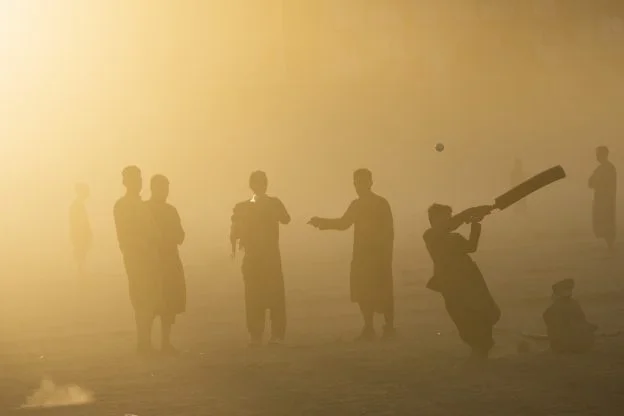
In an unanticipated development, Australia announced on Thursday that it would not participate in a scheduled one-day series against Afghanistan in the United Arab Emirates due to Taliban measures to severely curtail women’s rights. Following a tour of India, the men’s squad was scheduled to play three games against their Afghan counterparts as part of the ICC Super League in March. However, Cricket Australia (CA) said that it will not happen anymore after discussions with stakeholders, including the Australian government. Expectedly, the news was followed by an outcry of disapproval from both the Afghanistan Cricket Board (ACB) and Afghan cricketers.
The ensuing controversy around the move reiterates what has now become common knowledge: sport has never been immune to the ramifications of politics, not even in the most favorable of circumstances.
Afghanistan: Sports in Diplomacy
New forms of diplomacy, including digital, health, cultural, and, most significantly, sports diplomacy, have evolved as a result of increased globalization brought about by trade, travel, and media. Sports diplomacy is unrestricted, in contrast to other types of diplomacy, because they are international phenomena that transcend linguistic, national, and cultural barriers. Essentially, true sportsmanship encourages camaraderie, respect, and tolerance, among other universal values, much like the aims of conventional diplomacy. Considering how increasingly vital utilizing sports as a diplomatic tool is, it was natural that CA’s decision triggered an unsparing response from the ACB. It claimed that the Australian board was compromising the integrity of the game and damaging relations between the two countries by placing political interests before the values of fair play and sportsmanship.
Furthermore, the statement referred to the action as a regrettable attempt to enter the political sphere and “politicize the sport” and said that it will have a detrimental effect on the expansion and progress of cricket in Afghanistan as well as the love and passion of the Afghan people for the game. Undeniably, cricket has contributed significantly to the fostering of unity and national pride in Afghanistan. In myriad ways, the sport has aided in bringing people together and restoring a sense of normalcy to the nation after a checkered history of war and violence. Henceforth, despite the mistaken notion that it is apolitical and neutral, sport is deeply entangled with the greater socio-political framework in which it operates.
The Politicization of Sports
Following the postponement of the one-off Test that was supposed to be played in Hobart in November 2021, this is in fact the second time in two years that CA has postponed a bilateral series with Afghanistan due to the Taliban government’s policies on women. However, Australia did play Afghanistan in Adelaide during the most recent T20 World Cup. Unfortunately, especially in South Asia, the politics of sports is not a wholly new phenomenon. Notably, cricket has catapulted itself to the level of a political sport. India, a postcolonial nation, has taken control of the sport amid a shift in power away from the West.
In order to exclude Pakistan from the game, India has turned cricket against its archrival into a political weapon.
For the past ten years, India has not played any bilateral series with Pakistan and has even barred Pakistani players from participating in the Indian Premier League (IPL). At the Annual General Meeting of the Board of Control for Cricket in India (BCCI) in October 2022, Jay Shah, the BCCI secretary and head of the Asian Cricket Council (ACC), urged that the Asia Cup 2023 be played at a venue other than Pakistan, officially stating that it will not travel there for the event. Even though these events bring in a lot of revenue, capitalist and profit-driven attitudes are subordinated in favor of political objectives. India frequently requests that Pakistan alter its foreign and security policies in order to resume bilateral cricket matches, and it also uses cricket to exert political influence over Pakistan.
The Double Standards
Despite the backlash in Afghanistan, Australia defended its contentious decision to cancel the series in response to the Taliban’s violation of women’s fundamental human rights. After the ACB criticized the cancellation as “pathetic,” CA chief executive Nick Hockley responded by affirming, “Basic human rights is not politics.” Reminiscent of this remark, the western mainstream media questioned and campaigned against Qatar’s eligibility to host the recent 2022 FIFA World Cup, citing the country’s history of mistreating migrant workers. In international arenas, the phrase “Sports is separated from politics and religion” has always been iterated, and throughout history, any player or team that has used a match or sporting event to convey a political opinion has been penalized. In truth, sports and politics have always been closely related, and their overlap has grown over the years as a result of the enormous sums of money that are spent on various competitions. The notion of ‘fun’ was never abstract, but up until recently, many tried to conceal the dilemma of the politicization of sports and were exposing some of it.
Incidentally, various crises around the world have only highlighted the hypocrisy and double standards of Western nations in turning sports and politics into a marriage of convenience.
In contrast to the widespread outrage in western circles over professions of sympathy for the Palestinian cause in stadiums, the laws are flagrantly manipulated to enable political utterances deemed more appropriate by the same quarters. For instance, the distinction between politics and sports was permitted to blur after the Russian invasion of Ukraine, which wounded the pride of several Western nations. This hypocrisy extends to the vexed question of acceptance of homosexuality across the globe, which has been made apparent in several stadiums in Europe by plastering its insignia on players’ arms, jerseys, or the stands.
Of Conflicts and Sports
The events of the last few days may be an opportune reminder that Major General Paul Brereton, the Australian Defense Force’s inspector general, opened an investigation into claims that Australian special forces troops engaged in war crimes in Afghanistan between 2005 and 2016. Brereton’s report states that there is substantial evidence suggesting that 25 members of the Australian Defense Force were complicit in major crimes in Afghanistan. 19 of the troops were directly connected to the brutal treatment of two other people and the murder of 39 detainees and civilians, while the other military members were thought to have been complicit in the crimes. Brereton mentioned that the patrol commanders had given some of the soldiers orders to kill captives. The details of a 2012 incident that the report calls perhaps the most shameful instance in Australia’s military history were omitted from the public edition.
Regardless of the notoriety surrounding the War in Afghanistan or protracted conflicts in the region, such as the situation in Kashmir, the common denominator remains the exclusion of powerful perpetrators from any moral policing on the international, ‘neutral’ stage. Perhaps it is about time to establish if sports are in fact apolitical or if they must remain apolitical only to appease the world’s more influential lobbies.