Bangladesh Tribunal Seeks Extradition Amidst Allegations Against Hasina

Bangladesh Tribunal seeks Sheikh Hasina's extradition amid serious allegations against her. Latest updates and details.

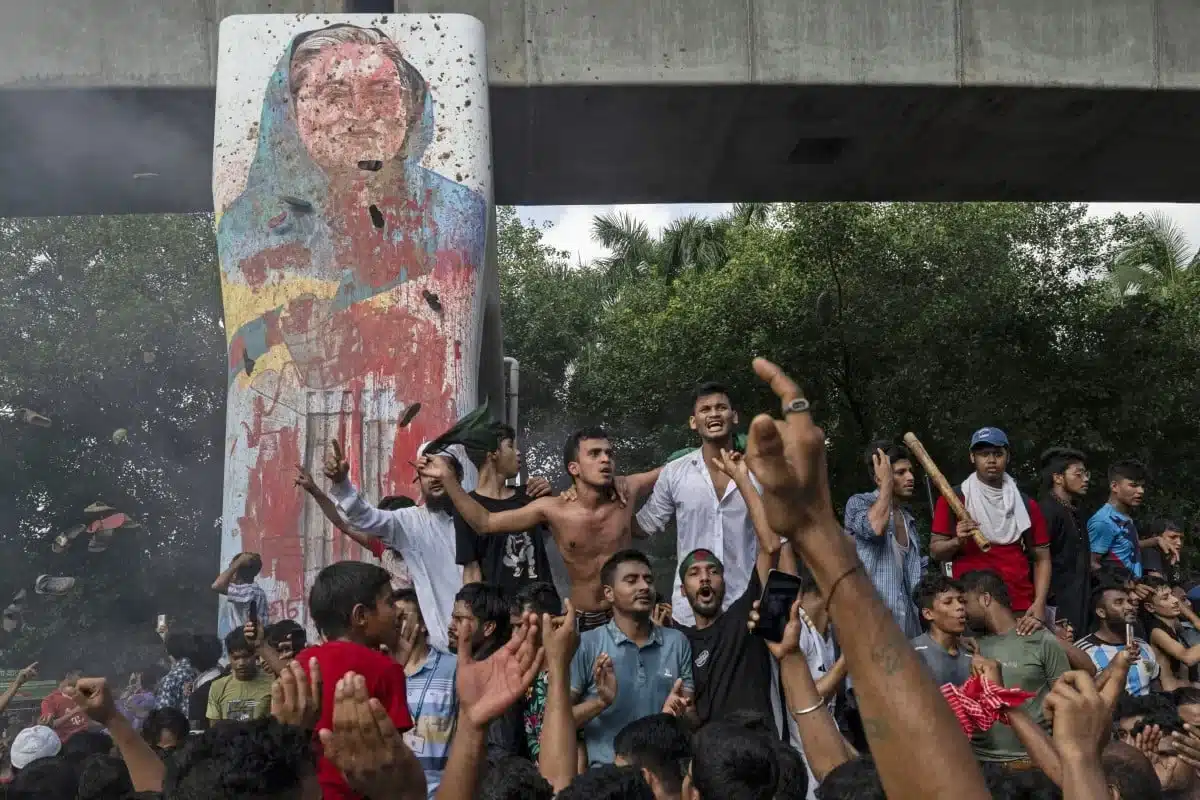
The chief prosecutor of Bangladesh’s International Crimes Tribunal (ICT), Mohammad Tajul Islam, has announced that the tribunal will seek the extradition of former Prime Minister Sheikh Hasina from neighboring India. This move comes amidst mounting allegations against Hasina. Specifically, the allegations follow a dramatic escalation of student-led protests in Bangladesh. Consequently, these protests led to Hasina’s resignation and her subsequent flight to India on August 5. As a result, her departure ended a 15-year period of authoritarian rule and marked a significant shift in the country’s political landscape.

Hasina established the ICT in 2010 to investigate war crimes committed during the 1971 independence war against Pakistan. However, the tribunal’s focus has now shifted to addressing the allegations against Hasina herself. The ICT accuses Hasina of severe human rights violations, including orchestrating massacres, mass detentions, and extrajudicial killings of political opponents. The allegations against Hasina have gained traction. This increase in attention followed weeks of widespread demonstrations. The protests ultimately challenged her regime. They also exposed the scale of the alleged abuses.

Also See: Clashes Erupt Between Pakistani Forces and Afghan Taliban

Tribunal Escalates Extradition Efforts for Hasina

Islam underscored the tribunal’s resolve to seek justice for these human rights abuses. Islam said in a statement to reporters on Sunday, “As the main perpetrator has fled the country, we will start the legal procedure to bring her back.” The legal efforts to extradite Hasina will mark a significant escalation. These efforts are part of the tribunal’s ongoing attempts to address and rectify the human rights abuses attributed to her administration.

The pursuit of Hasina by the ICT adds a complex layer to the political and legal challenges faced by both Bangladesh and India. Hasina’s departure has intensified domestic controversies. It has also attracted international scrutiny. The tribunal’s actions highlight growing concern over the allegations against Hasina. They underscore broader issues of accountability and justice in Bangladesh. Observers expect the legal process to extradite Hasina to be contentious. They anticipate it will be closely watched on the global stage. This situation reflects how political conflicts profoundly impact human rights and international relations.

This news story is produced with inputs from AFP (Agence France-Presse). The content reflects the latest available information and is provided for informational purposes.


News Desk

Your trusted source for insightful journalism. Stay informed with our compelling coverage of global affairs, business, technology, and more.

Recent

An analysis of how the Taliban’s promised 2021 amnesty has collapsed into widespread arrests, killings, and repression, echoing historical patterns of Taliban rule.

A New Afghanistan, Old Methods

The Taliban’s 2021 promise of a general amnesty has collapsed into systematic arrests, disappearances, and killings—especially in Panjshir. Despite assurances of moderation, evidence from 2021–2025 shows a deliberate campaign to eliminate former officials, suppress dissent, and rule through fear, mirroring the Taliban’s historical patterns of coercion and violence.

Read More »
Oil, Ports, and Proxies: The Battle for Hadhramawt and the Red Sea

Oil, Ports, and Proxies: The Battle for Hadhramawt and the Red Sea

The expulsion of Saudi-backed forces from Hadhramawt by UAE-aligned proxies signals the collapse of the Riyadh-Abu Dhabi alliance. In Yemen and Sudan, Abu Dhabi leverages non-state actors to secure ports, resources, and influence, while Riyadh prioritizes state stability and territorial consolidation. The result: a regional realignment where Gulf unity gives way to fierce intra-Gulf competition.

Read More »
India’s Coercive Foreign Policy in 2025 By Farwa Imtiaz

India’s Coercive Foreign Policy in 2025

India’s foreign policy in 2025 marks a clear break from its earlier soft-power orientation, shifting toward overt coercion and interference. Once seen as a restrained global actor, India now increasingly relies on hard power, diplomatic pressure, and transnational repression to shape external outcomes. Through cases in Canada, Pakistan, Bangladesh, and Türkiye, this article shows how India has adopted a more assertive—and often destabilizing—approach to protect its expanding ambitions, using tools ranging from foreign interference to military escalation and economic coercion.

Read More »
The End of Liberal Internationalism

The End of Liberal Internationalism

The 2025 U.S. National Security Strategy marks a decisive break from the post-1945 liberal order, replacing globalism and multilateralism with a neo-Westphalian focus on sovereign nation-states, fortified borders, and exclusionary spheres of influence. It signals America’s retreat from global leadership and the return of great-power rivalry.

Read More »
A critical analysis of Drop Site News’ report alleging a UK–Pakistan “swap deal,” exposing its reliance on anonymous sources, partisan framing, and legally impossible claims.

Anonymous Sources, Big Claims, Thin Ground

A recent Drop Site News report claims a covert UK–Pakistan exchange of convicted sex offenders for political dissidents. But a closer look shows the story rests on hearsay, anonymous insiders, and a narrative shaped more by partisan loyalties than evidence. From misrepresenting legally declared propagandists as persecuted critics to ignoring the legal impossibility of such a swap, this report illustrates how modern journalism can slip into activism. When sensational claims outrun facts and legality, credibility collapses, and so does the line between holding power accountable and manufacturing a story.

Read More »