Since the Taliban’s return to power in August 2021, Afghanistan has experienced one of the most abrupt economic reversals of the 21st century. The collapse of the internationally backed Republic dismantled an aid-dependent economic architecture, replacing it with an improvised, inward-looking system operating under acute financial isolation.
With foreign assistance suspended, central bank assets frozen, and international recognition denied, the economy has been forced to function through informal networks, narrow regional trade corridors, and coercive revenue extraction. The Taliban-era economic model represents a structural regression from the pre-2021 trajectory, marked by extreme informality, fiscal fragility, and an economic logic that increasingly fuels cross-border tensions and conflict dynamics.
Before August 2021, Afghanistan’s economy was heavily distorted but institutionally legible. Between 2002 and 2020, foreign aid constituted approximately 38-45 percent of GDP, financing core state expenditures, including public sector salaries, security costs, and basic service delivery. Civilian grants alone averaged between USD 4-5 billion annually in the late 2010s, according to World Bank data.
Economic growth, though volatile, averaged roughly 2.5-3 percent per year between 2015 and 2019, before slowing due to COVID-19 and political uncertainty. The Afghan state directly employed over 500,000 individuals, while a modest formal private sector emerged in telecommunications, construction, banking, and logistics. Agriculture remained the dominant employer, absorbing close to 40 percent of the workforce, though its contribution to GDP was considerably lower.
Afghanistan also began limited regional economic integration. Trade with Pakistan and Iran expanded steadily, while Central Asia emerged as a supplier of electricity and a potential transit partner. Long-term infrastructure projects such as TAPI and CASA-1000 reflected ambitions, most notably through the TAPI gas pipeline and the CASA-1000 electricity project to embed Afghanistan within regional markets. Alongside this formal economy, illicit activities such as opium production and smuggling persisted, but they remained structurally parallel rather than central to state finances.
Post-2021 Economic Model
The Taliban takeover dismantled Afghanistan’s formal fiscal foundations. International budgetary support ceased almost immediately, public spending fell by more than 70 percent within months, and approximately USD 9.5 billion in reserves were frozen abroad. Lacking international recognition and correspondent banking access, the de facto authorities were left with minimal monetary or fiscal policy tools.
Formal revenue streams collapsed, forcing reliance on customs duties, border taxation, and internal checkpoints. Taliban officials have claimed annual revenues exceeding USD 2 billion by 2023, as referenced in reporting by UNAMA and the Special Inspector General for Afghanistan Reconstruction (SIGAR), though independent assessments suggest these figures are uneven, coercively collected, and disconnected from productive growth.
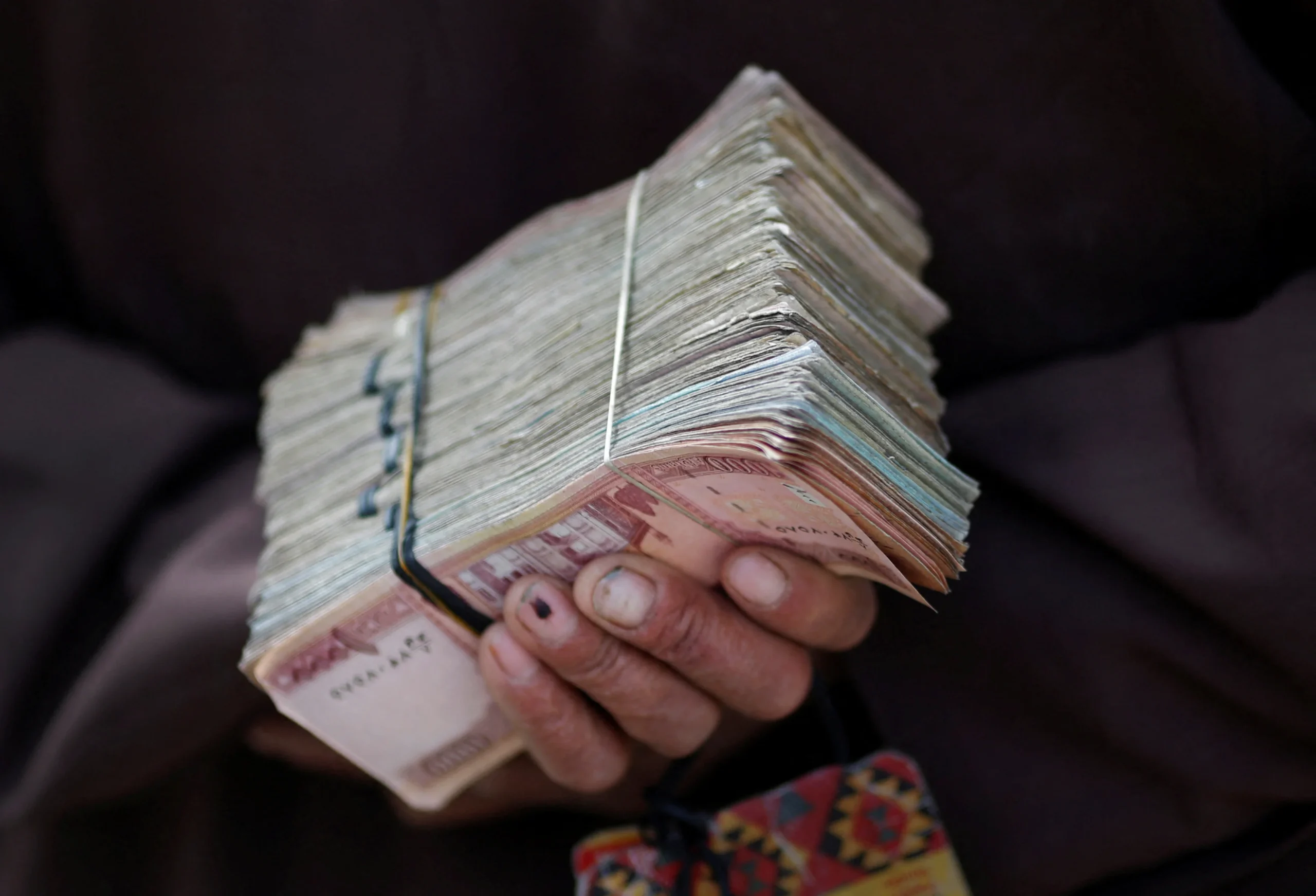
The private sector has retreated almost entirely into informality. Banking activity is severely constrained, credit markets are largely absent, and most transactions are conducted in cash or via hawala networks. Remittances from the Afghan diaspora, estimated at USD 1.5-2 billion annually, along with wages earned by Afghan laborers in Iran and Pakistan, have become critical economic lifelines.
Sectorally, agriculture remains dominant but weakened by drought, rising input costs, and market fragmentation. Mining, often highlighted by the Taliban as a future growth engine, remains underdeveloped due to sanctions, political risk, and infrastructural deficits. Small-scale trade, transport, and low-value services now constitute the core of economic activity.
In practice, Afghanistan’s economy operates through regional corridors linking it to Pakistan, Iran, and Central Asia. Informal credit substitutes for formal finance, while periodic humanitarian dollar inflows temporarily stabilize the currency. Inflation surged above 12 percent in 2022 before moderating, based on IMF country data, though purchasing power remains significantly depressed.
Taliban economic governance prioritizes revenue extraction and control rather than developmental reform. Customs enforcement is strict, but institutional modernization is minimal. Restrictions on women’s education and employment have removed an estimated 20–25 percent of potential labor force participation, directly constraining household incomes and long-term human capital formation.
Current Economy in Context
The divergence between pre- and post-2021 Afghanistan is most evident in capital availability and liquidity. Before 2021, donor flows and international banking access ensured liquidity and fiscal predictability. Today, dollar scarcity is chronic, and hawala networks have become indispensable.
Fiscal stability has eroded sharply. Donor-backed buffers once ensured regular salary payments and basic service provision. Under the Taliban, public wages are irregular, social services skeletal, and infrastructure investment negligible. Formal employment has contracted substantially, pushing skilled labor into emigration or informal survival strategies.
Social outcomes have similarly deteriorated. The exclusion of women from education and work has reversed two decades of incremental human capital gains. Trade patterns reflect this regression: formal exports have declined, while informal and illicit trade has expanded, deepening Afghanistan’s entanglement with regional shadow economies.
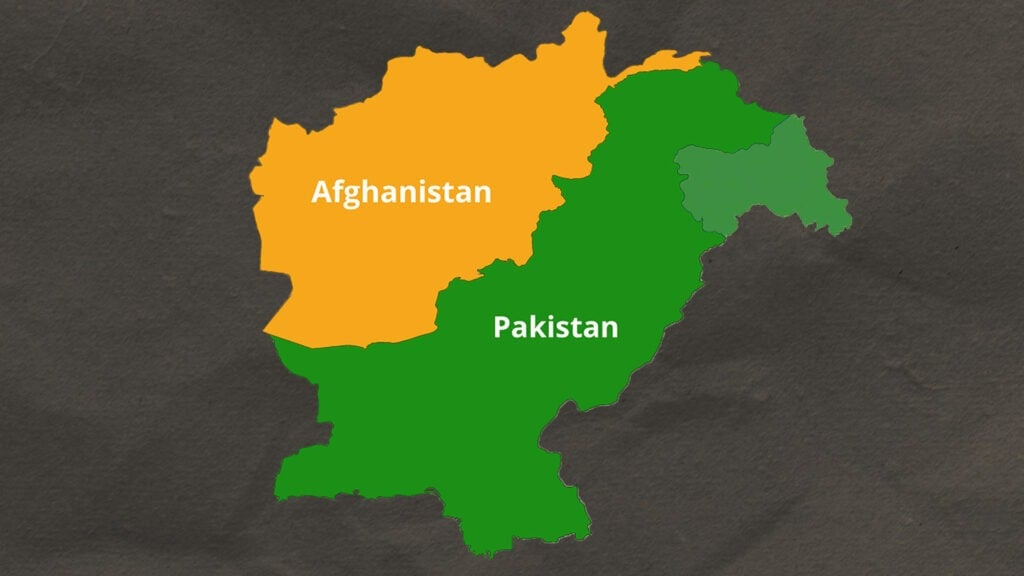
Pakistan shares Afghanistan’s reliance on informal economic activity but differs fundamentally as a recognized state with access to global finance, IMF programs, and a diversified industrial base. According to State Bank of Pakistan (SBP) data, Pakistan’s formal trade and financial inflows remain embedded in global markets despite chronic balance-of-payments stress. Afghanistan’s dependence on Pakistani ports and transit routes grants Islamabad leverage, while simultaneously exposing Pakistan to economic and security spillovers. SBP trade statistics show that Afghanistan has consistently remained among Pakistan’s top regional export destinations, with bilateral trade fluctuating between USD 1.2-1.8 billion annually in recent years.
Iran provides a partial parallel, having adapted to prolonged sanctions through informality and barter trade. However, Iran’s institutional depth and diversified economy distinguish it sharply from Afghanistan’s survival-oriented model. Central Asian states, by contrast, operate commodity-export systems with functioning financial institutions. Afghanistan’s potential integration as a transit hub remains unrealized due to political risk and infrastructural decay.
Way Forward
For Kabul, economic stabilization requires pragmatic engagement with regional partners to normalize trade, reform customs administration, and gradually integrate informal activity into the formal revenue framework. Equally critical is a clear political signal to the international community: a demonstrable break from insurgent logics and any tolerance for transnational militant groups. Sustained economic recovery is unlikely without verifiable commitments to prevent Afghan territory from being used by terrorist networks, as credibility deficits continue to deter investment, banking re-engagement, and development assistance. Restoring even limited central bank credibility, both technically and reputationally, would significantly ease currency pressures and unlock cautious external engagement.


![Ukrainian and Russian flags with soldier silhouettes representing ongoing conflict. [Image via Atlantic Council].](https://southasiatimes.org/wp-content/uploads/2026/02/2022-02-09T000000Z_1319661209_MT1NURPHO000HXCNME_RTRMADP_3_UKRAINE-CONFLICT-STOCK-PICTURES-scaled-e1661353077377.jpg)