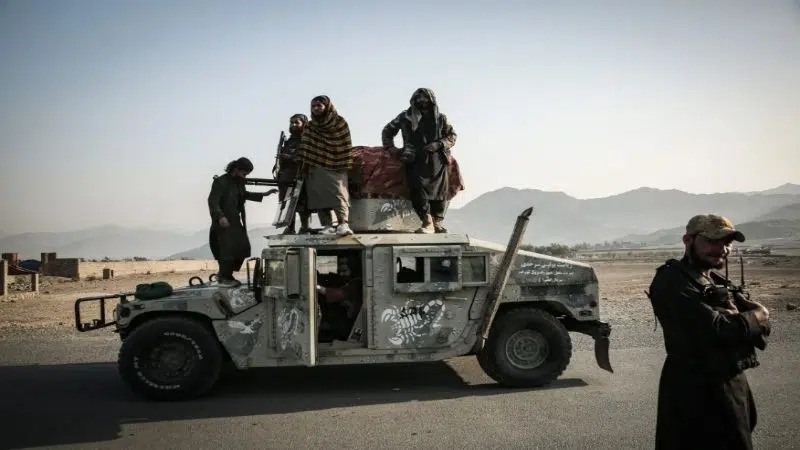
It is no secret that Afghanistan and Pakistan have had a tense relationship since the latter was established along the former’s eastern border upon the partition of British India in August 1947. Despite their numerous commonalities, the two nations have thus far been unable to forge genuine cordial relations owing to territorial disputes and other disagreements, particularly during the period of war in Afghanistan. However, history has thus far proven that—for better or worse—the conjoined twins will undoubtedly continue to share each other’s fate. After all, Pakistan has historically served as an important conduit for transit trade with Afghanistan, and each of the two countries is one of the other’s top trading partners.
Afghanistan: The Heart of Asia
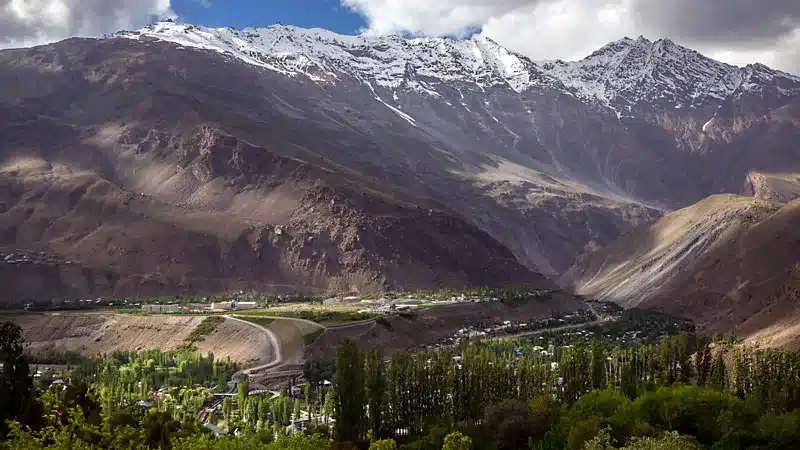
A landlocked country, Afghanistan is situated at the crossroads of Central and South Asia. Also known as the “Heart of Asia”, it is surrounded by Pakistan to the east and south, Iran to the west, Turkmenistan to the northwest, Uzbekistan to the north, Tajikistan to the northeast, and China to the east and northeast. The Hindu Kush range divides the country’s plains in the north and southwest, which are predominantly mountainous. The immense significance this has rendered the country was not lost on the renowned Urdu poet and spiritual founder of Pakistan, Allama Muhammad Iqbal, who once wrote:
“Asia is a body of water and earth, of which the Afghan nation is the heart. From its discord, the discord of Asia; and from its accord, the accord of Asia.”
Although the West may not currently hold such a view, the conventional Western perception that the East, including Afghanistan, was a land of immense prosperity was, in fact, entirely true for hundreds, perhaps thousands, of years. Whereas Europe was then rather poor and inconsequential, the East was the region of wealth, high-value international trade, and intellectual prosperity, with Afghanistan playing a leading role by virtue of its location.
For millennia, the renowned Silk Road has traversed Afghanistan.
Because of its geographic placement halfway between the China Sea and the Mediterranean, the country has always been at a strategic crossroads.
Balkh, Bamiyan, Herat, Badakhshan, and Kabul were among the cities that were situated along the Silk Road’s network. Despite its daunting topography, Afghanistan and the governing empires profited greatly from free trade through these ancient trade routes. Some of these led to China in the east; others to the nomadic steppe in the north; some southeast into India; and still others east into Iran, which eventually leads to the Mediterranean Sea and Europe. Since goods had to pass through Afghanistan to move between any of these locations, Afghan cities that were ideally positioned along these trade routes were able to reap enormous benefits as hubs of mercantile exchange.
Thus, the historical influence of Afghanistan on global trade is not unexpected. For instance, the blue lapis lazuli stone used in the widely recognized Tutankhamun funerary mask was imported into Egypt about 1300 BC from Badakhshan, Afghanistan. Even earlier, around 2500 BC, lapis lazuli from Afghanistan was transported to Iraq for the harps that were buried with the kings of the ancient city of Ur. This demonstrates the longevity and geographic scope of the trading routes.
Pakistan: Ancient Connections
Even in ancient times, trade flowed between the regions that are now Afghanistan and Pakistan. Still operational today as the Karakoram Highway, a single route from China through the Karakoram mountains made up the greater part of the famed Southern Silk Road. Then it headed westward with spurs to the south so that travellers might conclude their journey by sea from multiple points. It traversed the rugged mountains, went through northern Pakistan, crossed the Hindu Kush mountain ranges into Afghanistan, and then rejoined the northern route close to Merv, Turkmenistan. Another branch route led from Herat through Susa to Charax Spasinu at the head of the Persian Gulf, across to Petra, and then on to Alexandria and other eastern Mediterranean ports, from where ships transported the merchandise to Rome.
Possibly one of the Silk Road’s most iconic locations is the Khyber Pass, which links Pakistan’s Khyber Pakhtunkhwa province with Afghanistan’s Nangarhar province. In its prime, the Parthian Empire fought for control of routes like these in order to benefit from the trade in luxury goods travelling from China to Western Asia and Europe, such as silk, jade, and rhubarb. With the addition of luxury items like ivory, pepper, and textiles to the Silk Road trade from the Indian subcontinent, Gandhara, in modern-day Pakistan, rose to prominence as a regional hub of trade linking Taxila in Pakistan and Bagram in Afghanistan through the Khyber Pass.
It is also vital to remember that conflicts, like commerce, are not a recent phenomenon in the region, especially in light of more recent confrontations that have strained ties between the two nations.
Historical invasions of the Indian subcontinent, including those of Cyrus, Darius I, Genghis Khan, and later Mongols like Duwa, Qutlugh Khwaja, and Kebek, have primarily occurred through the same Khyber Pass. Among the most notable Muslim conquests of the Indian subcontinent to have been facilitated by the Khyber Pass were those of Mahmud Ghaznavi, Muhammad Ghori, and the Turkic-Mongols.
A Shared Future
Presently, under the Afghanistan-Pakistan Transit Trade Agreement (APTTA), cargo trucks from both countries are allowed to transit goods primarily through the Torkham and Chaman border crossings. The agreement additionally permits Afghan trucks to transport commodities to India via Pakistan up to the Wagah border crossing. Perhaps most significantly, Pakistan’s seaports have contributed to Afghanistan’s trade. The Pakistani ports of Karachi and Port Qasim in Sindh have long been used by Afghan traders for transit.
However, a third alternative that is less distant from Afghanistan has recently become readily accessible: the Gwadar port.
On the other hand, Afghanistan acts as Pakistan’s gateway to the Central Asian Republics, which are abundant in natural resources.
In addition to the widely discussed China-Pakistan Economic Corridor (CPEC), which is now being extended into Afghanistan, a number of other connectivity initiatives have been envisaged to resurrect historical golden routes. One of these projects is the Khyber Pass Economic Corridor (KPEC), whose development cost of $482.75 million was approved for funding by Pakistan and the World Bank in December 2019. It is a part of the Central Asia Regional Economic Cooperation Program’s (CAREC) Corridors 5 and 6, which aim to create the quickest commercial route between Uzbekistan, Tajikistan, Afghanistan, Pakistan, and the strategically crucial Arabian Sea to the south. With Pakistan being the sole exception, the other three countries are landlocked states. While Corridor 6 is focused on connecting the region to Europe, the Middle East, and Russia, Corridor 5 traverses directly through Pakistan. In the long run, it will make it possible for Pakistan to access Central Asian markets and for Central Asians to benefit from Pakistani seaports.
Although there is little ambiguity about India’s competitive ambitions in the region, which it hopes to achieve by circumventing Pakistan, the greatest challenge faced by both Pakistan and Afghanistan is not to convince stakeholders of the feasibility of their transboundary projects but to forge a conducive environment for them.

Your go-to editorial hub for policy perspectives and informed analysis on pressing regional and global issues.