In what may be regarded as one of the most eventful chapters of modern history, the world stood witness as the Taliban returned to power in Afghanistan post-United States withdrawal from the country in August 2021. It brought back into focus the beginnings of a 20-year-long occupation, when the US-led invasion in 2001 toppled the original Taliban regime, laying the foundations for a Western-backed governmental setup under the Bonn Agreement. Alienated as they undoubtedly were, then as stakeholders in these seemingly “Afghan-led” conferences wherein being debated the future course of the country’s affairs, there is little reason to doubt their conviction to reinstate themselves and demand recognition, at a time more opportune, as indicated by a famously reported, almost prophetic remark by a Taliban commander to Rick Hillier, Canada’s former Chief of the Defense Staff, “You have the watches, but we have the time”.
At present though, making sense of the time elapsed, and its significance for Afghanistan and its people presses upon the international community the perennial question of conferring external legitimacy to an entity that is now the undisputed authority in the country. With no official recognition of the Taliban regime as yet on the horizon, the region is rife with much speculation as to what it may bring to it, if and when it happens.
Taliban’s Quest for Legitimacy
The Taliban’s long quest for incontrovertible legitimacy, at least on the international stage, is far from over.
From a conceptual standpoint, ‘legitimacy’ in political science per John Locke’s argument in ‘The Second Treatise of Government’ is the implicit consent of the governed, wherein it is imperative for an authority to derive its legitimacy from its sphere of influence over territory or its inhabitants, and by extension have the right to exercise power or make laws within that sphere. Devoid of foreign recognition, a government does not per se cease to be ‘legitimate’, for ‘recognition’ serves only to declare acceptance of a legal situation where an entity is in effective control over a territory, and is not therein practically rivaled by any other. Interesting as it may be, it is the political vacuum that is far more undesirable in international law than the constitutionality of the means through which the said entity gained power or even the practices in which that power is manifested. Nevertheless, there is no denying that nation-states chart their course in the world today by securing the necessary international clout to affirm their existence and stability as sociopolitical and socioeconomic entities, making recognition and conferred legitimacy by the international system still relevant if not an absolute necessity.
During the war, successive Afghan governments bore the fruits of international legitimization which reflected itself in aid worth nearly $65 billion, with the stated objective of developing the country in key areas of education, agriculture, infrastructure, security, etc. Although support had indeed waned post-2011, as international donors became wary of the continued dependence of the recipients with no end to the war in sight, all of it was to change as the Taliban ultimately took over from the Ashraf Ghani regime. Most prominently, the United States immediately froze upon the withdrawal of their troops from the country $9.5 billion in Afghan central bank assets, rendering them inaccessible to the de facto government, which has been since then subject to numerous coordinated attempts by the Western governments and institutions at delegitimization and marginalization.
Taliban, Legitimacy & the World
If the rationale behind these attempts was to isolate the Taliban diplomatically and block ready access to aid or other monetary packages, it might have to an extent served its purpose, but did not seem to take into due consideration the repercussions of these actions on an already struggling Afghan society. United Nations Development Program (UNDP) had projected that by the middle of 2022, 97% of Afghans would be living below the World Bank-designated poverty line of $1.90 a day—a humanitarian crisis that is not resultant of the Taliban takeover but aggravated by isolation meted by much of the international community at a time when the country is reeling from decades of conflict, poverty, food insecurity, as well as a susceptibility to natural calamities.
For all the lip service paid to world peace, the Western governments, in particular, must reflect on whether subjecting Afghanistan to a diplomatic vacuum would win them any favors in the long run.
Differences with the Taliban, ideological or otherwise, do not take away from the fact that they are a political reality, and the pursuit of a policy of non-engagement with them will only strengthen any inherent disregard for international norms, which in the case of extending formal recognition they would be obligated to honor.
Another cause for concern is the Islamic State of Khorasan Province (ISKP), the regional affiliate of the Islamic State active in Central and South Asia, and the rising frequency of deadly attacks carried out at its behest in the country since August last year. In this view, to both abandon engaging meaningfully with Afghanistan and expect that its soil will not fall prey to extremist ambitions of any terror outfit is akin to closing one\’s eyes to the specter that is large and looming.
A Way Forward for International Community
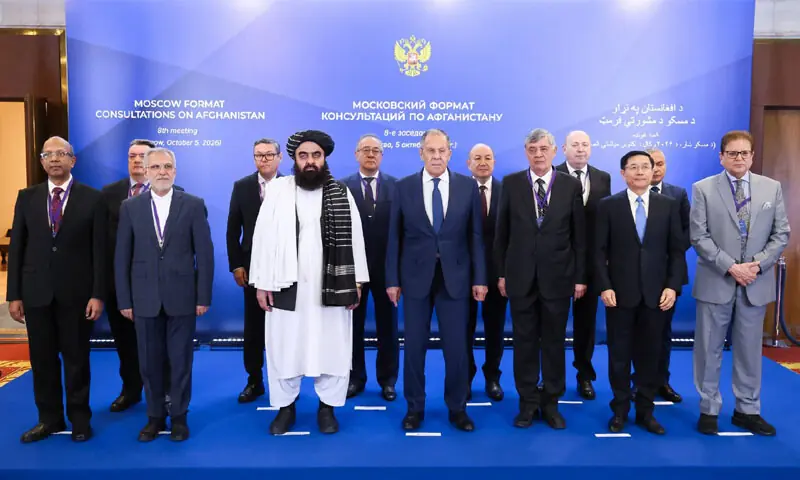
One way forward for the larger international community would be to adopt a more pragmatic approach as that of others in the region, notably Afghanistan’s neighbors and Russia, and how they have conducted affairs of mutual interest with the country. These include the Trans-Afghan Railway Line project launched by Uzbekistan, which will connect Central Asia to the seaports of Pakistan. In the same spirit of working toward a more connected, economically prosperous region, several other prospective projects and ventures have been deliberated, including the Turkmenistan-Afghanistan-Pakistan-India (TAPI) gas pipeline, an extension of the China-Pakistan Economic Corridor (CPEC) to Afghanistan, etc.
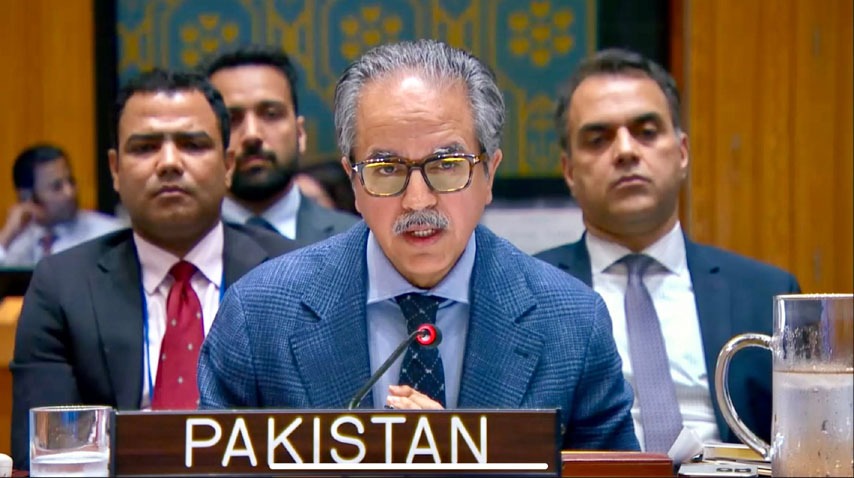
For its part, Pakistan did not cease constructive engagement with or humanitarian assistance to Afghanistan even when relations between the two countries were seemingly marred at first by vicious propaganda by regional spoilers in wake of US withdrawal, and then owing to cross-border conflicts that arose primarily due to attacks orchestrated by Tehrik-i-Taliban (TTP) from Afghan soil targeted at Pakistan’s military personnel. As of now, talks mediated by the Afghan Taliban are underway between the government of Pakistan and TTP leadership with hopes of brokering a mutually acceptable political settlement.
On closer inspection, the US and its allies may discover that there is more to gain from engagement and/or recognition of the Taliban. For one, this would ensure not only the stability and security of the region by not leaving an unintended void for groups such as ISKP to gain a foothold, but also secure the US its place in an emerging multipolar world by not deserting Afghanistan, and thereby allowing Russia and China to assume an undisputed advantage. Moreover, greater human security in Afghanistan can only be guaranteed foremost by providing necessary safeguards against their economic woes, and mutually agreed on preconditions vis a vis the Taliban on the subject of human rights, instead of seeking an unreasonable goal of erasing them from the broader world stage, let alone the political future of their own country.
The views expressed in this article are the author’s own. They do not necessarily reflect the editorial policy of the South Asia Times.

Fariha Rashid is an independent research analyst with a keen interest in Indian affairs and history, driven by her love for diverse perspectives as an avid reader. She can be reached on X @_FarihaRashid_