
There is a comforting fiction that has survived four years of Taliban rule in Kabul, that whatever else the Taliban are, they are at least Afghan.
Saifullah Khalid’s book, built on more than three decades of direct observation stretching back to the anti-Soviet jihad, makes a considerably more uncomfortable argument: that this distinction has collapsed, and that what governs Afghanistan today is not a Taliban government with foreign guests, but a fused Taliban–Al Qaeda structure in which the guests now sit at the table.
The documentary record, where it exists independently of Khalid’s own reporting, tends to corroborate the shape of the argument. The UN Security Council’s Monitoring Team, in report after report since 2021, has stated plainly that Al Qaeda maintains a presence in at least a dozen Afghan provinces.
And that the historic personal and ideological bonds between Taliban and Al Qaeda leadership remain intact, reinforced rather than severed by the Doha agreement’s non-enforcement.
What Khalid’s decades of ground access seem to add is texture the UN’s remote monitoring can’t easily supply. Al Qaeda-linked figures inside the machinery of government rather than merely tolerated in the hills.
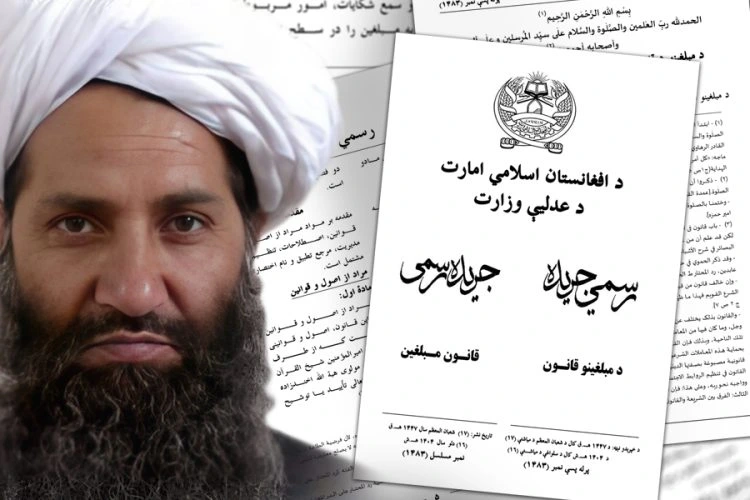
Khalid’s claim that Haibatullah’s regime violates Pashtun tradition as much as it claims to fulfill Sharia is a sharper argument than the standard “the Taliban aren’t real Muslims” critique, because it doesn’t rely on an outsider’s theological judgment. It uses the movement’s own claimed cultural inheritance against it.
Pashtunwali is famously decentralized, consensus-driven, and resistant to exactly the kind of unaccountable one-man rule that Haibatullah has built in Kandahar. A supreme leader who is functionally unreachable, who overrides his own cabinet’s decisions on girls’ education and media policy by decree, and who has centralized power to a degree even his own commanders reportedly resent, is not restoring a traditional order. In fact, he is dismantling the Pashtun traditional order, using its vocabulary as camouflage.
It’s telling that the aspect of Khalid’s research most easily corroborated by independent human rights reporting — the near-total exclusion of Tajiks, Uzbeks, and Hazaras from senior government and security positions. It is also the aspect least discussed in Western coverage, which fixates almost exclusively on the terrorism-nexus angle.
But the two are connected, not separate: a regime built on narrow ethnic and factional loyalty is structurally more dependent on ideologically committed outside allies like Al Qaeda to compensate for its lack of broad domestic legitimacy. Exclusion and internationalization of the security apparatus are two faces of the same coin.
The real payoff of the “Taliban-Al-Qaeda hybrid regime” framing is that it resolves a puzzle that conventional Taliban-watching struggles with: why does a government that claims to want international recognition keep sheltering the TTP, tolerating ETIM, absorbing Al Qaeda cadres into state structures.
The standard answer is incompetence or insularity. Khalid’s framing offers a sharper one: the regime isn’t failing to secure recognition despite these choices, it’s making these choices because the actual internal balance of power depends on constituencies.
For Al Qaeda-aligned hardliners around Haibatullah, international isolation is not a cost but a feature, insulating them from exactly the kind of outside scrutiny that a recognized government would have to accept.
The point this book makes effectively is that Taliban don’t just harbor terrorists, but they are embedded with them.

SAT Commentaries, a collection of insightful social media threads on current events and social issues, featuring diverse perspectives from various authors.