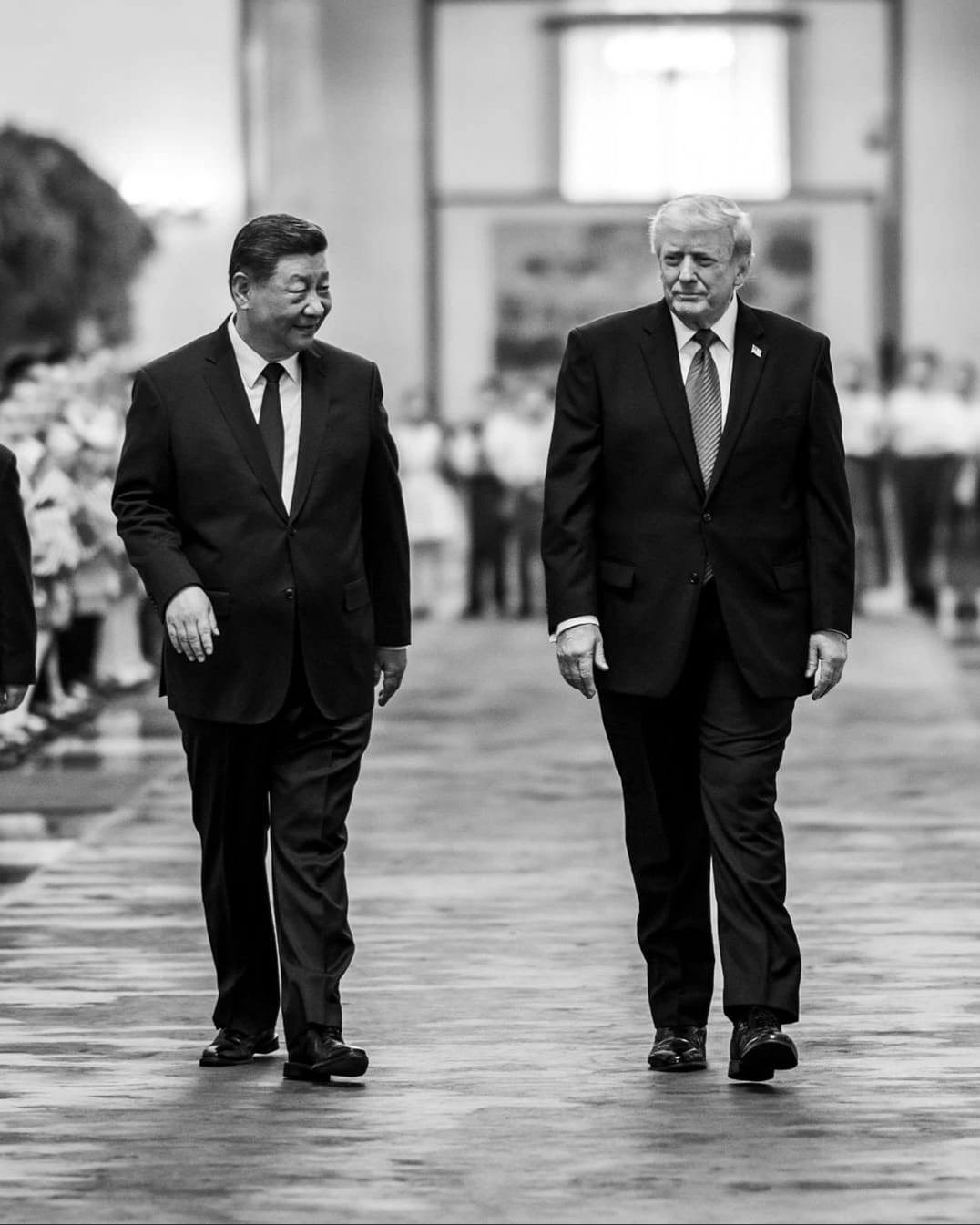
Nine years after his last state visit to China, the US President, Donald Trump, returned to the Great Hall of the People on May 13, 2026, not merely as a returning president, but as a negotiator-in-chief facing a vastly different global chessboard. The spectacle was vintage Beijing, grand, meticulous, and heavy with symbolism, but beneath the red carpet lies a high-stakes gamble. The optics of the initial two-hour bilateral meeting, which went longer than scheduled, suggested a desperate craving for stability in a world currently defined by volatility. While Trump characterized the talks as “great,” the substance reveals a complex relationship between two superpowers attempting to de-escalate without appearing to retreat.
The CEO Cabinet: Diplomacy by Ledger
Perhaps, the most striking aspect of this visit is the sheer weight of American corporate muscle trailing the President, transforming a traditional diplomatic mission into what resembles a high-stakes boardroom expansion. By flanking himself with industry titans like Nvidia’s Jensen Huang, Apple’s Tim Cook, Tesla’s Elon Musk, and BlackRock’s Larry Fink, Trump is sending an unmistakable message: the United States intends to trade its way out of geopolitical tension. The primary objective behind this corporate entourage is to force an opening in China’s formidable digital and financial “Great Wall,” thereby securing unprecedented market access for American technology and investment firms.
To achieve this, Trump is wagering that Beijing’s deep-seated desire for global stability and economic certainty will ultimately compel it to yield lucrative concessions for American silicon and capital. However, the prominent presence of these executives also exposes a critical vulnerability. Because these multinational corporations are already so deeply integrated into Chinese manufacturing supply chains and consumer markets, they remain as much hostages to the fragile bilateral relationship as they are architects of its future.
The Shadow of the US-Israel War and the Strait of Hormuz
The timing of this summit, rescheduled from March following US and Israeli strikes on Iran, frames the entire dialogue. Trump arrives in Beijing with the global economy reeling from the Strait of Hormuz blockade. Here, the power dynamic shifts in favor of President Xi Jinping.
As Iran’s primary trading partner, Beijing holds the keys to the shipping corridors that Trump needs reopened to stabilize domestic energy prices and his own political standing. While Trump publicly insists he does not need China’s help to end the conflict, his presence in Beijing tells a different story. China knows that a “weakened” Trump is a Trump more likely to bargain on trade in exchange for a Chinese “nudge” to Tehran.
Taiwan: The Non-Negotiable Core
If Trump brought a shopping list of economic demands, Xi Jinping brought a manifesto on sovereignty. The narrative from the Chinese side regarding Taiwan was notably sharp. Warning of “clashes and even conflicts” if the issue is mishandled, Xi has drawn a clear line in the sand.
“Taiwan is the most important issue in the relationship… the U.S. must exercise extra caution.” — Chinese State Media
Xi is essentially demanding a “trade-off”: a cessation of US arms sales and a long-term trade truce in exchange for Chinese cooperation on regional security and agricultural purchases.
A Marriage of Convenience: Rejuvenation meets MAGA
The most intriguing takeaway from the initial talks is the attempt to find a shared linguistic bridge. Framing the future as “constructive, strategic and stable” is an attempt to move past the “Cold War” rhetoric of the early 2020s. Xi’s statement that the “great rejuvenation of the Chinese nation” and “Make America Great Again” can coexist is a masterful stroke of rhetorical diplomacy. It offers Trump a way to claim victory at home, securing deals for soybeans, beef, and Boeing, while allowing Xi to maintain his trajectory toward regional hegemony.
The Verdict
As the two leaders prepare for their second round of talks this Friday, the world watches a pragmatic pivot. China likely feels it holds the upper hand, utilizing the Iran crisis to extract concessions on Taiwan and trade. Trump, meanwhile, is betting that a “constructive” relationship can provide the economic stability required to navigate his domestic challenges.
Whether this summit marks a genuine “better future” or merely a strategic pause in an inevitable rivalry remains to be seen. For now, the world’s two largest economies have decided that, for at least the next three years, a stable tension is preferable to an unstable conflict. The “Deal” is on the table; the cost of the signature, however, remains to be calculated.

Your go-to editorial hub for policy perspectives and informed analysis on pressing regional and global issues.