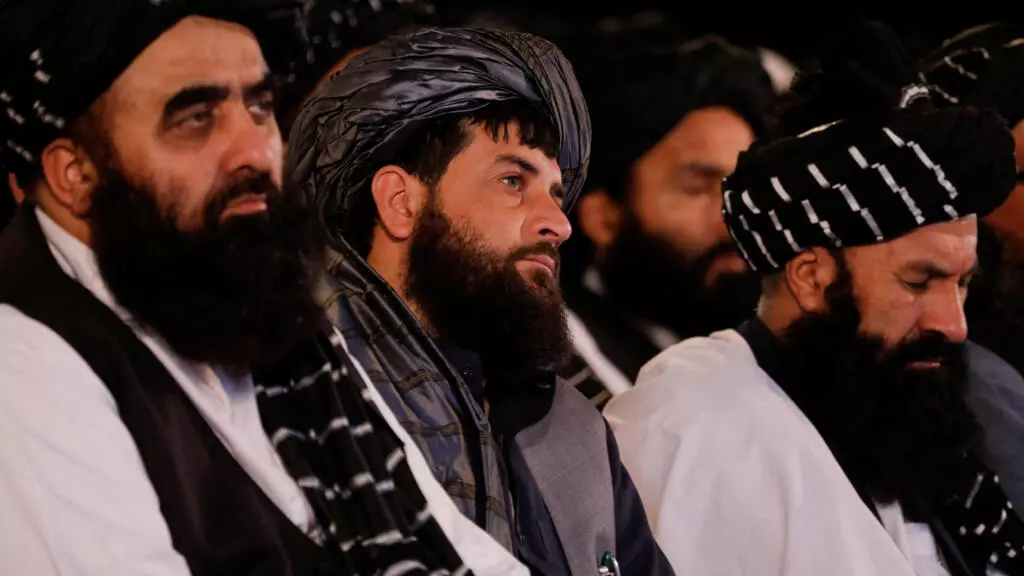
On 10 March 2026, the 1988 Taliban Sanctions Committee of the United Nations Security Council amended its list of 22 people with biographical information, aliases, and current positions of Taliban members who now hold posts in the de facto government of Afghanistan. These revisions did not involve issues of introducing more sanctions or removing the existing ones, instead, they aimed at maintaining the validity and enforceability of the sanctions profiles as the Taliban continue to govern present-day Afghanistan.
These updates fall under the sanctions framework established by United Nations Security Council Resolution 1988 (2011), which created a dedicated regime targeting Taliban-linked individuals and entities considered threats to Afghanistan’s peace and stability. The measures imposed under this regime include asset freezes, travel bans, and arms embargoes on listed individuals, requiring all UN member states to restrict financial and logistical interactions with sanctioned persons. The current list of sanctions list includes over 100 Taliban-linked individuals and several entities subject to these measures.
The sanctions oversight functions are handled by the Afghanistan Sanctions Committee that is supported by an Analytical Support and Sanctions Monitoring Team responsible for monitoring implementation, updating listings, and reporting on how Taliban-linked networks overlap with terrorism financing and regional militancy.
The broader sanctions architecture was recently reaffirmed through UNSC Resolution 2816 (2026), adopted in February 2026, which extended the mandate of the Monitoring Team until February 2027 amid continuing international concern about terrorism links, governance restrictions, and regional security risks originating from Afghanistan. The resolution also highlighted threats from militant groups including including Tehreek-e-Taliban Pakistan (TTP), Balochistan Liberation Army (BLA), Islamic State Khorasan Province (ISKP), and Al Qaeda that are active in and around the region.
Yet a structural vulnerability remains within the sanctions architecture. The existing list is mainly about the figures from the Taliban’s initial era of insurgency rather than the full composition of today’s governing leadership. As a result, the 1988 list does not include key personalities of today, including the Supreme Leader Haibatullah Akhundzada and the Defence Minister Mullah Mohammad Yaqoob, even though they have the ultimate authority within the Taliban hierarchy. While mid-level commanders and former Taliban leaders remain sanctioned, many of the primary decision-makers shaping current policies, from restrictions on women’s rights to engagement with militant networks, are still outside the scope of direct UN sanctions.
Hardline policies, including sweeping restrictions on women and girls, have largely been driven by senior leadership, as documented in several United Nations human-rights reports. Similarly, decisions regarding the tolerance or containment of militant groups operating inside Afghanistan are made at the highest levels of authority, many of which remain outside the current sanctions framework.
The March 2026 amendments also indicate how the sanctions regime is maintained through periodic technical updates rather than major redesigns. The Security Council updated the entries of 22 Taliban-linked individuals, updating biographical details, aliases, and official roles to reflect evolving positions within Afghanistan’s governance structure. The Council also continues to monitor the Islamic State Khorasan Province (ISKP) and its financial networks. According to Monitoring Team reports, hawala networks, narcotics trafficking, and cross-border funding channels continue to provide financial lifelines to militant groups, allowing funds to move quickly and often beyond formal oversight mechanisms.
In addition, the recent monitoring assessments have also highlighted the growing role of narcotics-linked revenues, including opium taxation estimated at around $9.2 per kilogram, expanding methamphetamine production, and cannabis markets that provide massive funding streams for militant actors. These financial ecosystems remain a primary focus of sanctions enforcement and intelligence monitoring.
In the case of Pakistan, these developments underpin long-standing security concerns. The past years have seen an escalation of militant violence linked to the Tehreek-e-Taliban Pakistan (TTP), and the frequency and magnitude of cross-border infiltrations and attacks have been on the rise. The presence of sanctuaries and logistical networks inside Afghanistan has translated into tangible security threats for Pakistan, including attacks on security forces and violence in border districts.
In 2025, Pakistan recorded thousands of terror-related incidents, with a significant majority occurring in Khyber Pakhtunkhwa, thus demonstrating the scale of the challenge along the frontier. These patterns are reflected both in Pakistani security briefings and in independent datasets tracking militant activity. In this regard, the UN’s continued focus on Taliban-linked militancy supports Islamabad’s long-standing argument that instability in Afghanistan cannot be contained within its borders.
Pakistan’s own security responses mirror several concerns highlighted in the sanctions regime. These include strengthening border management along the Pakistan-Afghanistan frontier, expanded counter-terrorism operations, and enhanced intelligence coordination. Recent reporting and security briefings have frequently highlighted the growing number of cross-border incidents and security challenges along the frontier. Pakistan’s representatives at the United Nations have also pointed to recent TTP-related attacks causing dozens of fatalities within short time periods, underlining the urgency of addressing militant sanctuaries across the border.
At the same time, the gradual repatriation of undocumented Afghan nationals has also been debated in policy discussions on border management and the risks associated with unregulated cross-border movement.
Millions of Afghan refugees have stayed in Pakistan over the decades and this fact has been well captured by the operations of the United Nations High Commissioner for Refugees (UNHCR). Pakistan currently hosts roughly 1.5 million registered Afghan refugees along with a large population of undocumented Afghan nationals, placing sustained pressure on national resources. This has required significant national resources across housing, healthcare, education, and infrastructure, while Pakistan has also continued to manage the security implications and periodic waves of displacement linked to instability inside Afghanistan.
The extension of the sanctions regime under Resolution 2816 therefore signals a broader international acknowledgment that security threats emerging from Afghan territory remain unresolved and closely tied to regional stability. Notably, the sanctions framework also incorporates humanitarian exemptions designed to allow continued delivery of aid and assistance to Afghan civilians while maintaining restrictions on militant actors and networks. For Pakistan, which has often faced criticism over its strict border and security measures, the renewed attention from the United Nations serves as partial validation of concerns it has repeatedly raised. Issues such as militant safe havens, terrorist financing networks, and uncontrolled cross-border movement are now increasingly reflected in multilateral assessments of Afghanistan’s security landscape. In that sense, the continuation of the sanctions regime does not only constrain the Taliban but also underlines that Pakistan’s security concerns form an important component of the evolving international understanding of the Afghan challenge.

Your go-to editorial hub for policy perspectives and informed analysis on pressing regional and global issues.