
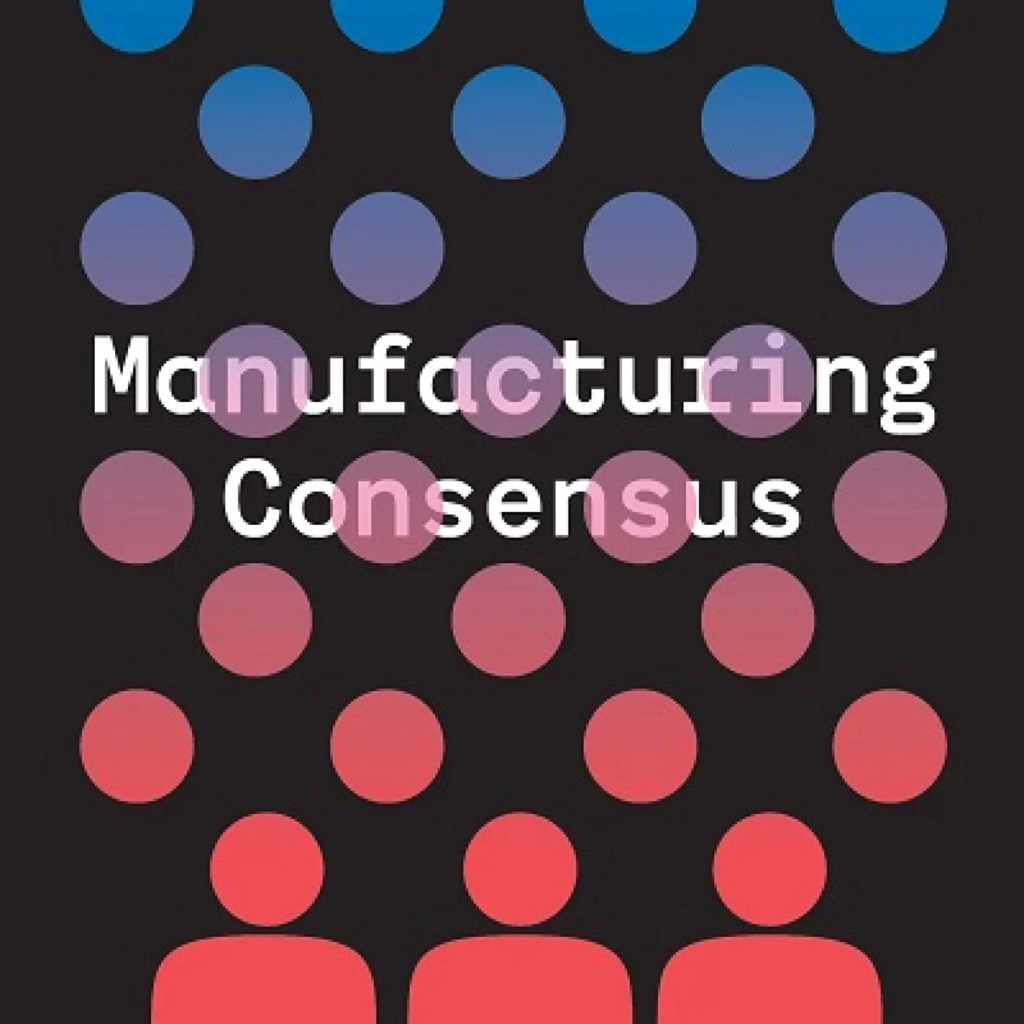

In the contemporary era, terms like Artificial Intelligence (AI), automation, and algorithms have become quite ubiquitous due to their profound impact on various domains. One such domain which is significantly affected by these phenomena is the field of propaganda. AI, automation, and algorithms, which are the hallmarks of the contemporary digital age, have transformed the nature of propaganda to a great extent. Samuel Woolley’s recent book, “Manufacturing Consensus: Understanding Propaganda in the Era of Automation and Anonymity,” looks into the details of this transformation, examining how AI, automation, and algorithms have reshaped the landscape of modern propaganda.
Samuel Woolley currently serves as an assistant professor of journalism and media. Additionally, he is a program director of the Propaganda Research Lab, and a Knight Faculty Fellow at the Centre for Media Engagement at the University of Texas, Austin. Woolley’s research interests mainly focused on how emergent technologies are used in political communication around the world. In this regard, he has authored scholarly works including a book entitled “The Reality Game: How the Next Wave of Technology Will Break the Truth.” These qualifications establish Woolley as a credible authority on the subject matter discussed in his latest book.
In ‘Manufacturing Consensus’, Wolley extends the horizons of our understanding of propaganda by examining how propaganda has evolved in the age of social media, AI, automation, and algorithms. He argues that in recent years the nature of propaganda has changed. It has shifted from what Noams Chomsky and Herman had described as a top-down, elite-controlled system primarily employed by states through mainstream news mediums such as TV channels and newspapers. Instead, he argues, it has become increasingly democratized and decentralized with the rise of social media which is accessible to nearly anyone with a smartphone and internet connection. This democratization has allowed a wider range of actors, not just traditional elites, to participate in the creation and dissemination of propaganda.
Not only has propaganda become democratised, argues the author, but it has also become sophisticated and complicated with the rise of automation and algorithms. In the book, Woolley shows in detail how social media platforms such as X (formerly Twitter), Reddit, Facebook, and Instagram, with their capacity for anonymity and automation, allow people to create and propagate a sophisticated form of propaganda which the author described in the book as computational propaganda.
Computational propaganda, according to the author, is the use of algorithms, automation, and human intervention to purposefully distribute misleading or manipulative information over social media networks. It is carried out with the help of computational tools such as bots (automated social media accounts) and human-driven efforts such as sock puppet accounts (fake accounts administered by real people assuming false identities online and partisan nano influencers (people with around 10,000 followers).
The author further contends in the book that computational propaganda which is primarily disseminated through social media platforms, is sophisticated and difficult to detect due to its ability to manipulate social media algorithms. By gaming algorithms, propagandists artificially increase the visibility of their content, making it appear as a trending topic on users’ feeds. This manufactured virality is then picked up by traditional mainstream media, which often misinterpret it as a topic of genuine public interest, thereby granting undue importance to the manipulated information. This phenomenon, as repeatedly highlighted in the book, is now extensively employed not only by governments and political movements worldwide but also by individuals seeking to promote their ideologies and narratives.
The book has a few strengths. It has introduced some novel ideas, just like the idea of computational propaganda itself. Moreover, the descriptions of interviews with computational propagandists cited in the book are also very invaluable as they provide an insight into the inner world of propagandists.
However, the book also has some notable weaknesses. For instance, the book falls short in terms of depth and analysis. The author superficially touches upon examples from various countries, including Ecuador, Mexico, Russia, India, and Turkey, but fails to discuss any substantial detail. I mean the book casually states that the ruling party in Turkey employs bots to undermine its opposition through propaganda, that Russia used bots to assist Trump in winning the 2016 elections, and that India’s fascist BJP party disseminates fake stories with the help of bots on Facebook groups and WhatsApp because they are difficult to detect. However, it provides no detailed evidence or support for these assertions or claims.
Secondly, the book also demonstrates incongruity in its intended readership. It somehow oscillates between an academic approach, as evidenced by the references to prior theoretical frameworks on propaganda, and the frequent employment of academic jargon, and a very basic explanatory approach, exemplified by the repetitiveness of explanation of very basic concepts such as bots. Such an approach, in the view of this reviewer, may inadvertently alienate both academic and non-academic readers. The academic reader, for instance, may find the reiteration of fundamental concepts, time and again, unnecessary, while a non-academic reader may be overwhelmed by academic theories and specialized jargon. A more focused approach, tailored to the specific knowledge base could have enhanced the efficacy of the book.
In sum, “Manufacturing Consensus” is a fascinating read to get an insight into how propaganda works in the digital age. While its depth of analysis and target audience could have been more refined, the book’s exploration of computational propaganda and firsthand accounts from propagandists are notable contributions. Given its academic leanings, the book is recommended for scholars and researchers interested in the intersection of technology, media, and political communication.
Azhar Zeeshan is a researcher at the Centre for Aerospace and Security Studies (CASS), Lahore. He can be reached at [email protected]
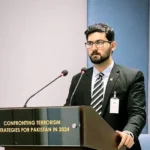
Azhar Zeeshan is a researcher at the Centre for Aerospace and Security Studies (CASS) Lahore, Pakistan. He can be reached at [email protected]