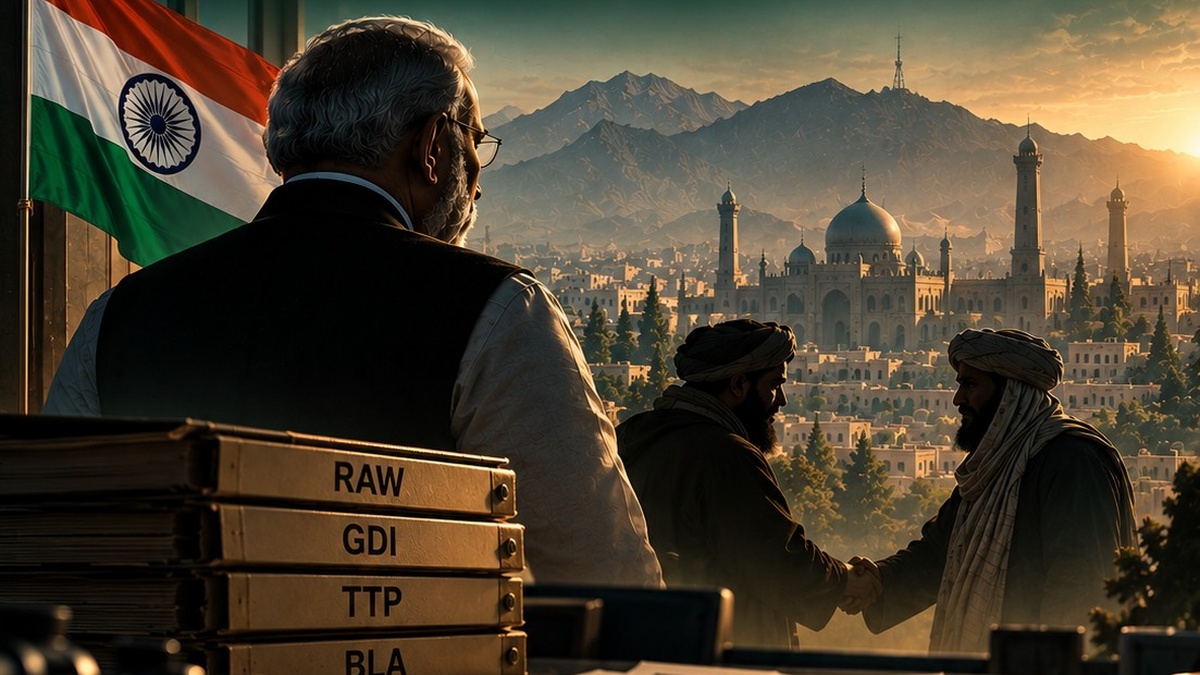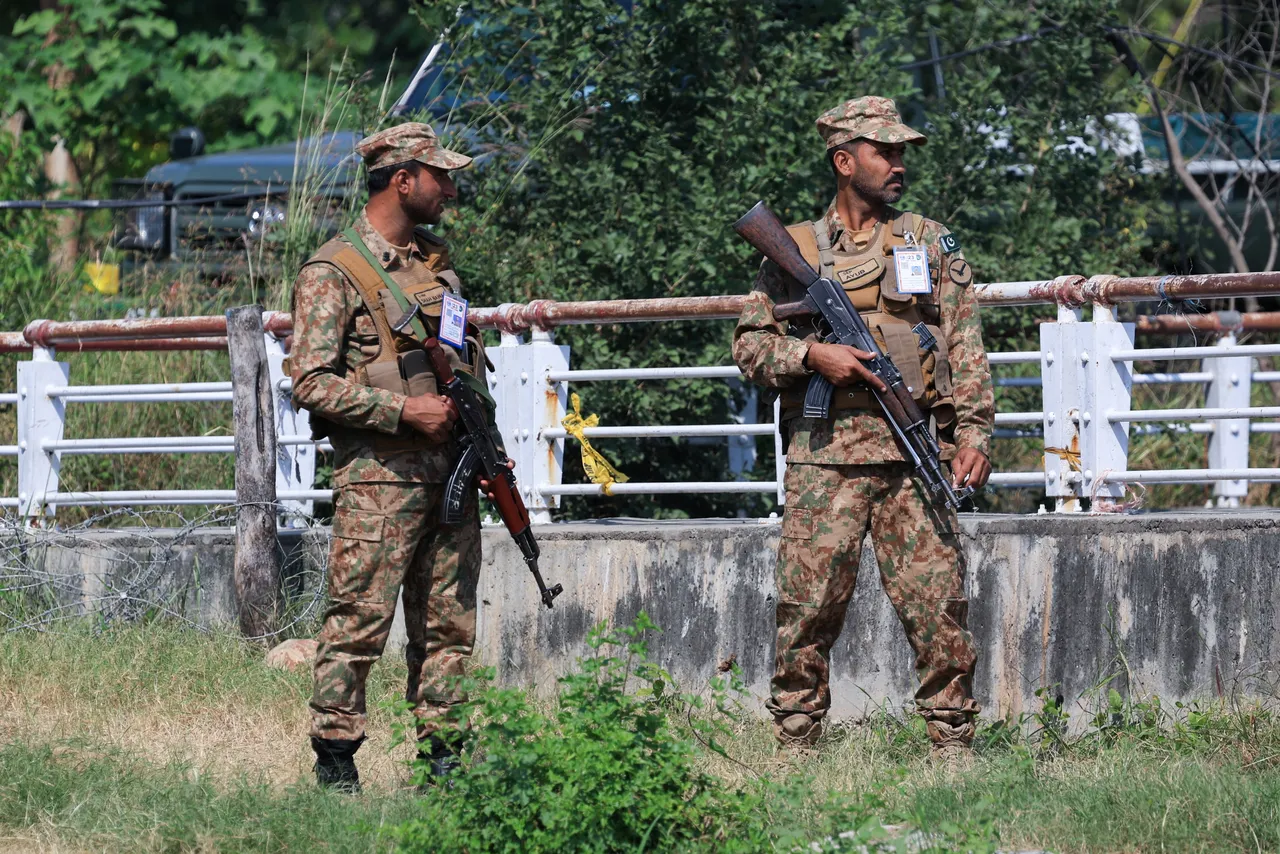
Pakistan’s counterterrorism approach has transformed significantly over the past decade, moving from broad military campaigns to operations focused on intelligence-led precision and civilian protection. This shift emphasizes dismantling extremist networks through targeted interventions rather than large-scale force, aiming to enhance both operational effectiveness and public safety. The situation in Tirah Valley provides a contemporary example of this strategy in action, one that has become the subject of intense political debate and narrative framing.
Tirah Valley, located in Khyber district, has long been a challenging environment for security operations due to its rugged terrain and complex local dynamics. In recent years, counterterrorism efforts in the region have relied exclusively on intelligence-based operations designed to dismantle extremist infrastructure while minimizing civilian harm. Nationally, this strategy has produced measurable results: in 2025 alone, more than 75,000 IBOs were conducted across Pakistan, leading to the neutralization of nearly 2,600 militants.
Within Tirah, security and administrative measures were accompanied by sustained consultation with tribal elders and local communities. Temporary relocation was adopted as a protective and logistical measure, coordinated through civilian authorities and disaster management frameworks. According to official registration data, approximately 11,400 families were identified, with over 10,000 voluntarily relocating to safer areas such as Bara and Peshawar. Movement into and out of the region remained open, and seasonal realities, including heavy snowfall, further constrained any possibility of large-scale military activity.
Despite these realities, the public discourse surrounding Tirah has been increasingly shaped by political propaganda rather than empirical assessment. Pakistan Tehreek-e-Insaf (PTI) has played a central role in constructing and amplifying narratives that portray security measures as coercive and displacement as forced, often detached from the consultative mechanisms and administrative oversight that governed the process. This framing has contributed to public confusion by collapsing complex security and humanitarian dynamics into simplified claims that prioritize political mobilization over factual accuracy.
The contrast between rhetoric and action is particularly instructive. On one hand, PTI has sustained criticism of the security forces, questioning intent and legitimacy in Tirah without acknowledging the operational restraint, intelligence-led methodology, or humanitarian safeguards in place. On the other hand, PTI’s political conduct reveals a markedly different set of priorities. At a time when tens of thousands of terror-affected individuals in Tirah were facing insecurity and harsh winter conditions, the Chief Minister of Khyber Pakhtunkhwa chose to stage a public sit-in outside Adiala Jail in solidarity with Imran Khan.
This juxtaposition, between mass humanitarian need and singular political focus, highlights the phenomenon of selective outrage. While displacement affecting over 100,000 people (in terms of families and dependents) has received limited sustained advocacy, disproportionate political energy has been invested in the incarceration and medical treatment of one individual, despite that treatment being conducted under standard medical protocols. The imbalance is not merely symbolic; it reflects how political capital is allocated and which constituencies are deemed worthy of sustained attention.
From an academic perspective, this pattern aligns with broader theories of populist mobilization, where emotionally resonant individual cases are elevated above structurally complex collective issues. Such strategies are effective in generating visibility and loyalty but often undermine nuanced policy discourse. In the case of Tirah, the consequence has been the erosion of public understanding regarding intelligence-based counterterrorism and the humanitarian logic underpinning temporary relocation.
Importantly, this dynamic does not negate the real hardships faced by families. Displacement, even when voluntary and compensated, imposes social, economic, and psychological costs. However, addressing these costs requires policy continuity, administrative capacity, and political seriousness, not narrative escalation that risks delegitimizing counterterrorism frameworks essential for long-term stability.
The propagation of misleading narratives also carries strategic risks. Counterterrorism efforts depend not only on operational effectiveness but on public trust. When political actors frame security measures as predatory or illegitimate without substantiation, they inadvertently weaken societal consensus against extremism and complicate reintegration and stabilization efforts. In conflict-affected regions like Tirah, where militants have historically embedded themselves within civilian populations, such confusion can be particularly damaging.
Ultimately, the Tirah episode underscores the importance of aligning political advocacy with humanitarian proportionality. Genuine concern for affected populations must be reflected in sustained engagement with displacement, rehabilitation, and reconstruction, not episodic outrage shaped by political allegiance. The credibility of any political movement is measured not by the intensity of its rhetoric, but by the consistency of its priorities.
In this light, the divergence between PTI’s narrative against the security forces and its visible political actions offers a revealing case of contemporary Pakistani politics. It illustrates how selective attention can overshadow collective suffering, and how propaganda, when decoupled from policy realities, risks distorting both public perception and national priorities. For Pakistan’s counterterrorism and stabilization efforts to succeed, discourse must return to evidence, proportionality, and an honest reckoning with the scale of human impact involved.
Also See: The Operational Reality on Ground
Alisha Zahra is a young International Relations scholar with a keen interest in South Asia’s political landscape, regional security and diplomacy.