Pakistan is currently navigating one of the most profound demographic transformations in South Asia. This shift, however, is not a story of balanced national development or industrial modernization but rather the manifestation of a lopsided “Metropolitan Triad.” The urban centers of Greater Karachi, Greater Lahore, and the Islamabad-Rawalpindi corridor are effectively cannibalizing the nation’s resources, population, and economic potential. While the 7th Population and Housing Census 2023 suggests an official urban population of approximately 38.8%, independent research and the World Bank’s Agglomeration Index reveal a more startling reality. Nearly 50% of the country is effectively urbanized or living in densely populated peri-urban clusters. The crisis is not simply that Pakistan is urbanizing, it is that it is urbanizing badly. This unplanned, hyper-concentrated growth has created systemic failures that threaten the country’s socio-economic fabric, environmental and political stability..
The magnetism of the big three cities reflects a deep geographic imbalance. Over half of the total urban population resides in just eight large cities, with the primary triad acting as gravitational hubs that suck in labor and capital from the rural hinterlands. Karachi, the industrial heartbeat, contributes nearly 25% of the national GDP and 50% of total tax revenue. Yet, its growth is a study in administrative neglect and advanced urban decay. With an estimated population of 17 to 20 million, the city has become a patchwork of informal settlements, or Katchi Abadis, which now house a sizable portion of its residents. The city’s infrastructure is crumbling; in the absence of effective local government, it lacks a functional sewage system, and its water supply is frequently hijacked by a tanker mafia that forces residents to buy back their own natural resources at exorbitant rates.
The transport vacuum in Karachi further illustrates this decay. While Lahore and Islamabad have seen significant investment in Bus Rapid Transit systems, Karachi’s public transport remains in a state of absolute ruin. The long-defunct Karachi Circular Railway stands as a monument to bureaucratic inertia, leaving millions of working-class citizens dependent on dilapidated, privately owned buses that offer no dignity or efficiency. This scarcity of basic resources has turned the city into a theater for zero-sum ethnic friction. In the absence of a neutral, efficient administrative framework, the competition for jobs, housing, and water frequently spills over into a tussle between various linguistic and ethnic groups. From a national security perspective, this fragility is a national security concern, as the state fails to provide a social contract that transcends tribal or regional identities, leaving a vacuum often filled by non-state actors.
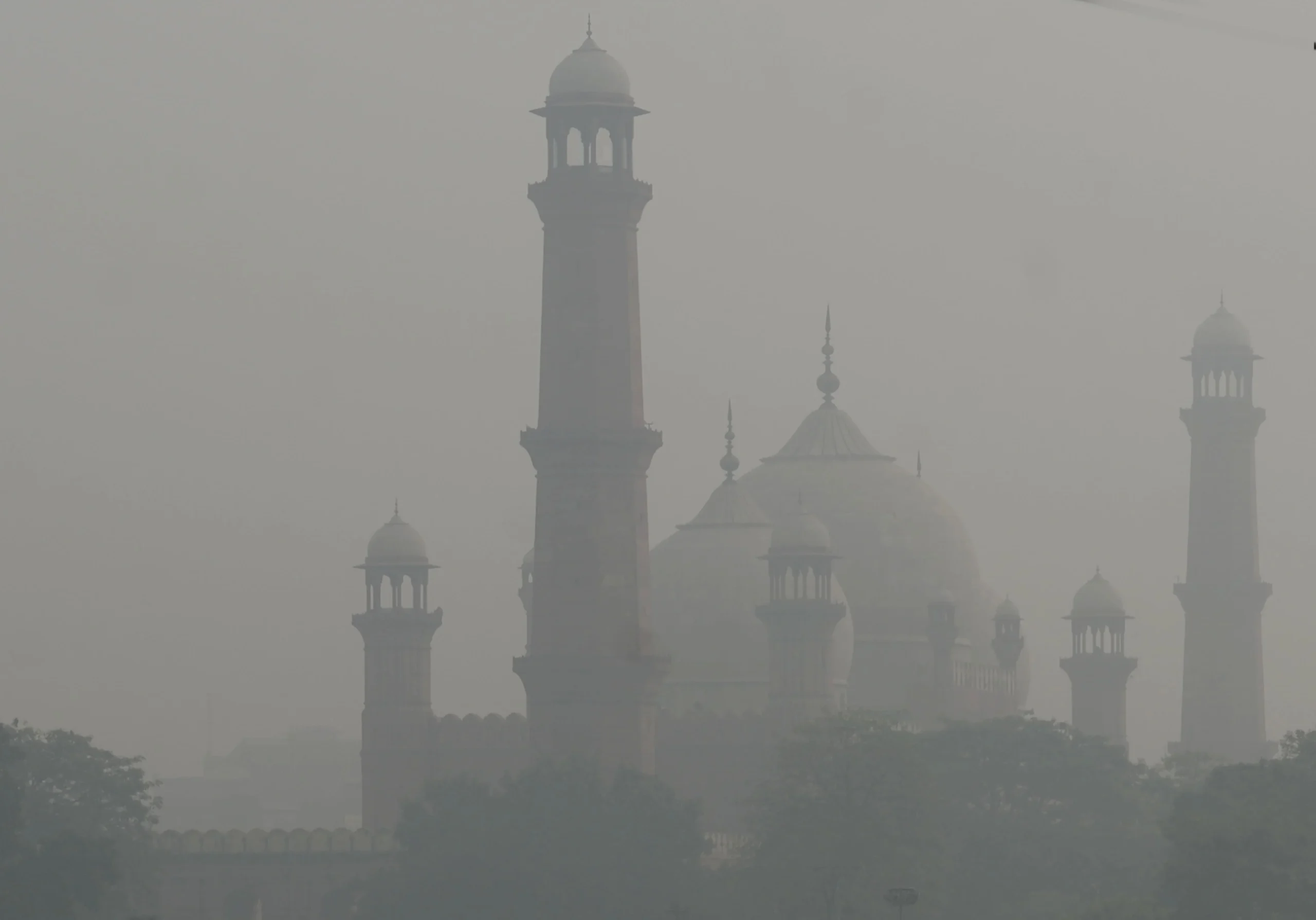
In the north, Lahore and the Islamabad-Rawalpindi corridor represent the elite face of Pakistan’s urbanization, yet they are equally catastrophic in their environmental footprint. These regions are rapidly devouring prime agricultural land and green lands to satisfy the demand for low-density housing. Lahore is consuming the fertile Ravi basin at an alarming rate. Between 200 and 2024, the city lost nearly 35% of its farmland to housing schemes. Similarly, Islamabad has allowed private developers to encroach upon the once-protected Margalla foothills and critical wetlands. This concretization has created a permanent Heat Island effect. By destroying natural carbon sinks and replacing them with heat-absorbing asphalt, these cities have worsened the regional climate trajectory. The most visible result is the fifth season of smog that paralyzes the Punjab plains every winter. This air quality crisis leads to thousands of premature respiratory deaths and costs the national economy an estimated 6.5% of its GDP annually in healthcare and productivity losses.
The structural realities of this crisis are perhaps most visible in the rapidly receding water table. One of the most ignored metrics of urban failure, the water table in Lahore is dropping by approximately 2.5 to 3 feet every year. In Karachi, the groundwater is either brackish or completely exhausted. This is a direct consequence of a massive governance gap, there is no centralized regulation for groundwater extraction. Every new gated community installs industrial-scale turbines, sucking the aquifers dry with no mechanism for recharge. At the current rate of extraction, major parts of Lahore could face a day zero scenario within the next decade.
The Historical Role of the Administration
The root of this governance crisis lies in the persistence of the British colonial administrative system. Pakistani cities are still managed by Commissioners and Deputy Commissioners, positions originally designed by the Raj to control a conquered population and collect revenue rather than to serve a modern citizenry. These bureaucrats are often parachuted into cities they have no cultural or social connection with. They remain accountable to provincial capitals and political masters rather than the residents of the city. Without empowered, elected local governments that control their own police, budgets, and sanitation, Pakistani cities will remain unmanageable. A megacity of 20 million cannot be run by a bureaucrat whose primary skill is maintaining the status quo and securing the interests of the provincial executive.
Furthermore, Pakistan has mistakenly adopted the 20th-century American model of urban development, characterized by multi-lane freeways, massive flyovers, and sprawling, low-density gated communities. The prevailing logic among planners is that one more lane will fix the traffic, a fallacy that has been debunked for decades in the West. This has resulted in a form of mobility disparity. Despite the fact that less than 10% of the population owns a private car, the vast majority of urban development funds are spent on infrastructure designed specifically for car owners. Pakistan must pivot toward a European model of walkable, high-density, transit-centered cities. Secondary cities like Faisalabad, with its planned Union Jack layout and flat terrain, are perfectly suited for mass transit and cycling grids. Implementing such systems would discourage the current chaos of unruly rickshaws and private vehicles, creating a more egalitarian and functional urban space.
To solve the urbanization crisis, Pakistan must look beyond the Big Three and rethink its rural-urban interface. We must focus on the second tier of cities, including Peshawar, Hyderabad, and Sialkot. Peshawar serves as the critical gateway to Central Asian trade but is currently struggling under the weight of an undeveloped infrastructure and a lack of modern trade logistics. Sialkot and Faisalabad are industrial powerhouses that, if provided with world-class infrastructure, could act as alternative magnets for labor, preventing the over-saturation of the major metropolises.
Reimagining the Urbanization
A critical missing link in the national strategy is the development of a Rurban buffer, small towns approachable from villages. Migration to big cities is often a desperation move caused by a total lack of basic facilities in rural areas. If a villager can access high-quality healthcare, tertiary education, and banking in a town fifteen minutes away, the urge to migrate to a Karachi slum is significantly reduced. By localizing services, these small towns can slow the demographic deluge on the metropolises. These towns should be equipped with cold-storage facilities for farmers, vocational training centers, and reliable digital connectivity to foster local economic growth.
The path forward requires a radical shift in how we view the city. We must abandon the suburban bungalow obsession that defines the urban class of Pakistan. Zoning laws must be changed to mandate high-density, mixed-use vertical developments. This is the only way to save our remaining agricultural land, reduce the cost of providing utilities, and make public transport financially viable. Moreover, urbanization requires local ownership. We need mayors with skin in the game, leaders who live in the city, breathe its polluted air, and are directly answerable to its voters. The current system of parachuted bureaucrats must be replaced by a robust local government system that holds constitutional protection and financial autonomy.
Pakistan’s urbanization is an inevitable demographic tide, but its current trajectory is a slow-motion disaster. We are currently building consumption hubs and environmental hazards rather than productivity engines. If we do not dismantle the colonial bureaucratic model, pivot away from car-centric sprawl, and invest in secondary and small-town infrastructure, the resulting social and environmental collapse will be irreversible.

Your go-to editorial hub for policy perspectives and informed analysis on pressing regional and global issues.