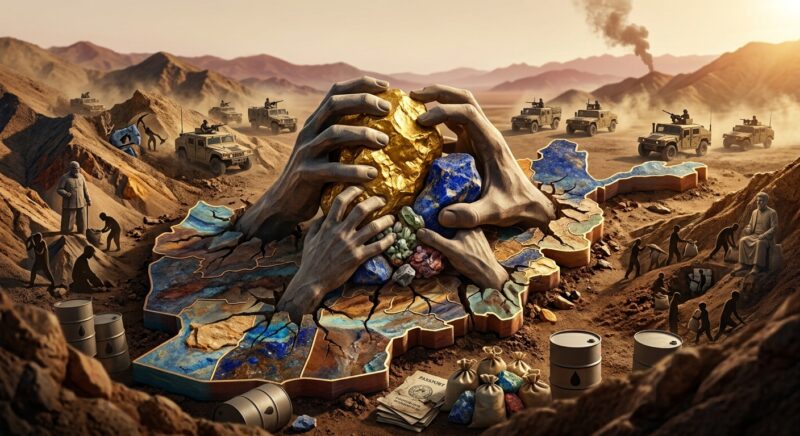
The rugged 2,640-kilometer stretch of the Durand Line has historically functioned more as a frontier than a border in the modern Westphalian sense. This porous zone of social and cultural transition has provided an ideal incubator for a galaxy of jihadist networks for over three decades. Groups such as Al-Qaeda, the Tehreek-e-Taliban Pakistan (TTP), and the Islamic State Khorasan (IS-K) have long exploited this region. However, a pivotal historical moment is unfolding as the Pakistani state pursues an aggressive drive to borderize this space. This transition from a fluid frontier to a hard, fenced boundary is fundamentally altering the political economy and strategic calculus of transnational militancy.
While contemporary discourse often begins with the 1979 Soviet invasion, the trajectory of militancy in the frontier actually stretches back to the immediate post-partition era. Following the 1947 creation of Pakistan, the region became a theater for a low-intensity, ethnically driven insurgency fueled by the Pashtunistan movement. During the 1950s and 60s, the Afghan government frequently backed tribal irregulars and local militias in the Federally Administered Tribal Areas (FATA) to challenge Pakistani sovereignty over the Durand Line. This period saw the deployment of tribal lashkars and state-sponsored proxies, establishing a precedent for irregular warfare and the use of the frontier as a launchpad for cross-border subversion.
This early ethnic friction set the stage for the massive mobilization of the 1980s anti-Soviet jihad. During the 1990s, the region witnessed the arrival of battle-hardened Arab-Afghans and the rise of the Afghan Taliban under Mullah Omar. This era was defined by frontier logic where the Durand Line was practically invisible to militants. Domestic Pakistan groups operated alongside the Taliban, utilizing the tribal belt as a seamless strategic depth. The post-9/11 era forced a violent realignment as the US invaded Afghanistan in 2001, causing remnants of Al-Qaeda and the Taliban to flee into Pakistan’s tribal districts.
This migration catalyzed the formation of the Tehreek-e-Taliban Pakistan in 2007 under the leadership of Baitullah Mehsud. Unlike earlier groups focused on external targets, the TTP turned the frontier against the Pakistani state itself, triggering a decade of brutal internal conflict that peaked with the 2014 Army Public School massacre in Peshawar. Since the 2021 US withdrawal, the region has entered a new phase. The return of the Afghan Taliban to Kabul has provided a moral and physical sanctuary for the TTP, now led by Noor Wali Mehsud. Simultaneously, the emergence of IS-K has added a layer of sectarian complexity, utilizing sovereignty gaps to challenge both the Taliban and the Pakistani state.
The Frontier vs. Border
To understand why this region remains a dangerous borderland, one must distinguish between a border as a legal line of separation and a frontier as a zone of contact. The mountainous terrain of regions like North Waziristan and Kunar province makes conventional state surveillance nearly impossible. Jihadist groups occupy the grey zones where neither Islamabad nor Kabul maintains a monopoly on violence. For the Pashtun tribes of the region, the border Line is a reality only present on maps. The frontier logic of tribal loyalty, or Pashtunwali, facilitates cross-border movement, marriage, and trade, providing a social camouflage for militants who are often seen as sons of the soil rather than foreign terrorists. Furthermore, the British colonial Forward Policy deliberately left these areas lightly governed as a buffer against Tsarist Russia. This structural vacuum was never fully addressed by the Pakistani state until recently, allowing militant groups to establish parallel governance and social structures.
The ideological landscape has shifted from localized resistance to a complex hybridization of Deobandi militancy and global Salafi-Jihadism in the last three decades. Early groups like the Taliban were primarily motivated by a mix of Pashtun nationalism and Deobandi conservatism. However, the influence of Al-Qaeda leaders like Ayman al-Zawahiri introduced the global jihad narrative, framing the local struggle as a battle against the near enemy in the form of the Pakistani state and the far enemy represented by the West. In the last decade, IS-K has disrupted this hierarchy by introducing a caliphate logic that transcends ethnic identity. While the TTP remains largely Pashtun-centric, IS-K recruits from radicalized urban elites, disgruntled Taliban commanders, and even foreign fighters from Central Asia. Their propaganda utilizes the frontier not as a tribal homeland, but as the starting point for the Ghazwa-e-Hind, the final battle for the subcontinent.
Recruitment is driven by a potent mix of economic disenfranchisement and ideological saturation. In border districts of Pakistan and Afghanistan, the lack of state education has left the field open to madrassas. Thousands of these institutions provide a steady stream of recruits who are ideologically predisposed to the Taliban’s worldview. While leadership often comes from educated backgrounds, such as the TTP’s Mufti Noor Wali Mehsud, the foot soldiers are typically rural underprivileged youth. For many, joining a militant group is the only available avenue for social status and employment in a region plagued by high unemployment rates. The TTP has also increasingly framed its struggle in ethnic terms, tapping into Pashtun grievances regarding state neglect and military operations. This complicates the state’s response, as counter-terrorism efforts are often framed by militants as an attack on the Pashtun people.
The State’s Counter-Move: The Borderization
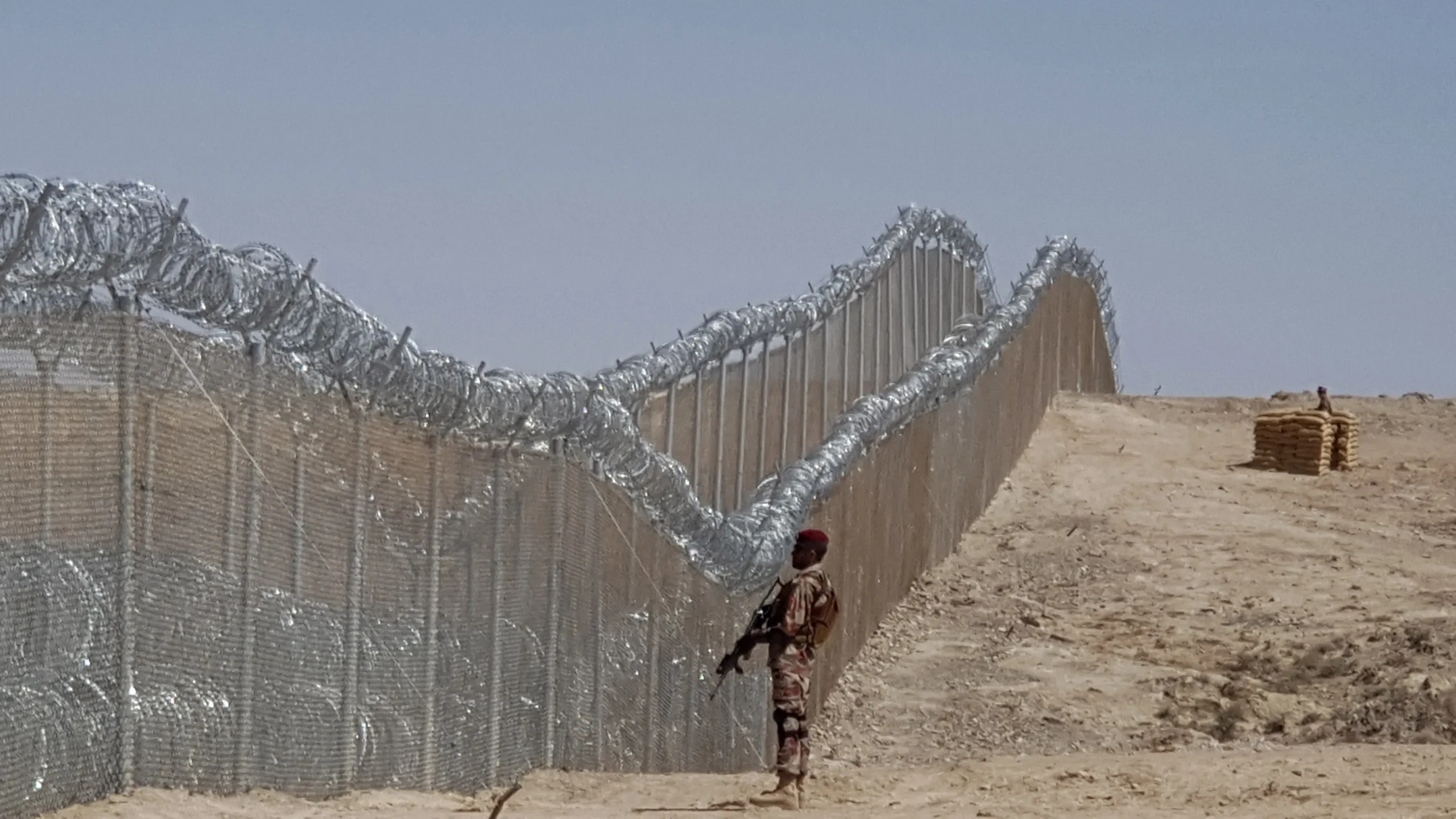
The most significant development in recent years is the Pakistani state’s successful effort to dismantle the frontier and impose a formal border. Since 2017, Pakistan has completed over 95% of a high-tech fence along the Durand Line. This physical barrier, equipped with thermal cameras and surveillance drones, has severely restricted but not fully stopped the unregulated flow that militants previously enjoyed. In early 2024, the state ended the easement rights that allowed tribal members to cross with local permits. The imposition of passport and visa requirements, known as the One Document Regime, is a decisive move to treat the Durand Line as a formal international border. Additionally, the 2018 merger of FATA into Khyber Pakhtunkhwa province via the 25th Amendment officially brought these areas under the national legal and administrative framework, ending the century-old Frontier Crimes Regulation.
Funding and the Political Economy of Conflict
The frontier economy has traditionally been based on unregulated trade, which jihadist networks exploited for funding. The TTP and IS-K have relied heavily on Bhatta, or extortion, from local businesses and kidnapping for ransom. Afghanistan remains the world’s largest producer of opium, and despite the Taliban’s official ban, the taxation of smuggling routes through the frontier remains a massive source of revenue for various militant factions. By formalizing trade at crossings like Torkham and Chaman, the Pakistani state is attempting to dry up these informal revenue streams. This has also led to massive civil society protests, such as the Ulasi Pasoon movement, due to the resulting economic hardship for local populations that have historically relied on cross-border trade.
Regional Spillovers and Future Outlook
The transition from a frontier to a border is not without significant blowback. The Afghan Taliban regime has repeatedly clashed with Pakistani forces over the fence, refusing to recognize a boundary that divides their ethnic base. This has led to a paradoxical situation where Pakistan’s security barrier has become a friction point that triggers cross-border shelling and diplomatic crises. Furthermore, the borderization project has inadvertently fueled the rise of the local non-violent civil rights group that protests the militarization of their lands. The state now faces a dual challenge: a resurgent TTP that has adapted to the fence by utilizing urban sleeper cells, and a section of civilian population that feels alienated by the hard border logic.
The Pak-Afghan frontier is no longer the Wild West of the 1990s. The Pakistani state has demonstrated the will and the capacity to impose a proper border on an ancient, fluid landscape. However, while the physical fence is nearly complete, the ideological and social porosity remains. The jihadist networks that once thrived on geographic depth are now evolving into decentralized, technologically savvy entities. True security in the region will require more than just a fence, it requires a socio-political reconciliation that provides the frontier’s inhabitants with a stake in the border logic, transforming them from subjects of a frontier to citizens of a modern state.