Maritime Cooperation: From Rivalry to Opportunity
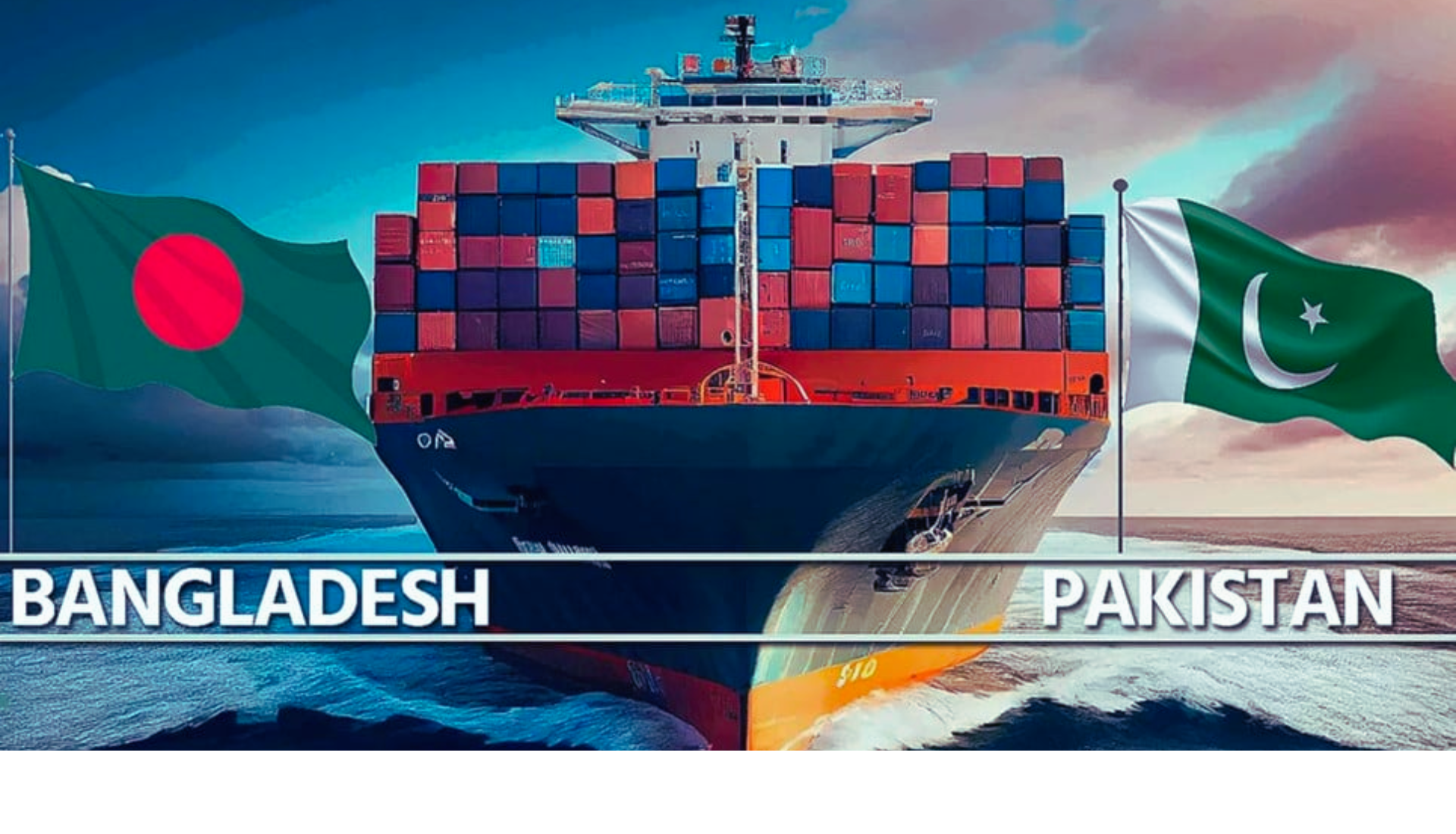
As global supply chains shift and maritime trade regains strategic importance, Pakistan and Bangladesh are reconsidering whether the sea can become a shared economic future rather than a contested past. What is being discussed is not merely a shipping route, but a maritime corridor with the potential to reshape trade patterns, revive historical linkages, and rebalance regional geopolitics. In a region long defined by rivalry and missed opportunities, maritime cooperation represents one of the few remaining pathways toward meaningful economic and strategic convergence.
As Pakistan’s Chief of Naval Staff, Admiral Naveed Ashra,f aptly observed during his visit to Bangladesh in November 2025, “The next century belongs to the oceans.” His assertion that Pakistan must plan today for the ports, trade routes, and maritime industries of tomorrow captures the urgency of naval thinking in the 21st century. With focus, political will, and mutual respect, a Pakistan–Bangladesh sea corridor could offer one possible model of regional integration in South Asia, one that prioritises cooperation while remaining sensitive to regional power dynamics.
Economic Potential and Institutional Challenges
Economically, the corridor presents significant potential gains, though its scale will depend on trade volumes, infrastructure readiness, and sustained political coordination. Direct route to the sea would not only save shipping time and transportation costs but also efficiency within its supply chain, and the foreign investment. Yet the real test of success lies beyond economics. The viability of the corridor will depend not only on political commitment in Islamabad and Dhaka, but also on economic feasibility, investor confidence, and realistic assessments of long-term trade demand. On a positive note, the relationships between people of the two nations are slowly improving, which provides a ground to repair the historical trauma and develop the trust required to further resort to structural collaboration.
This political intent has already found expression at the official level. On 24 November 2025, Pakistan’s Maritime Affairs Minister, Muhammad Junaid Anwar Chaudhry, proposed enhanced maritime coordination during a meeting in London with Bangladesh’s Adviser for Shipping, Brigadier General (Retd.) Dr M. Sakhawat Hussain. The initiative involved common freight transportation, port management, maritime security collaboration and international forums coordination. It is also noted that there was a proposal for a framework that shall be used to collaborate between the Pakistan National Shipping Corporation (PNSC) and the Bangladesh Shipping Corporation (BSC)- another step in institutionalising maritime cooperation.
Nevertheless, ambition is not enough to bring results. There are three key challenges that are on the way. To begin with, there is already congestion in the major ports like Karachi and Chittagong, which cannot accommodate more traffic. Their water access connections and those that handle cargo are still not sufficient to accommodate a high-volume transit. Second, incompatible regulatory policies such as cumbersome customs systems, uneven tariff systems, and erratic security measures make investors unwelcome. Third, and arguably most sensitively, the unresolved legacy of 1971 still has a tint of shaded bilateral relations as a limitation to diplomatic trust.
These challenges are not insurmountable, but ignoring them would turn the corridor into a mere figurative statement as opposed to an operational reality. For the initiative to materialise, both Karachi and Chittagong must undergo modernisation, including advanced cargo-handling equipment and digital tracking systems. Public–private partnerships can play a vital role by injecting capital, technical expertise, and efficiency, ensuring upgrades are both cost-effective and future-ready.
Equally important is regulatory convergence. Customs, transport, and security authorities must be coordinated to harmonise tariff structures, streamline border controls, and establish unified emergency response mechanisms. Beyond technical fixes, confidence-building measures are indispensable. Recent trends toward visa facilitation, scholarship programs, and cultural exchanges between Islamabad and Dhaka should be expanded, embedding economic cooperation within a broader social and cultural narrative.
Building Trust and Securing South Asia’s Future
Such initiatives would help transform the corridor into a geopolitically resilient project—one capable of delivering stable economic dividends. Critics are right to note that India may perceive closer Pakistan–Bangladesh maritime cooperation through a strategic lens, raising regional security sensitivities. Additionally, given the enduring trauma of 1971, any miscommunication risks diplomatic backlash. These concerns are legitimate and underscore the need for transparency, confidence-building, and careful corridor design that reassures rather than destabilises the region.
The moment for decision is now. Governments must commit to infrastructure investment and regulatory reform. Businesses should recognise the corridor’s commercial potential and bring in capital, expertise, and market access. Above all, citizens, through cultural and societal engagement, must sustain the dialogue that political processes often struggle to maintain.
Without taking advantage of this opportunity, South Asia will continue to be a disjointed market characterised by inefficiencies and unrealised potential. In case it succeeds, a hitherto separate geography can transform into an integrated maritime economy. The Pakistan-Bangladesh maritime corridor is not just about ships and ports, but it is also about the redefinition of the future of the region. Acting decisively today could secure economic resilience, regional stability, and a more integrated South Asia tomorrow.

Pursuing a Bachelor’s degree in International Relations at the National Defence University (NDU), Islamabad, with an academic focus on South Asian politics, economy, and security.