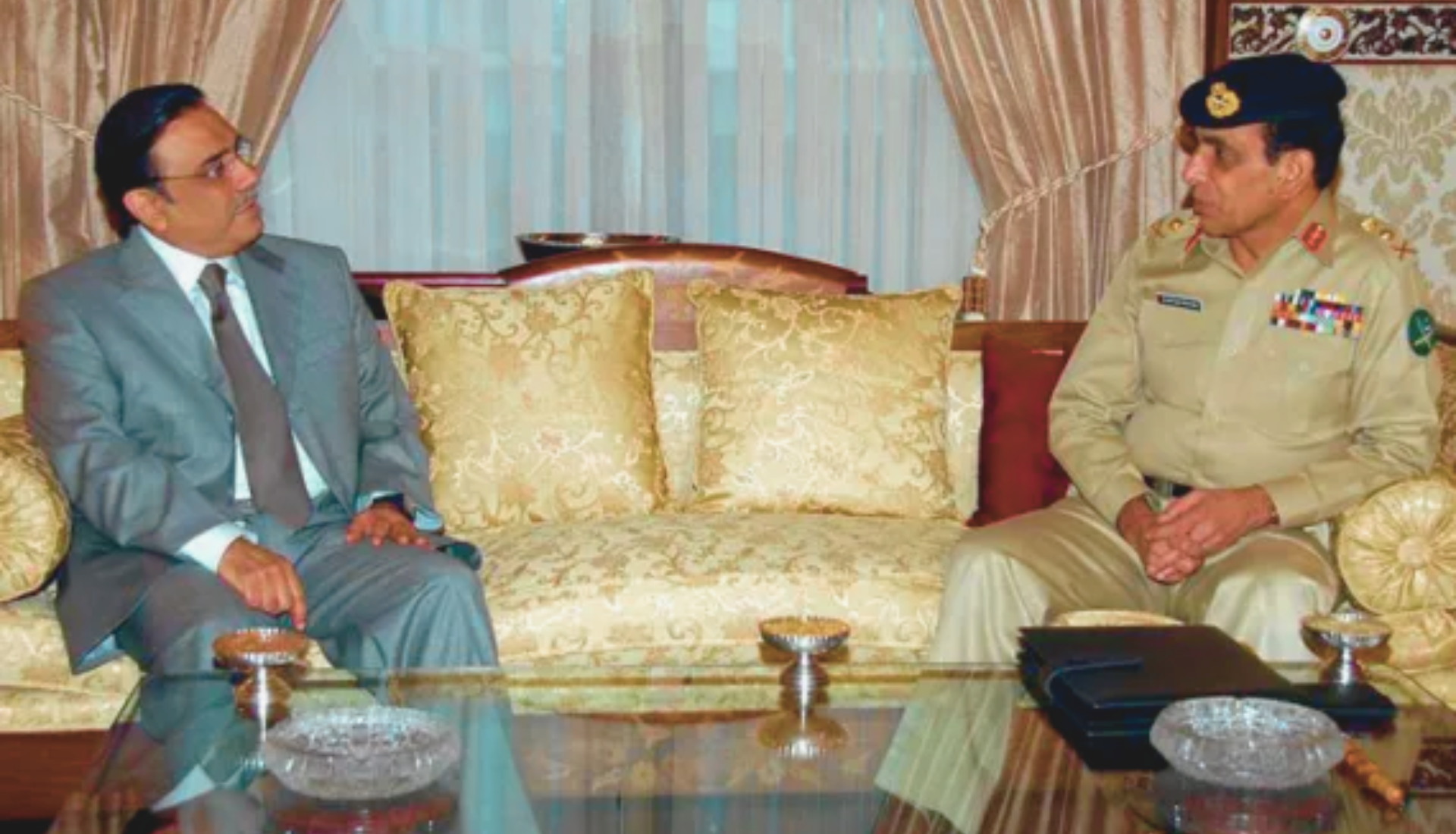
Midnight Islamabad is not a time of power that goes to sleep. It is a time when power watches and waits. And when it comes to power moving, the first thing that happened was the falling of governments. Those nights are the ones that have a hand in writing Pakistan’s political history. Democracies were interrupted, prime ministers dismissed, and militates replaced where institutions failed. For several years, Pakistan civil–military relations and legitimacy vacuum shaped political landscape and the relationship between civil and military authorities had one and the same pattern weakness of the civil side and dominance of the military. This pattern is recognized and given a name by political scientists. They refer to it as a legitimacy vacuum.
The Legitimacy Vacuum
The legitimacy vacuum theory is very simple but at the same time very harsh. A situation is said to arise when the civilian institutions fail to deliver good governance, stability, or credibility; hence, they lose their legitimacy. The vacuum is then filled by the most organized and trusted institution in Pakistan the military. Gradually, intervention shifts to being a norm, if not a demand. Mazhar Aziz, a scholar, is of the view that Pakistan’s political instability, economic mismanagement, and institutional imbalance have been factors leading to military intervention in the name of national interest repeatedly. Asif Ali Zardari was very much mindful of this hard fact. He came to power in 2008 when Pakistan was going through a crisis. Benazir Bhutto was killed, and the whole country was in a state of militancy. The economy was on the verge of collapse. The relationships with both India and the United States were strained. The legitimacy vacuum was huge. However, Zardari did not take the route of confrontation to fill it.
He coped with it through adjustments.
Choosing Survival: Civil–Military Relations & Legitimacy Vacuum
History gave him a hard lesson. Zulfikar Ali Bhutto directly tried to control the military power. The outcome was political exile and execution. Zardari made the choice of survival instead of symbolism. Then the jolts came. The 2008 Mumbai attacks increased regional tensions. The Kerry–Lugar–Berman Act was a sign of the civilian-focused U.S. aid, and it disturbed the military establishment. The Raymond Davis case uncovered the intertwining of intelligence and the crisis of confidence in sovereignty. Memogate disclosed the extent of mistrust between civilian leaders and the military. The tipping point was in Abbottabad, where U.S. troops killed Osama bin Laden without informing Pakistan’s government or military and thus, exposing the limits of sovereign control. Not long after, the attack on the Salala checkpoint led to the death of Pakistani soldiers which in turn, increased the tension with Washington further. Every crisis created a wider legitimacy vacuum, every crisis welcomed intervention. But intervention was not forthcoming. Zardari’s answer was strategic restraint.
Managing Power Without Confrontation
His decision to give a three-year extension to General Ashfaq Parvez Kayani was not a sign of surrender; it was a sign of stabilization. Zardari was able to limit the direct military intervention by accommodating the military’s preferences in the national security and foreign policy areas. This was a sort of legitimacy management. Instead of confronting the military at its strongest point, Zardari worked on the consolidation of civilian control where it was possible. This delicate navigation exemplifies Pakistan civil–military relations and legitimacy vacuum in practice, showing how compromise ensured survival without direct confrontation. Media became more free. The parliament was able to complete its term. The economic policy was still mainly in the hands of civilians. Democratic continuity became prioritized. The military, on its part, made some adjustments. It kept its decisive influence but avoided direct ruling. Indirect intervention was the new way of doing things. The army moved back but remained nearby. This situation was far from the ideal of democracy. The civilian control over the defense and foreign policy was still not total. The military power was still involved in making the important decisions. The legitimacy vacuum was getting smaller, but it did not quite disappear. However, something unprecedented happened. For the first time throughout Pakistan’s history, a civilian government completed its constitutional term and peacefully transferred power in 2013. In a political system that was a constant collapse, survival itself became an achievement. Zardari did not get rid of the legitimacy vacuum. Instead, he learned to live with it. His time in office is a painful revelation about Pakistan’s democracy: that sometimes waiting it out is more important than resisting it. Institutional maturity is not achieved through confrontation but rather by the slow and steady acceptance of civilian rule. Zardari did not kill the establishment; he simply outlasted it. And in the history of Pakistan’s civil-military relations, such endurance may well become the most political act of all.
Disclaimer: The view expressed in this article are the author’s own. They do not necessarily reflect the editorial policy of the South Asia Times.

Dilawaiz tabessum is a Research Associate and Lead Research Coordinator at South Asia Times. With a bachelor's in IR, her current academic interests include Terrorism, politics, diplomacy and gender focused development. Beyond her professional pursuits she is also a researcher and debator.