For decades, political scientists cited the Islamic Republic as a primary example of authoritarian resilience. Through a combination of oil-rentierism, ideological mobilization, and a multi-layered security apparatus composed of the IRGC, Basij, and Artesh, the regime successfully weathered multiple storms.
However, the 2025–2026 uprising represents a departure from this established pattern. The current crisis is not a mere demand for reform but a systemic rejection, occurring at a moment when the regime’s three pillars, ideology, economy, and coercion, are simultaneously under pressure.
The primary driver of the current unrest is a collapse in purchasing power that has rendered the Iranian dream obsolete. On January 5, 2026, the Rial (IRR) crossed the 1,450,000 mark against the USD. When compared to the 2015 rate of approximately 32,000, this 4,500% depreciation over a decade represents a total decimation of the middle class’s life savings. While general inflation sits at a staggering 52.6% according to IMF data, the point-to-point inflation for essential proteins and dairy has surpassed 85% in urban centers. Data from the Tehran Municipal Council suggests that meat consumption per capita has dropped by 60% compared to 2021 levels.
This economic misery was pushed to a breaking point by the Pezeshkian administration’s decision to move from a fixed exchange rate for medicine and grain to a market-based rate. The government attempted to offset this with a meager $7 monthly cash transfer, which served as the spark that ignited the Bazaar. The Iranian population historically accepted a lack of political freedom in exchange for basic economic security, when that security vanishes, the state loses its last vestige of utilitarian legitimacy.
A Learning Curve of Dissent
The path to the 2026 uprising is paved with the failures of previous movements, each contributing to what can be described as a learning curve of dissent. The 2009 Green Movement represented the intra-systemic phase, where millions took to the streets following a disputed election. However, that movement was reformist at its core. The shift toward the working class began between 2017 and 2019. The Aba” fuel protests of November 2019 marked the first time the “Mustaz’afin” turned against the clerical establishment. The state’s response, characterized by the killing of an estimated 1,500 people, broke the moral authority of the government. This was followed by the 2022 Women, Life, Freedom movement, a cultural rupture that challenged the Velayat-e Faqih on a secular and feminist level. While the regime regained physical control in 2022, it never regained cultural consent.
A critical variable in the 2026 uprising is the impact of the June 2025 military strikes. For forty years, the IRGC justified its massive budget as forward defense, claiming they protected the Iranian heartland by fighting in Damascus and Baghdad. When US and Israeli assets conducted precision strikes on Fordow, Natanz, and Isfahan in 2025 with minimal successful retaliation, the security shield was proven to be porous. This military humiliation emboldened domestic protesters. If the state cannot protect its most sensitive military sites from external actors, the population perceives it as significantly less capable of maintaining internal control.
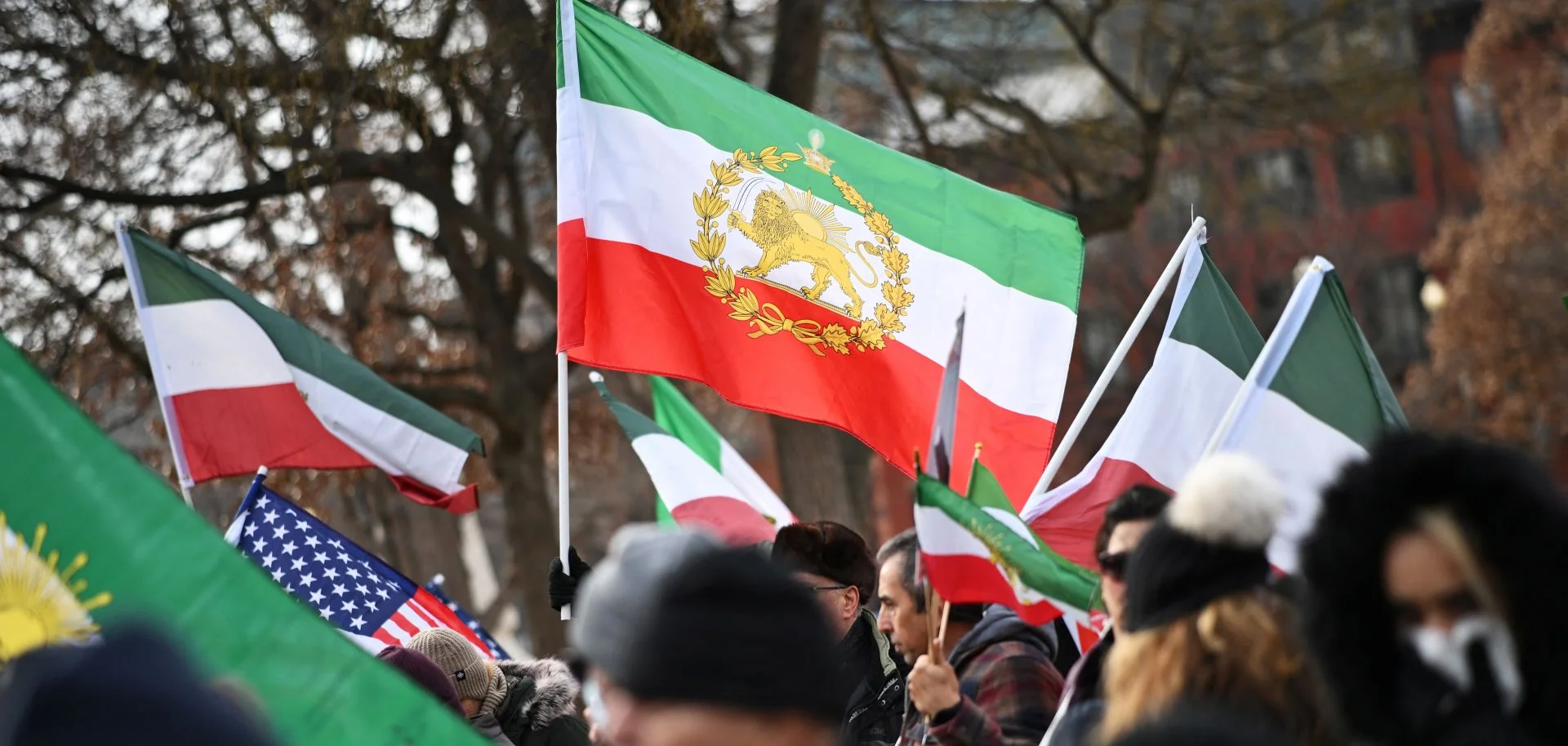
The current wave displays unique characteristics that were not present in previous protests. First, there is an unprecedented level of vertical and horizontal integration. The Bazaar-Worker-Student alliance means the state loses its ability to play different classes against each other. Second, the reformist myth has finally expired. In previous decades, a significant portion of the electorate believed in the possibility of slow, incremental change from within. By 2026, the overwhelming consensus among Iranians has shifted from reform to an explicit demand for regime change.
Furthermore, there is a newfound alignment between domestic aspirations and international policy. In contrast to the 2009 and 2022 movements, where Washington was often accused of strategic hesitation, the current US administration has pivoted toward an overt regime change posture. This is fueled by the 2025 regional conflicts and a perception that the Islamic Republic is no longer a rational actor capable of maintaining regional stability.
The Iranian government currently oscillates between two contradictory strategies. On one hand, it attempts the Chinese model of high-tech repression, using AI-driven facial recognition and internet shutdowns. However, this is costly and relies on a stable electrical grid that is currently failing. On the other hand, it considers a North Korea pivot, accepting total global isolation and a barter economy. This strategy is failing because Iran has a highly educated, globally connected youth population that refuses to live in a hermit state.
Potential Outcomes
As the crisis reaches its zenith, the possible trajectories for the Iranian state have branched into several distinct outcomes.
There remains a theoretical possibility of internal reform, often termed the Gorbachev scenario. In this model, a faction of the pragmatists within the establishment attempts to save the system by making massive concessions. However, history suggests that in highly ideologically rigid systems, late-stage reforms often accelerate collapse rather than prevent it.
A more likely internal shift involves a coup from within. In this scenario, the establishment, sensing that the clerical leadership has become a liability, moves to sideline the Supreme Leader and the clergy entirely. By stripping away the religious façade, the establishment might hope to appease the secular middle class and Gen Z while maintaining their own economic empires.
External actors, particularly the United States and its regional allies, are preparing for a scenario involving the active removal of the regime. A US-backed transition aims for a democratic, secular republic, however, the geopolitical risk is significant. Without a strong, locally legitimate leadership ready to take over immediately, such an intervention risks creating a power vacuum that could lead to years of instability.
Perhaps the most catastrophic outcome is the balkanization of Iran. Iran is a multi-ethnic mosaic, and as the central authority in Tehran weakens, ethnic regions like Iranian Kurdistan, Sistan-Baluchistan, and Arab-majority Khuzestan may seek autonomy or outright independence. If the security forces fracture along ethnic lines, the country could descend into a multi-sided civil war. This Syrianization of Iran would not only end the current regime but could physically dissolve the borders of the state as we know it, creating a regional security crisis of unprecedented proportions.
The destabilization of Iran can create a seismic shift for the Middle East’s Shia Crescent. In Iraq and Lebanon, where pro-Tehran factions rely on Iranian financial and military patronage, a vacuum in Tehran would likely trigger intense internal power struggles. The pro-Iran Shia groups in these countries face a dual threat: the loss of their primary benefactor and a potential backlash from Sunni majorities emboldened by Iran’s retreat..
The security of the Persian Gulf also hangs in the balance. A collapsing central authority in Tehran could lose control over its proxy networks and maritime assets, leading to disruption of global oil flows through the Strait of Hormuz.

Your go-to editorial hub for policy perspectives and informed analysis on pressing regional and global issues.