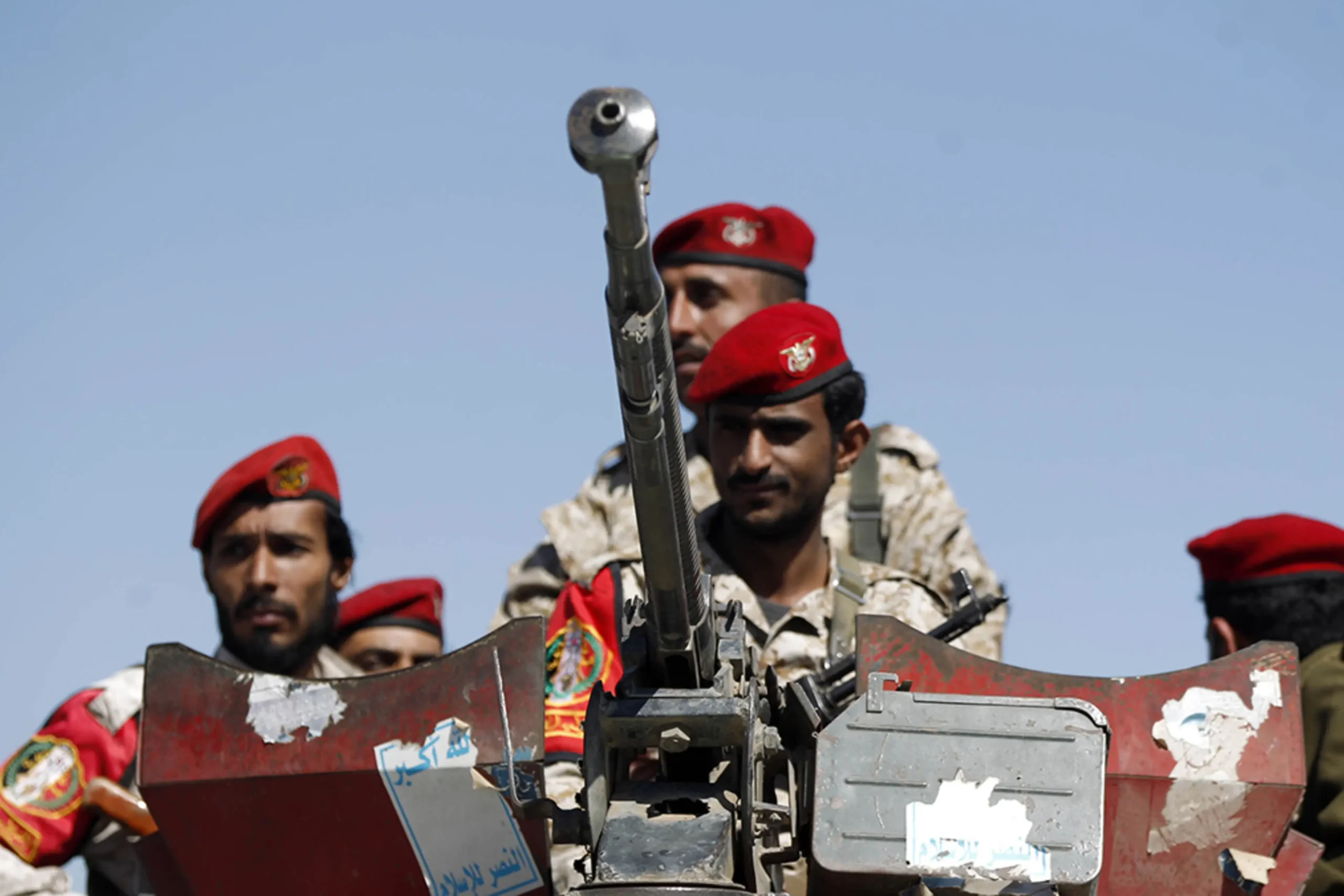
“Ruling Yemen is like dancing on the heads of snakes.”
–Ali Abdullah Saleh
As December 2025 draws to a close, the Bab al-Mandab Strait, historically known as the Gate of Tears, has become the focal point of a major geopolitical crisis.
While the world watched the Red Sea, a far more intimate and dangerous fracture was forming within the anti-Houthi coalition itself. The bombing of the port of Mukalla by Saudi warplanes on December 30, 2025, marks a definitive rupture in the Saudi-Emirati alliance in Yemen, replacing it with a rivalry that threatens to consume what little remains of the Yemeni state.
To understand the Yemen of today, one must look past the old civil war binary. It has become a fragmented multi-conflict where the interests of Riyadh, Abu Dhabi, Tehran, and now Tel Aviv have decoupled from the needs of the Yemeni people, leaving them in a permanent state of emergency.
The roots of the current carnage lie in the shotgun unification”of 1990. For decades, North Yemen (the Yemen Arab Republic) and South Yemen (the People’s Democratic Republic of Yemen) were distinct entities with vastly different political cultures. The North was defined by a Zaydi Shia Imamate and later a republican military elite, while the South was shaped by British colonial heritage and a subsequent Marxist regime.
Religious and ethnic identities in Yemen are the primary drivers of political loyalty. Yemen is an overwhelmingly Muslim nation, but it is split between two major schools. In the northern highlands, the Zaydi Shia (around 35% of the population) held a religious imamate for over a thousand years until the 1962 revolution. To the south and across the coastal Tihamah plain, the Shafi’i Sunnis (approximately 65%) predominate. While these groups coexisted peacefully for centuries, the 1990 unification under Ali Abdullah Saleh marginalized the Zaydi heartland and the Southern Shafi’i elites alike.
The 1994 civil war, in which Saleh’s northern forces crushed a southern secessionist bid, only buried these tensions. It also saw the rise of the Islah party, a mix of tribal interests and Muslim Brotherhood ideology, which Saleh used to weaken his socialist rivals. Ethnically, while 92% of the country is Arab, the Tihamah coast is home to Afro-Yemeni communities (the Muhamasheen) who face systemic racism, while the eastern deserts harbor ancient tribal confederations like the Hashid and Bakil.
The seal on a century of bottled up resentment was effectively broken by the 2011 Arab Spring. Inspired by uprisings in Tunisia and Egypt, thousands of Yemenis took to the streets to demand the end of Saleh’s 33 year rule. What followed was a messy, brokered transition managed by the Gulf Cooperation Council (GCC) that saw Saleh step down in favor of his deputy, Abdrabbuh Mansur Hadi.
This transition was fundamentally flawed. It left Saleh’s patronage networks intact while failing to address the core grievances of the Houthis in the north and the secessionists in the south. Seeing a vacuum, the Houthi movement formally known as Ansar Allah descended from their northern stronghold in Saada and seized the capital, Sana’a, in September 2014. By early 2015, they had chased the Hadi government into exile, prompting a Saudi led coalition to launch Operation Decisive Storm. This intervention was meant to last weeks, instead, it ushered in a decade of stalemate that hardened local identities into the regional factions we see today.
For years, Saudi Arabia and the United Arab Emirates (UAE) operated as frenemies, ostensibly united against the Houthis but backing rival visions for Yemen’s future. Riyadh anchored itself to the Presidential Leadership Council (PLC) and the hope of a unified state, while Abu Dhabi built the Southern Transitional Council (STC) into a powerful separatist machine.
The UAE’s focus on the south was not arbitrary, it was built on tactical successes like the 2016 Battle of Mukalla, where Emirati-backed forces successfully expelled Al-Qaeda in the Arabian Peninsula (AQAP) from the port city. While that battle was hailed as a counter-terrorism victory, it also served as the foundation for the Elite Forces and Giants Brigades, militias loyal to Abu Dhabi rather than the central government. In December 2025, this parallel power structure finally triggered a collapse of the alliance.
The spark was an aggressive STC push into the oil-rich Hadramaut and Mahra governorates, territories Saudi Arabia views as its vital strategic backyard. When Saudi jets bombed a UAE-linked weapons shipment in Mukalla on December 30, it was not just a military strike but a political declaration. In a coordinated move, both the Saudi leadership and the PLC formally demanded that the UAE exit Yemen entirely. The demand was specific and singular. Surprisingly, the UAE has complied, initiating a rapid withdrawal.
The ground in Yemen is now a mosaic of competing militias and political entities. Following the UAE withdrawal, the battle lines have simplified into a brutal everyone against everyone” scenario:
The Houthis (Ansar Allah) vs. The PLC & Islah: The primary north-south front remains active. The Houthis, led by Abdul-Malik al-Houthi and backed by Iran, are pushing to seize the oil-rich Marib governorate. This puts them in a direct, bloody stalemate with the Islah Party and the remnants of the PLC’s regular army. For the Houthis, Marib is the “final prize” for total northern dominance.
The Southern Transitional Council (STC) vs. The PLC & Islah: In the south, the war is internal. The STC is actively fighting to expel Islah and PLC forces from Abyan and Hadramaut. The STC views Islah as northern occupiers in southern skin, while the PLC views the STC as illegal rebels. This conflict will intensify after the UAE’s departure, as the STC will attempt to consolidate its maritime republic before Saudi Arabia can deploy more national shield units.
The National Shield Forces vs. The STC: This is the most recent and dangerous front. The National Shield, a Saudi-backed paramilitary loyal only to President Al-Alimi, is currently clashing with STC units around the temporary capital of Aden. It is a battle for the “soul” of the anti-Houthi administration.
AQAP vs. Everyone: Al-Qaeda continues to exploit the chaos. They are currently engaged in a shadow war with the STC in the mountains of Shabwah, while occasionally launching suicide attacks against Houthi checkpoints.
The Tihamah Resistance: Along the western coast, local militias refuse to take orders from either the Houthis or the PLC, fighting a localized war of attrition against Houthi incursions into the Red Sea ports.
One of the most dramatic shifts in 2024 and 2025 has been the direct entry of Israel into the Yemeni theater. Following Houthi drone and missile attacks on Tel Aviv and Eilat, Israel shifted from passive defense to aggressive offense.
The Israeli role is two-fold. Militarily, the IAF has conducted devastating strikes on Houthi political leadership, including the assassination of the Houthi Prime Minister in Sana’a in August 2025. Logistically, Israel had found common ground with the UAE.
Furthermore, the STC has subtly signaled its openness to the Abraham Accords. Aidarus al-Zoubaidi has hinted that an independent South Yemen would be a reliable partner in securing the Red Sea.
Yemen is no longer a country; it is a series of fiefdoms. The 1990 unification is, for all practical purposes, a dead letter. The Houthis have built a proto-state in the North modeled on Hezbollah, while the STC has carved out a maritime republic in the South.
The December 2025 rupture, followed by the UAE’s withdrawal under joint pressure from Riyadh and the PLC, removes the last shred of a unified opposition to the Houthis. As the UAE exits, the humanitarian ledger continues to bleed. According to the World Food Programme, 17 million people are facing severe hunger, and the currency divide has made basic survival a luxury.
The path forward requires a brutal honesty that international diplomacy has lacked. Peace in Yemen cannot be found in a return to the status quo, it requires a multi-party settlement. Until the localized factions stop treating Yemeni soil as a chessboard for their own ambitions, the Gate of Tears will continue to earn its name.

Your go-to editorial hub for policy perspectives and informed analysis on pressing regional and global issues.