For more than two decades, Qatar has marketed itself as a small state with an outsized commitment to diplomacy. Its leadership has repeatedly framed engagement with militant and Islamist actors as pragmatic “dialogue,” arguing that isolation breeds extremism while engagement moderates behavior. Yet a growing body of evidence suggests that Qatar’s approach has often moved beyond dialogue into political patronage, granting radical movements legitimacy, protection, and international relevance without enforceable conditions.
This pattern has had profound consequences, not only for regional stability but also for global counterterrorism norms.
The Doha Model: Hosting Without Conditionality
Qatar’s mediation strategy relies on a simple but powerful asset: access. Doha has consistently opened its territory to groups shunned elsewhere, positioning itself as an indispensable intermediary. The most consequential example was the establishment of the Taliban’s political office in Doha in 2013. Officially, the office was meant to facilitate peace talks. In practice, it became the Taliban’s primary international platform. From Doha, Taliban representatives met U.S. officials, European diplomats, UN envoys, and international media, years before the group made any credible commitment to sever ties with transnational terrorist networks or respect basic human rights.
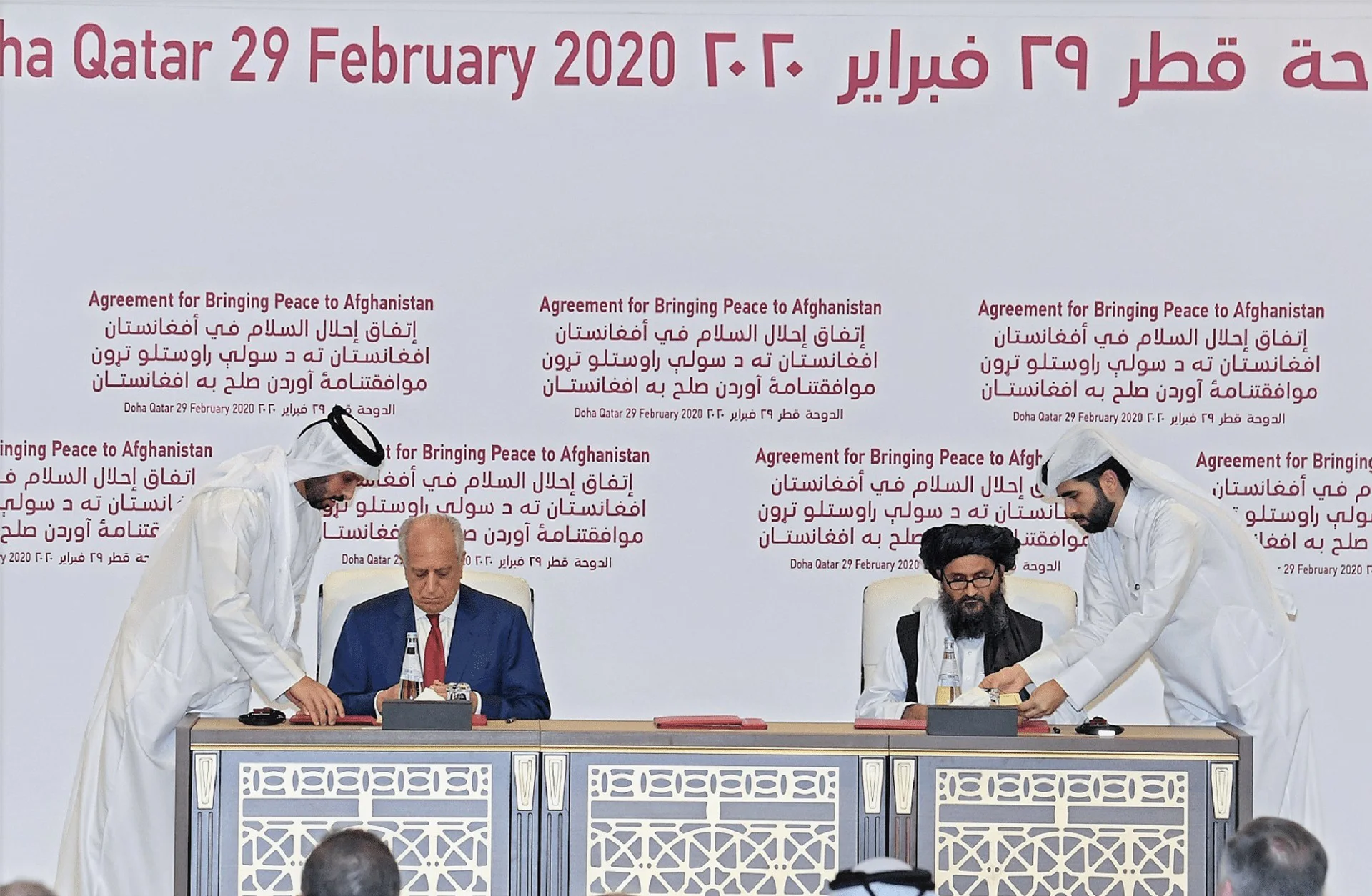
The culmination was the 29 February 2020 US–Taliban Agreement, signed in Doha. The agreement granted the Taliban international recognition as a negotiating partner while offering vague assurances on counterterrorism. Crucially, verification and enforcement mechanisms were weak, leaving compliance largely dependent on goodwill rather than obligation. Subsequent UN and U.S. assessments have continued to raise concerns about militant sanctuaries in Afghanistan, calling into question the assumption that engagement alone would transform Taliban behavior.
Hamas: Shelter, Legitimacy, and Diplomatic Cover
Qatar’s relationship with Hamas follows a similar pattern. Since 2012, Doha has hosted senior Hamas leaders after their departure from Syria. Qatari officials argue that this access enables mediation during Gaza crises. Critics counter that it provides Hamas with a secure political rear base while weakening international pressure on the group to renounce violence. Despite periodic escalations, Qatar has rarely conditioned its engagement on Hamas altering its military posture. Instead, Doha’s leverage has translated into political survival for Hamas leadership and recurring cycles of negotiation that manage crises without addressing root causes .
This dynamic, access without accountability, has reinforced the lesson that armed movements can gain international relevance without reform.
The 2017 Gulf Crisis: A Pattern Recognized by Neighbors
Concerns about Qatar’s patronage of Islamist movements reached a breaking point in 2017, when Saudi Arabia, the UAE, Bahrain, and Egypt severed diplomatic ties with Doha. Their jointly issued list of demands accused Qatar of supporting extremist groups and destabilizing the region through its foreign policy and media ecosystem.
Among the demands were calls to sever ties with groups such as the Muslim Brotherhood and to curtail platforms that amplified radical narratives. Whether one accepts all these accusations or not, the crisis underscored a regional consensus: Qatar’s “dialogue-first” approach was seen not as neutral mediation but as strategic alignment with political Islam.
The crisis also revealed the structural flaw in Doha’s strategy. By prioritizing influence over alignment, Qatar increasingly found itself isolated from collective regional frameworks designed to counter extremism.
From Mediation to Normalization
What distinguishes Qatar’s approach from traditional diplomacy is its effect on legitimacy. Hosting, mediating, and amplifying radical actors has steadily normalized their participation in international affairs. Negotiating tables once reserved for states are now accessible to non-state actors who have not disarmed, demobilized, or accepted international norms.
This is not merely symbolic. Legitimacy translates into funding access, media platforms, political leverage, and negotiating parity with states. Over time, this undermines peaceful political processes and marginalizes moderate voices within affected societies.
Security analysts warn that this model incentivizes violent entry into politics. If endurance and relevance are enough to secure international engagement, the deterrent value of counterterrorism norms erodes.
Media as a Force Multiplier
Qatar’s patronage does not operate in isolation from its media power. Al Jazeera has played a crucial role in amplifying narratives aligned with Doha’s diplomatic posture. Coverage frequently emphasizes grievances and political context for Islamist actors while placing heavier scrutiny on states opposing them.
During the 2017 crisis, critics explicitly cited Al Jazeera as an instrument of Qatari foreign policy, a rare admission by states that media framing itself had become a strategic concern. Academic studies comparing Al Jazeera’s coverage with Western and regional outlets have identified consistent framing differences, particularly in conflicts involving Islamist movements. These differences shape global perception and reinforce the normalization effect of Doha’s engagement strategy.
The Strategic Cost
Qatar’s defenders argue that engagement prevents worse outcomes. Yet the evidence suggests that engagement without leverage entrenches instability. Militant groups gain time, space, and recognition, while states confronting violence are pressured into restraint and compromise. For countries facing cross-border terrorism, this imbalance is not theoretical, it is operational. Mediation that avoids naming perpetrators or enforcing commitments effectively shifts the burden of stability onto states rather than armed actors. Over time, the Doha model risks weakening the international system’s capacity to distinguish between legitimate political actors and those who use violence as leverage.
Conclusion: Dialogue Needs Discipline
Dialogue is not inherently flawed. But diplomacy without conditions is not peace-building, it is patronage. Qatar’s experience demonstrates the danger of confusing access with influence and relevance with responsibility. If mediation is to contribute to stability, it must be paired with enforceable standards: renunciation of violence, compliance with international law, and accountability for abuses. Without these, dialogue becomes a branding exercise that elevates spoilers and erodes norms painstakingly built over decades.
The question facing the international community is not whether Qatar should mediate, but whether mediation that normalizes violence can ever deliver lasting peace.
Disclaimer: The views expressed in this article are the author’s own. They do not necessarily reflect the editorial policy of the South Asia Times