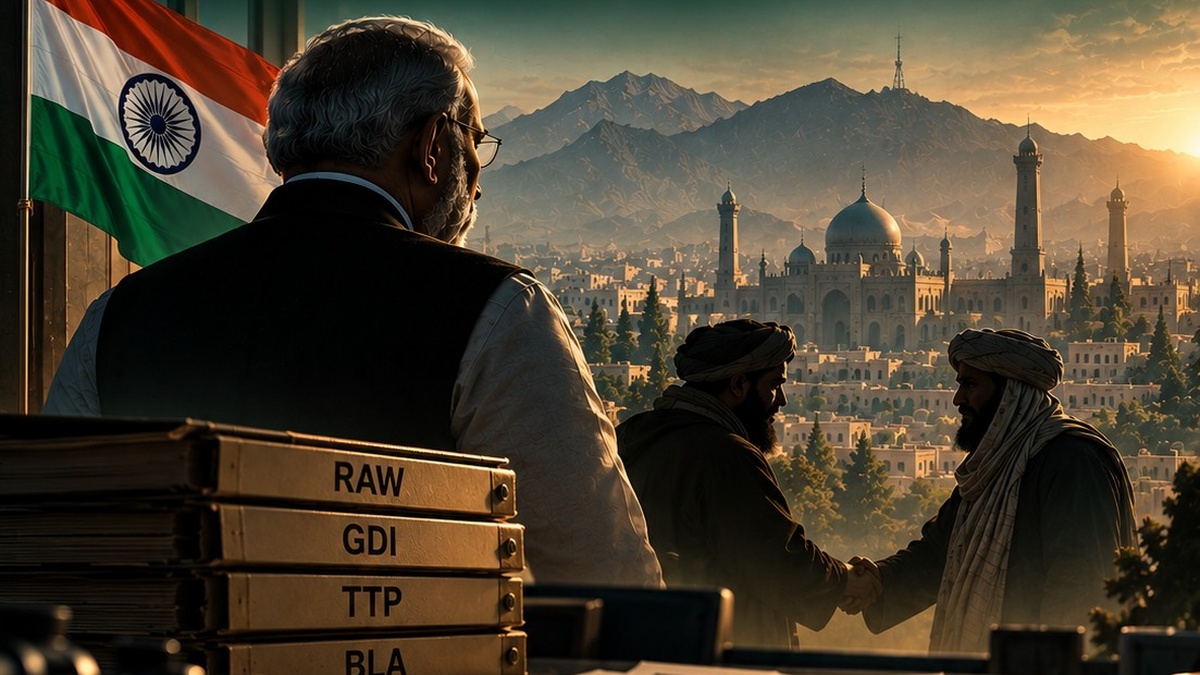
As international scrutiny intensifies regarding the verified presence of the Tehrik-e-Taliban Pakistan (TTP) on Afghan soil and their enduring ties with the Taliban leadership, Kabul has sought to manufacture a false equivalence. By pointing fingers across the Durand Line and alleging that Pakistan is the true sanctuary for ISIS-K (Islamic State Khorasan Province), the Taliban are attempting to create a diplomatic stalemate.
This rhetorical strategy is designed to suggest that if Pakistan has a TTP problem originating in Afghanistan, then Afghanistan has an ISIS-K problem originating in Pakistan. However, this attempt to balance the scales of blame ignores a mountain of operational data, verified intelligence, and the bloody history of ISIS-K’s war against the Pakistani state. This deflection is not just a diplomatic maneuver, it is a calculated effort to outsource responsibility for a militant presence that remains overwhelmingly rooted in Afghan geography.
Historical Roots and the Afghan Sanctuary
To understand why Kabul’s claims are so fundamentally flawed, one must first look at the historical trajectory of ISIS-K. The group did not emerge from a Pakistani vacuum after the fall of Kabul in August 2021. Instead, it metastasized within Afghanistan’s eastern provinces, specifically Nangarhar and Kunar, as early as late 2014. The core of ISIS-K was formed from disgruntled defectors of the TTP and the Afghan Taliban, after they were defeated and forced to flee from Bajaur following Pakistani military operations. Crucially, these were individuals who were directly or indirectly part of the Taliban’s organizational structure and had previously performed bayat (the oath of allegiance) to the Taliban Ameer. Their transition to ISIS-K represented an internal ideological schism rather than an external import.
For years, these militants found refuge in the rugged terrain of the Spin Ghar mountains, benefiting from the fragmented security architecture of the previous Afghan government. When the Taliban took power in 2021, the chaos of the transition led to the mass release of thousands of ISIS-K prisoners from facilities like Pul-e-Charkhi and Bagram. This influx of battle-hardened manpower provided the group with the oxygen it needed to reorganize.
International observers have repeatedly noted that the current gaps in security mechanisms within Afghanistan, not Pakistan, have provided the primary breeding ground for the group’s resurgence. ISIS-K expanded precisely because the Taliban’s internal enforcement has been inconsistent, leaving vast tracts of territory where the group can recruit, train, and plan.
ISIS-K vs. Pakistan
The suggestion that Pakistan sponsors or harbors ISIS-K is further decimated by the group’s own violent campaign against the Pakistani state. A state does not nurture a viper that systematically strikes its own heart. ISIS-K views Pakistan as an apostate entity, and its actions within the country have been nothing short of a sustained war involving mass casualties and high-profile arrests by Pakistani security forces.
The groups that eventually formed the backbone of ISIS-K in the region were notably the same ones targeted by Pakistan’s military during the mid-2010s. These operations successfully broke the back of the local militant infrastructure, compelling the survivors to flee across the border into the Afghan provinces of Kunar and Nangarhar, where some of these groups subsequently joined ISKP.
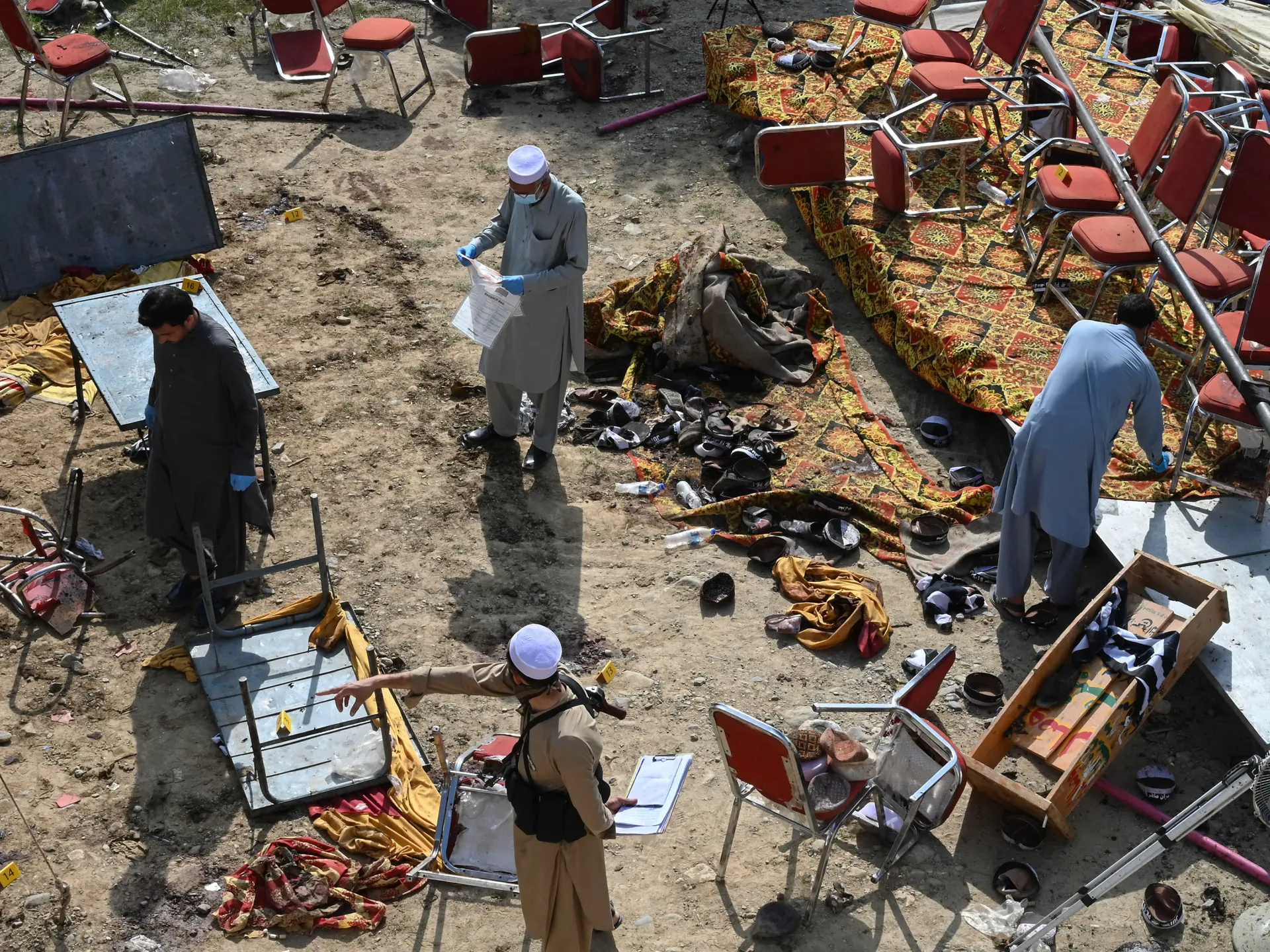
The history of ISKP’s attacks in Pakistan is written in blood: the March 2022 suicide bombing of a Shia mosque in Peshawar that killed over 60 worshippers, the devastating Mastung blast in September 2023 that claimed 60 lives during a religious procession; and the July 2023 targeting of a political convention in Bajaur that left over 50 dead.
Beyond these attacks, Pakistan has aggressively pursued the group’s leadership. In late 2024, Pakistani intelligence executed a breakthrough operation resulting in the arrest of Sultan Aziz Azzam, the group’s chief propagandist and founder of the Al-Azaim Foundation. Furthermore, numerous ISIS-K militants have been neutralized or captured in intelligence-led raids across Khyber Pakhtunkhwa and Balochistan, with several key facilitators facing execution or long-term imprisonment following military court proceedings. The human cost borne by Pakistan makes the allegations of sponsorship not only factually absurd but deeply offensive to the thousands of Pakistani families who have lost loved ones to ISIS-K’s brutality.
Operational Reality vs. Rhetorical Deflection
The reality is that Afghan Taliban’s claims collapse under the weight of their own contradictions when subjected to analytical scrutiny. If ISIS-K truly operated from Pakistan with impunity, it would not be the Pakistani intelligence services arresting the group’s most vital assets. Azzam’s capture by Pakistani intelligence directly contradicts Mujahid’s narrative that Pakistan is a sanctuary. Following these arrests, the propaganda output of ISIS-K, essential for its recruitment of Central Asian and regional youth, crumbled. A state protecting a group would not dismantle its most effective non-kinetic weapon.
Furthermore, United Nations monitoring reports, specifically document S/2025/796, meticulously record coordinated Pakistani operations that have degraded the group’s command structure, disrupted its external attack planning, and severed its recruitment pipelines. It is intellectually inconsistent for Kabul to accuse Pakistan of “harboring” the group while simultaneously benefiting from Pakistan-led arrests that prevented ISIS-K strikes targeting both Afghanistan and the wider region. For example, the sharing of actionable intelligence by Pakistan led to the identification of figures like Mohammad Sharifullah, a key operative linked to the devastating Kabul airport bombing.
Regional peace depends on recognizing the distinction between a state producing verified results and a regime producing verified rhetoric. Instead of persisting with manufactured false equivalences, the Taliban must recognize that regional security is a shared responsibility. The path to stability lies in meaningful collaboration with Pakistan to take decisive, verifiable action against all terror groups operating in the region, including ISIS-K and the TTP. The geography of the threat remains overwhelmingly inside Afghanistan, and it is time for Kabul to prioritize genuine counter-terrorism cooperation over rhetorical games.

Your go-to editorial hub for policy perspectives and informed analysis on pressing regional and global issues.