Despite possessing a civilizational history extending over several millennia, India has never experienced a “people’s revolution” comparable to those that transformed France (1789), Russia (1917), China (1949), or Vietnam (1945). Instead, India’s political trajectory has been shaped largely by elite-led nationalist mobilization and a parliamentary system inherited from British colonial rule. As allegations of electoral manipulation and voter suppression intensify, scholars warn that India’s parliamentary democracy faces an unprecedented crisis, one that could ultimately engender new forms of mass resistance. This article critically examines India’s historical political evolution, its democratic limitations, and the emerging possibility of a future popular upheaval.
Across world history, people’s revolutions have emerged during periods of acute political delegitimization, when mass frustration crystallized into radical and transformative uprisings. Yet, despite deep-rooted social inequalities, recurring political turmoil, and extensive mobilizations during the independence struggle, India has not undergone a revolution of comparable scale or structural consequence.
Historians such as Eric Hobsbawm and sociologists like Barrington Moore Jr. have long argued that successful revolutions require the convergence of material crisis, ideological clarity, and broad-based popular mobilization—conditions that have only sporadically aligned in India (Hobsbawm, The Age of Revolution; Moore, Social Origins of Dictatorship and Democracy).
This essay explores the reasons behind India’s divergence from global revolutionary patterns, the limits of its parliamentary system, and the growing crisis defined by voter suppression and authoritarian consolidation.
The Absence of a People’s Revolution in India
Revolutions in France, Russia, China, and Vietnam were driven by frontal confrontations against monarchic, aristocratic, or colonial orders. These upheavals mobilized peasants, workers, and marginalized classes into coalitions that fundamentally restructured their states and economies (Skocpol, States and Social Revolutions).
India’s independence movement, while undeniably massive and politically consequential, diverged from this pattern for several key reasons:
1. Elite-Dominated Leadership
The Indian National Congress, composed predominantly of upper-caste, urban, and professional elites—monopolized leadership and steered the nationalist movement within a constitutional and moderate framework (Brown, Gandhi’s Rise to Power).
2. Strategic Factionalism Rather Than Revolutionary Ideology
Internal divisions between moderates (“soft faction”) and radicals (“hard faction”) reflected strategic disagreements rather than a collective revolutionary doctrine aimed at overthrowing socio-economic structures (Metcalf & Metcalf, A Concise History of Modern India).
3. Absence of a Structural Transformative Agenda
The movement sought primarily the transfer of political power rather than a comprehensive restructuring of entrenched caste, class, and land hierarchies.
Consequently, although India achieved independence through mass participation, the absence of a systemic socio-political rupture distinguishes its nationalist struggle from classical people’s revolutions elsewhere.
Independence Without Revolution: Congress Dominance and Its Structural Consequences
Because India’s independence was negotiated rather than seized through insurrection, the new republic inherited and preserved:
- the colonial bureaucratic administration,
- the British parliamentary model, and
- an elite-driven political culture.
These continuities ensured state stability but significantly constrained democratic deepening. Postcolonial India did not witness the sweeping redistribution of power, land, or resources that typically accompanies revolutionary upheavals. As scholars such as Francine Frankel argue, longstanding hierarchies—particularly those related to caste and land ownership—remained structurally intact (Frankel, India’s Political Economy 1947–2004).
Post-Independence Parliamentary Democracy: Rights Without Participation
The adoption of universal adult franchise in 1950 represented one of history’s most ambitious democratic expansions. Yet the institutional architecture of the new republic offered only limited avenues for participatory governance.
Key structural limitations included:
- Concentration of power within political parties and legislatures,
- Weak participatory institutions, particularly at local and policy-making levels,
- Persistent social inequalities that constrained effective political agency.
Political theorist Rajni Kothari famously argued that India developed into an “electoral democracy,” not a “participatory democracy” (Kothari, Politics in India). Voting became the primary—often the only—mechanism of popular involvement in governance.
Contemporary Crisis: Electoral Manipulation and Voter Suppression
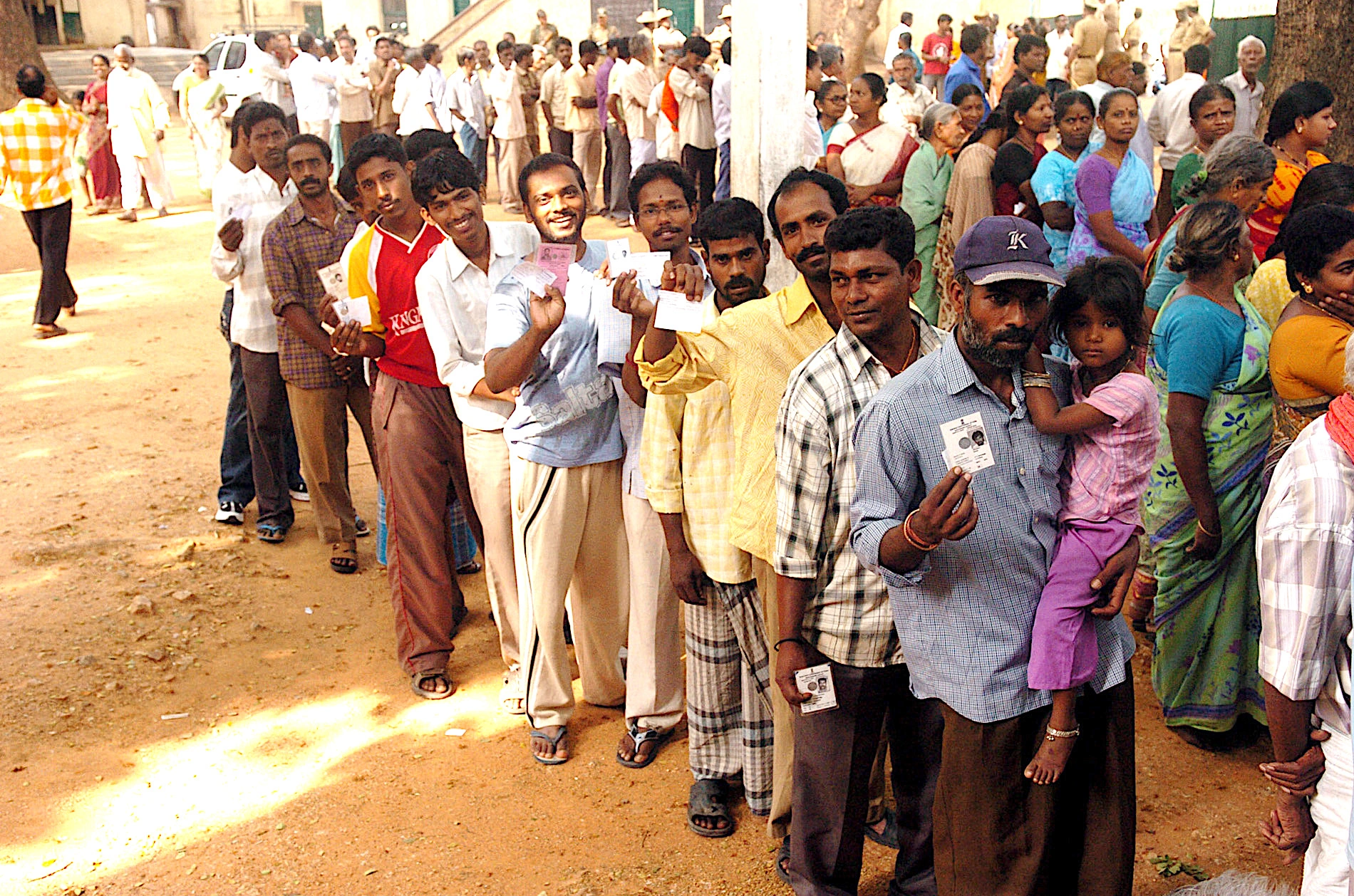
In recent years, concerns over voter suppression and electoral roll manipulation have grown significantly. Civil society organizations and investigative journalists have highlighted patterns of irregularity, particularly during “special intensive revision” (SIR) exercises.
Reported issues include:
- Large-scale deletions of voter names in states such as Maharashtra, Haryana, Delhi, and Bihar.
- Artificial inflation of electoral rolls through fictitious entries.
- Administrative opacity surrounding revisions and verifications.
These practices erode public confidence in elections and disproportionately disenfranchise marginalized communities, reflecting broader global trends of democratic backsliding (Levitsky & Ziblatt, How Democracies Die).
Democratic Decline and the Rise of Political Authoritarianism
The compounded effect of electoral manipulation, suppression of dissent, politicization of institutions, and the centralization of executive authority has led major democracy indices—including Freedom House and the V-Dem Institute—to classify India as undergoing a democratic recession.
The term “political fascism” is employed by several analysts to describe:
- the fusion of the state with a dominant ideological apparatus,
- the delegitimization and criminalization of political opposition, and
- the weakening of constitutional checks and balances.
Although interpretations vary, a broad scholarly consensus indicates that India’s institutional equilibrium is undergoing a historic weakening (Chatterjee, Lineages of Political Society).
Election Rigging in the 2025 Bihar Assembly Election
The Bihar Assembly Election of 2025 has intensified these concerns. The central government’s arbitrary appointment of Gyanesh Kumar as Chief Election Commissioner—despite widespread objections from opposition parties—has raised questions regarding institutional neutrality.
Twenty days before the election, the Election Commission initiated the “Special Intensive Revision” process, citing the identification and removal of alleged Bangladeshi, Nepali, and Myanmar intruders. Yet the Commission failed to identify a single intruder. Instead, it:
- wrongfully declared living individuals as deceased,
- listed deceased persons as active voters,
- removed approximately 6.2 million legitimate voters, and
- simultaneously added large numbers of new, unverifiable entries.
Further discrepancies emerged in turnout reporting. Before polling began, the Commission published a voter list of 74.2 million. After voting concluded, it claimed that 74.5 million votes had been cast—raising a fundamental question: How did an additional 300,000 voters cast ballots on EVMs without appearing on the initial electoral roll?
Bihar Assembly Election 2025: Reported Constituencies-wise BJP & Its Allies (Vote Margins)
| No. | Constituency | Votes 1 | Party 1 | Votes 2 | Party 2 | Margin |
| 112 | Gobindpur | 25545 | LJP | 72581 | BJP | 2639 |
| 113 | Kutumba (SC) | 24130 | HAM | 84727 | JDU | 2605 |
| 114 | Kanti | 28312 | JDU | 117299 | BJP | 2517 |
| 115 | Imamganj (SC) | 27817 | HAM | 104861 | RSLTKLM | 1961 |
| 116 | Hayaghat | 13621 | BJP | 77222 | JDU | 1782 |
| 117 | Sasaram | 27143 | RSHTLKM | 105006 | BJP | 1700 |
| 118 | Arwal | 15312 | BJP | 79854 | JDU | 1219 |
| 119 | Lalganj | 33303 | BJP | 127650 | JDU | 1136 |
| 120 | Bakhri (SC) | 18280 | LJP | 98511 | BJP | 962 |
| 121 | Lakhisarai | 25860 | BJP | 122408 | JDU | 920 |
| 122 | Banka | 24478 | BJP | 95558 | JDU | 714 |
| 123 | Katihar | 22861 | BJP | 100255 | JDU | 707 |
| 124 | Supaul | 31259 | JDU | 109085 | BJP | 456 |
| 125 | Sarairanjan | 21187 | JDU | 102792 | BJP | 389 |
| 126 | Sikandra (SC) | 24089 | HAM | 91603 | JDU | 182 |
| 127 | Sikti | 19500 | BJP | 113442 | JDU | 178 |
| 128 | Mohania (SC) | 18913 | BJP | 76290 | JDU | 161 |
| No. | Constituency | Votes 1 | Party 1 | Votes 2 | Party 2 | Margin |
| 168 | Kahalgaon | 39939 | JDU | 130767 | BJP | -10173 |
| 169 | Mahnar | 28224 | JDU | 98050 | BJP | -10334 |
| 170 | Belhar | 26640 | JDU | 115393 | BJP | -10566 |
| 171 | Chiraia | 28616 | BJP | 90572 | JDU | -10744 |
| 172 | Jamalpur | 24688 | JDU | 96683 | BJP | -11540 |
| 173 | Teghra | 23575 | BJP | 112770 | JDU | -11789 |
| 174 | Darbhanga | 12720 | BJP | 97453 | JDU | -11873 |
| 175 | Barbigha | 13554 | JDU | 61882 | BJP | -11939 |
| 176 | Dhamdaha | 42629 | JDU | 138750 | BJP | -12530 |
| 177 | Minapur | 20645 | JDU | 113411 | BJP | -13593 |
| 178 | Bankipur | 36620 | BJP | 98299 | JDU | -15316 |
| 179 | Nirmali | 21707 | JDU | 119804 | BJP | -15603 |
| 180 | Pipra | 22159 | JDU | 107041 | BJP | -15617 |
| 181 | Kusheshwar Asthan (SC) | 19840 | JDU | 85685 | BJP | -16601 |
| 182 | Beldaur | 17923 | JDU | 106262 | BJP | -17252 |
| 183 | Nalanda | 14887 | JDU | 105432 | BJP | -18121 |
| 184 | Dehri | 17543 | LJP | 104022 | BJP | -18425 |
| 185 | Alauli (SC) | 16037 | JDU | 93208 | BJP | -19695 |
| 186 | Tarapur | 26015 | BJP | 122480 | JDU | -19828 |
| 187 | Rosera (SC) | 30383 | BJP | 122773 | JDU | -20150 |
| 188 | Kumhrar | 27342 | BJP | 100485 | JDU | -20182 |
| 189 | Alamnagar | 32481 | JDU | 138401 | BJP | -22984 |
| 190 | Bathnaha (SC) | 28525 | BJP | 123698 | JDU | -23244 |
| 191 | Asthawan | 15266 | JDU | 90542 | BJP | -25442 |
| 192 | Mahua | 19466 | LJP | 86741 | BJP | -25531 |
| 193 | Aurai | 31040 | BJP | 104085 | JDU | -26166 |
| 194 | Jamui | 26935 | BJP | 123868 | JDU | -27563 |
| 195 | Sikta | 19353 | JDU | 97114 | BJP | -28439 |
| 196 | Raja Pakar (SC) | 19750 | JDU | 96258 | BJP | -28799 |
| 197 | Jhanjharpur | 25980 | BJP | 107958 | JDU | -28869 |
| 198 | Rajgir (SC) | 25038 | JDU | 107811 | BJP | -30309 |
| 199 | Harnaut | 17374 | JDU | 106954 | BJP | -30961 |
| 200 | Gopalpur | 21486 | JDU | 108630 | BJP | -36649 |
| 201 | Sugauli | 20327 | LJP | 98875 | BJP | -37864 |
| 202 | Rupuali | 35111 | JDU | 124826 | BJP | -38461 |
These constituency-level outcomes reflect margins and anomalies that require independent scrutiny, judicial review, and forensic verification to restore public trust in the electoral process.
Opposition parties contend that the outcome does not reflect the genuine democratic mandate of the people; rather, it constitutes a “Gyanesh-order” engineered by Gyanesh Kumar, the BJP-aligned Chair of the Election Commission. According to them, the Commission, through systematic electoral rigging, artificially enabled the ruling BJP and its coalition partners to secure illegitimate leads, resulting in a fabricated victory on 128 out of 243 seats in the Bihar Legislative Assembly. Such actions, they argue, amount to a grave, punishable, and indefensible offence.
In order to uphold the integrity of India’s parliamentary democracy, all non-BJP Members of Parliament ought to tender their resignations en masse and assume leadership of a broad-based public movement. Moreover, opposing the establishment of what they describe as a fraudulent BJP–JDU government in Bihar, the opposition’s declared winning candidates should boycott the “oath-taking ceremony” scheduled for 18 November, and press for the constitution of a newly elected Legislative Assembly.
The Prospect of a Future People’s Revolution
Political history suggests that prolonged authoritarianism often generates its own antithesis. From pre-revolutionary France to Tsarist Russia, persistent repression eventually catalyzed mass resistance.
If India’s current trajectory—marked by electoral manipulation, shrinking civic space, and institutional decay—continues unchecked, the nation may confront:
- growing public disillusionment,
- intensified grassroots mobilization, and
- demands for structural political transformation.
Whether such mobilization crystallizes into a true “people’s revolution” will depend on material conditions, organizational leadership, ideological coherence, and public consciousness—all variables that remain fluid in the present moment.
Summing Up
India’s distinctive political evolution—shaped by an elite-led independence struggle, a parliamentary system lacking participatory depth, and contemporary democratic erosion—raises pressing questions about the future of its political order. As allegations of electoral manipulation grow and authoritarian consolidation accelerates, the possibility of a mass-driven political upheaval cannot be dismissed.
Safeguarding India’s democratic future requires sustained civic vigilance, rigorous scholarship, institutional resilience, and a renewed commitment to constitutional integrity. The nation now stands at a pivotal juncture, where the endurance of its democratic foundations may depend on the reawakening of popular political agency.
Disclaimer: The views expressed in this article are the author’s own. They do not necessarily reflect the editorial policy of the South Asia Times.

Dr. Akhilesh Chandra Prabhakar is an International Professor of Economics and Director of Global South Social Networks. His research focuses on sustainable economic development and the political economy of the Global South.