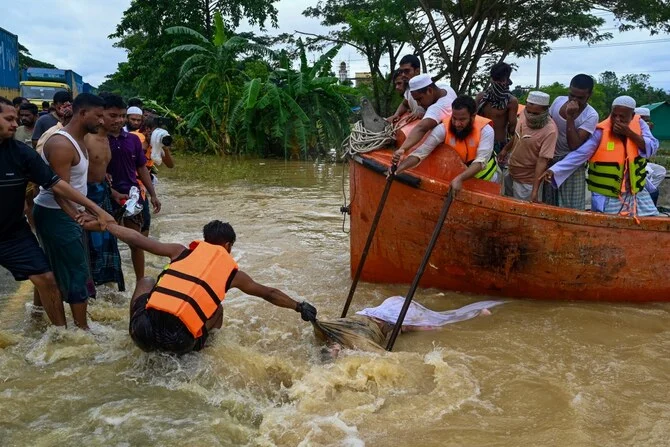
DHAKA: Authorities in Bangladesh are bracing for the spread of waterborne diseases. They are racing to get drinking water to people. This comes after devastating floods last week that left at least 54 people dead and millions stranded.
As floodwaters recede slowly, many people remain stranded. They are in urgent need of food, clean water, medicine, and dry clothes. The situation is especially dire in remote areas where blocked roads have hindered rescue and relief efforts.
The Bangladesh Meteorological Department said that flood conditions could persist. They warned that if the monsoon rains continue, water levels might recede very slowly.
Around 470,000 people have taken refuge in 3,300 shelters across 11 flood-hit districts. Approximately 600 medical teams are providing treatment. The army, air force, navy, and border guard are assisting in rescue operations, authorities said.
Health Crisis
A disaster management ministry official warned that as floodwaters recede, there is a risk of an epidemic, adding that the outbreak of waterborne diseases is likely if clean water is not provided soon.
“Our top priority is to ensure the availability of safe drinking water,” the official said.
In the past 24 hours, the Directorate General of Health Services has hospitalized around 3,000 people due to waterborne diseases in flood-hit areas. Many areas remained submerged, preventing stranded people from accessing health care facilities.
“Water is everywhere but there is no clean water to drink. People are getting sick,” said Farid Ahmed, a resident of one of the worst-hit districts, Lakshmipur.
Agriculture ministry officials said that the submersion of vast areas of land poses a significant threat to crops.
The UN children’s agency has warned that two million children were at risk as the worst floods in three decades sweep through eastern Bangladesh. The organization is urgently appealing for $35 million to provide life-saving supplies.
“The devastating floods in eastern Bangladesh are a tragic reminder of the relentless impact of extreme weather events and the climate crisis on children,” said Emma Brigham, Deputy Representative of UNICEF Bangladesh.
An analysis in 2015 by the World Bank Institute estimated that 3.5 million people in Bangladesh, one of the world’s most climate-vulnerable countries, were at risk of annual river flooding. Scientists attribute the exacerbation of such catastrophic events to climate change.
Farah Kabir, director of ActionAid Bangladesh, said that countries like Bangladesh, which contribute minimally to global emissions, urgently need funding to recover from climate-related losses and build resilience for future impacts while pursuing green development pathways.
This news is sourced from Arab News and is intended for informational purposes only.

Your trusted source for insightful journalism. Stay informed with our compelling coverage of global affairs, business, technology, and more.