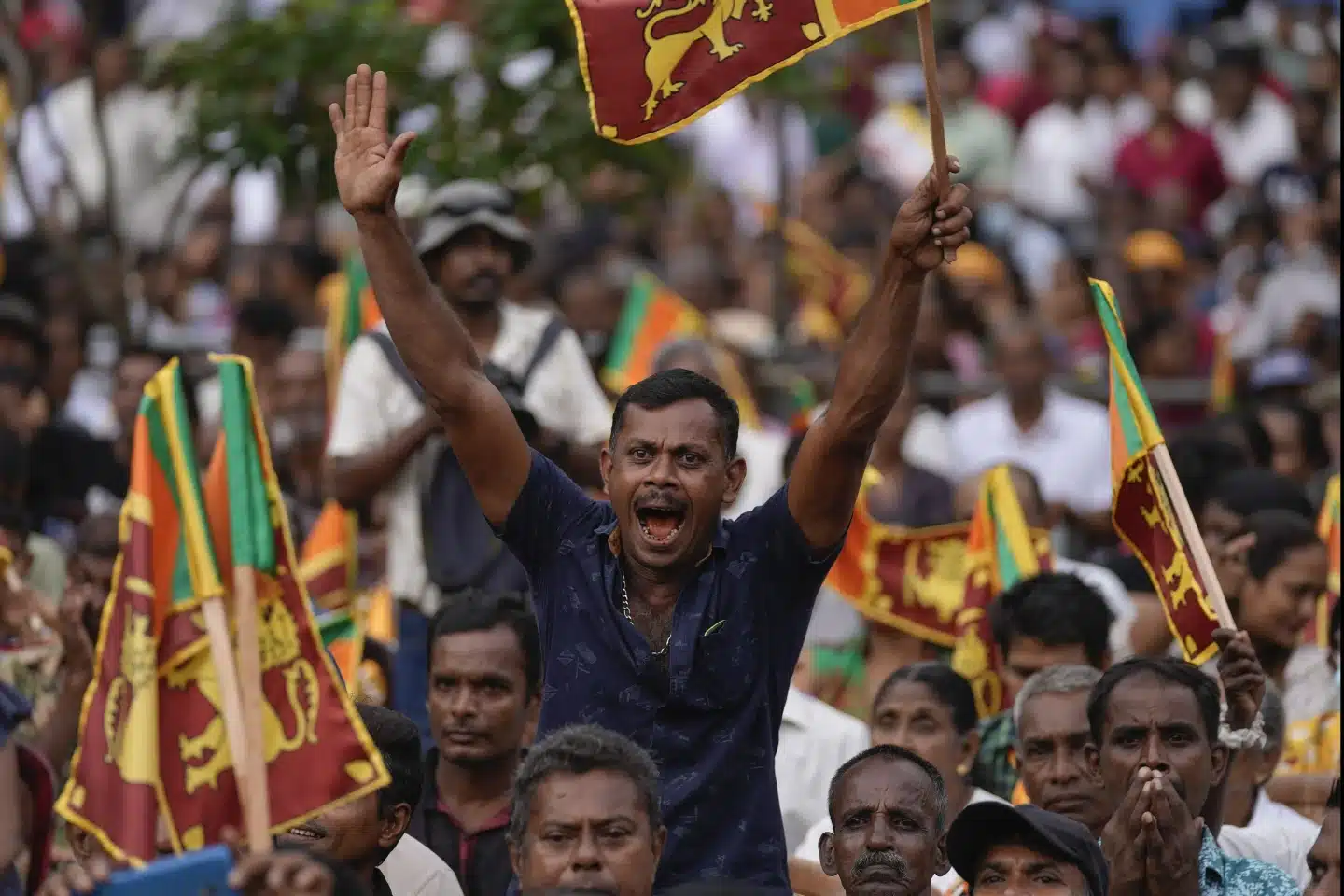
COLOMBO, Sri Lanka (AP) — Sri Lanka will hold its presidential election on Sept. 21. This crucial vote will decide the future of the South Asian nation. Sri Lanka is still struggling to recover from its economic collapse in 2022. The collapse provoked mass protests and forced former President Gotabaya Rajapaksa to flee the country and later resign. The Sri Lankan Elections are particularly significant as they will shape the country’s path toward recovery.
The Sri Lankan Elections serve as a referendum on President Ranil Wickremesinghe’s two-year rule. During this period, he has overseen a fragile recovery of the country’s economy.
He faces a tough challenge from the leader of the opposition in parliament. He also faces competition from a left-leaning politician with a powerful alliance. This politician is gaining popularity among young voters. These key players will be central figures in the Sri Lankan Elections.
Almost 17 million of Sri Lanka’s 22 million people are eligible to vote. In the Sri Lankan Elections, 38 candidates are running for office.
Who are the main candidates?
Wickremesinghe is running as an independent candidate after a split weakened his United National Party. Even though Wickremesinghe remains unpopular for carrying out austerity measures, including sharp tax hikes, he is hoping to gain votes. He implemented these measures in exchange for an International Monetary Fund bailout. Wickremesinghe hopes to attract voters by his success in largely abating the shortage of essentials such as fuel, cooking gas, medicines, and food.
Wickremesinghe is a six-time prime minister. He is at a disadvantage because he belongs to the old guard. Sri Lankans blame this old guard for the economic collapse.
Anura Kumara Dissanayake, the leader of a Marxist-led coalition named National People’s Power, is fast emerging as a key challenger to Wickremesinghe due to his popularity among the young people fed up with corruption that they believe caused the economic crisis. He is also drawing support from some voters who participated in the 2022 protests demanding the resignation of the then-President Rajapaksa.
Although he has been a leftist in the past, Dissanayake now professes economic freedom and promises welfare measures to help the working class. Political analysts consider him a strong contender because, unlike his rivals, he is not linked to the business and political elites who previously ran the country.
Wickremesinghe’s other challenger is Sajith Premadasa, the incumbent president’s former deputy and leader of his breakaway party, United People’s Power. Premadasa promises to continue with the IMF program but with changes to lessen the burden on poor people.
He has also promised a degree of power devolution to the minority Tamil community, who make up about 11% of the country’s population. In return, Premadasa has secured the support of a strong Tamil political bloc.
What about the Rajapaksa family?
Namal Rajapaksa, the heir apparent to the once-powerful Rajapaksa clan, is also contesting. Namal’s candidacy will test whether his powerful clan, which has produced two presidents, can maintain its hold on the country after the political obscurity of many of its members. His father, Mahinda Rajapaksa, crushed the Tamil armed separatist movement in 2009.
Namal is promising to ease the tax burden on Sri Lankans and build a strong economy, saying its meltdown in 2022 was largely due to the COVID-19 pandemic.
How does the election work?
Votes will be cast throughout the day on Sept. 21, with results expected to be out by evening the following day.
Voters can select three candidates from the ballot paper in the order of their preference. The count will start with the first preferences, and the candidate who secures more than 50% of the valid votes will win.
If no clear winner emerges, the count will retain the top two candidates. Officials will check ballots that listed other candidates as No. 1 to see if they ranked either of the top two as their second or third preference. They will add these votes to the tallies of the remaining two candidates. The candidate with the highest total will win.
Sri Lanka has a powerful executive presidential system with the President being the head of state, government, cabinet and the armed forces. The prime minister has some powers like recommending Cabinet ministers.
There are no reliable opinion polls to suggest which candidate is in the lead, but many observers say Dissanayake has been gaining popularity.
Veeragathy Thanabalasingham, a senior journalist and political observer, said while it appeared to be a “two-horse race” between Premadasa and Dissanayake in early September, campaigning in the final weeks could place all three candidates on equal ground.
What are the big issues?
Sri Lanka’s economy is the key issue in the election.
Under Wickremesinghe, the economy has shown improvement: Inflation fell below 5% from 70% in 2022, he lowered interest rates, and he grew foreign reserves. Analysts predict a 2% growth for 2024, the highest since the economic collapse, but financial benefits have not reached the common people. Many are struggling with high living costs, and businesses and professionals are complaining about high taxes.
While Wickremesinghe insists that the IMF agreement cannot change significantly, his rivals promise to renegotiate it to ease the burden on the public.
A large section of the population is unhappy because it believes Wickremesinghe’s administration protected the Rajapaksa family, who have faced accusations of economic mismanagement and corruption. Many people believe the family should face accountability.
This news is sourced from AP News and is intended for informational purposes only.