US Delegation Meets Pakistan Army Chief at GHQ

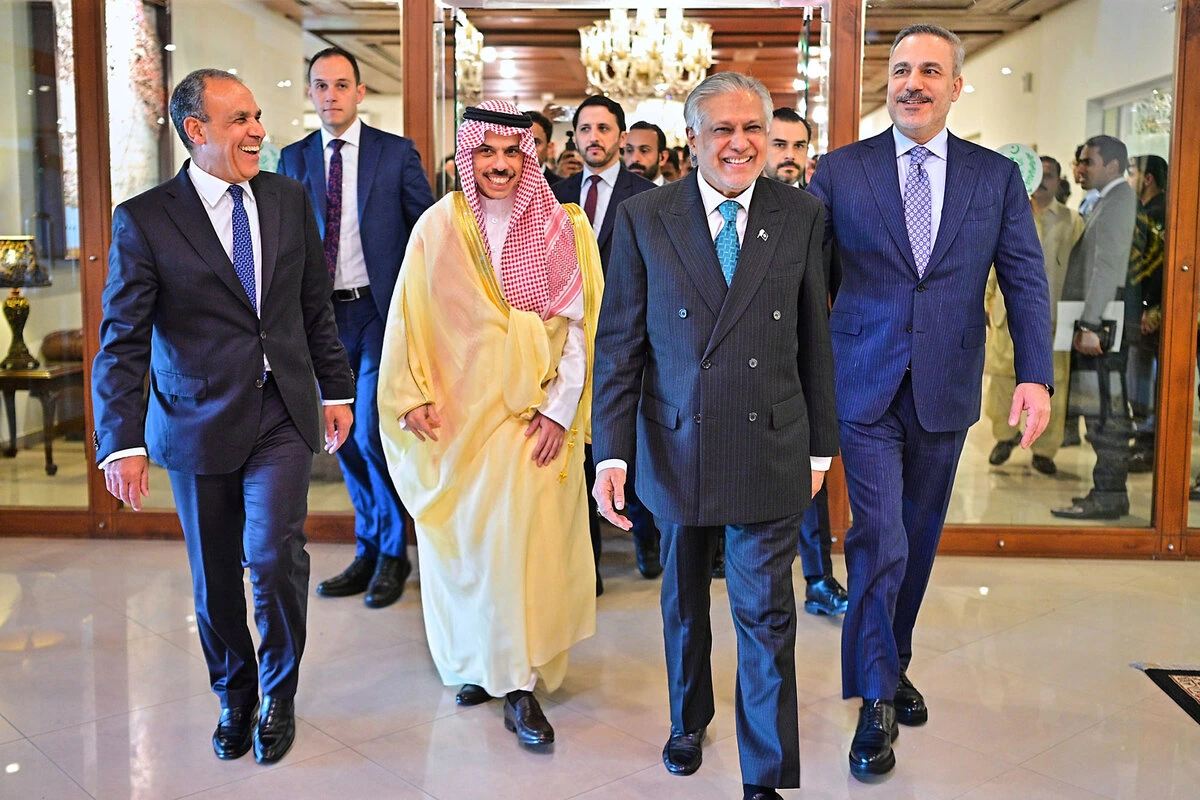
US delegation led by Eric Meyer meets Army Chief Gen Asim Munir to discuss mineral investment, ties, and cooperation. [Image via The Nation]

ISLAMABAD  –  A high-level delegation from the United States (US), led by Mr Eric Meyer, Senior Bureau Official for the Bureau of South and Central Asian Affairs, called on Chief of Army Staff (COAS) General Syed Asim Munir, NI (M), at General Headquarters on Wednesday.

The meeting came in the backdrop of Pakistan’s Mineral Investment Forum, says a press release issued by the Inter-Services Public Relations (ISPR).

Appreciating the first-of-its-kind forum, the delegation expressed confidence in Pakistan’s policy to develop vast untapped mineral wealth through mutually beneficial partnerships.

Also See: Pakistan to Send Delegation to the US for Talks on 29% Tariff Impact

Commenting on the US Administration’s priorities where collaboration in mineral development with Pakistan is a core area of mutual interest, Mr Meyer also expressed interest in Pakistan’s steadily improving investment landscape.

The meeting also afforded an opportunity to both sides for sharing perspective on global developments and Pakistan’s regional security imperatives, the ISPR said. Both sides expressed confidence on the positive trajectory of bilateral relations and agreed on the need to explore B2B avenues in addition to expanding existing G2G and P2P cooperation for comprehensively strengthening the relationship, the ISPR added.

This news is sourced from The Nation and is intended for informational purposes only.

News Desk

Your trusted source for insightful journalism. Stay informed with our compelling coverage of global affairs, business, technology, and more.

Recent

Beyond the Rhetoric: What Muttaqi’s Address Reveals About Afghan Policy

Beyond the Rhetoric: What Muttaqi’s Address Reveals About Afghan Policy

Interim Foreign Minister Amir Khan Muttaqi’s recent address sought to reframe Afghanistan’s strained ties with Pakistan through a narrative of victimhood and denial. From dismissing cross-border militancy to overstating economic resilience, his claims contradict on-ground realities and historical patterns. A closer examination reveals strategic deflection rather than accountability, with serious implications for regional peace and security.

Read More »
We Want Deliverance

We Want Deliverance

Political mobilization in South Asia is not rooted in policy or institutions but in a profound yearning for deliverance. From Modi’s civilizational aura in India to Imran Khan’s revolutionary moral narrative in Pakistan, voters seek not managers of the state but messianic figures who promise total transformation. This “Messiah Complex” fuels a cycle of charismatic rise, institutional erosion, and eventual democratic breakdown, a pattern embedded in the region’s political psychology and historical imagination.

Read More »
Pakistan-Only? The TTP’s Transnational Reality

Pakistan-Only? The TTP’s Transnational Reality

While the TTP publicly claims its insurgency targets only Pakistan, evidence reveals a transnational reality. Supported by Afghan fighters and resources, and shaped by the Afghan Taliban’s strategic interests, the TTP exemplifies cross-border proxy warfare. Understanding its structure, motivations, and operational networks challenges simplistic “Pakistan-only” narratives and underscores the enduring complexities of South Asian security.

Read More »
Pakistan’s Heritage and Rights Ethos: Unlocking Cultural Diplomacy

Pakistan’s Heritage and Rights Ethos: Unlocking Cultural Diplomacy

Pakistan’s diverse cultural heritage, from the hospitality of Pashtunwali and Sufi music in Sindh to folk traditions in Punjab, Balochistan, and Gilgit–Baltistan, reflects an enduring rights-based ethos. These living practices promote dignity, justice, and social inclusion. By integrating these traditions into cultural diplomacy, Pakistan can showcase its soft power while supporting custodians of heritage, artisans, and local communities.

Read More »