The High Court ruled incorrectly on UK visa rejections. This ruling involved eight former BBC journalists in Afghanistan. The ruling allowed them to win their legal battle.
After successfully challenging the rationale behind the refusals in the high court, eight former BBC journalists in Afghanistan anticipate. Their applications to relocate to the UK were initially rejected. They anticipate that authorities will reconsider their cases. This allows for visa review.
Mr. Justice Lane issued a judgment on Monday stating that the decisions had been made on an incorrect basis. He noted that, without the error, there was a “more than fanciful prospect of a different outcome”. This allows for visa review.
Journalists at Risk
The journalists had high-profile roles for the BBC and other media agencies in Afghanistan before British troops withdrew last year. They are now in hiding. They state their work supporting the UK government has endangered them and their families, putting them at “high risk” of being killed.
At a hearing in December, they advanced five grounds on which they challenged decisions by the defense secretary, Ben Wallace, and the home secretary, Suella Braverman, to deny them UK visas.
Lane ruled that their judicial review succeeded on one ground. This related to a finding by a caseworker on the Afghan relocations and assistance policy (ARAP). The caseworker had stated they did not qualify because the BBC was independent from the government. Lane found this statement, suggesting they did not meet ARAP eligibility criteria of working alongside a UK government department, was “wrong”. This finding allows for visa review.
Part of the Government
In his judgment, he wrote, “The caseworker erred in confining their decisions to the issue of whether working for the BBC amounted to working for HMG (His Majesty’s Government). This was at the expense of considering whether a journalist working for the BBC or any other news organization could be said to have worked alongside an HMG department. Such work could include partnership with or closely supporting that department.”
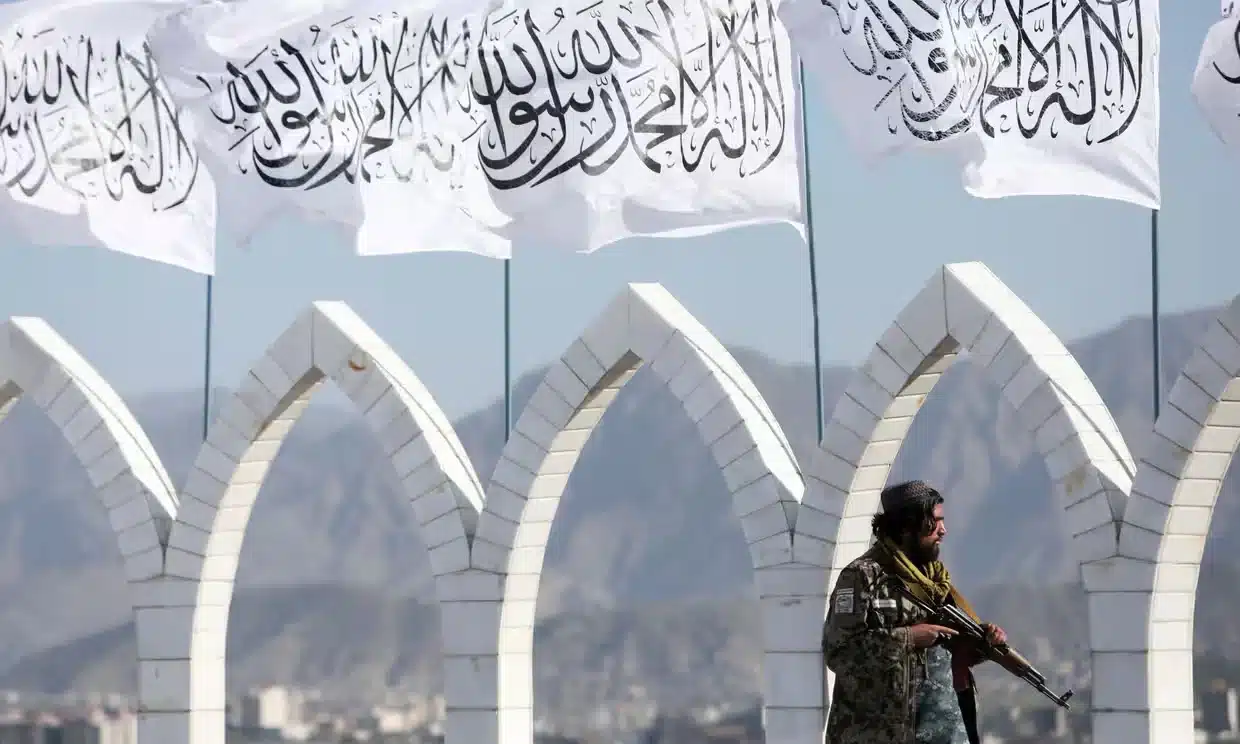
He also said the perception of the Taliban was relevant. According to the claimants, the Taliban consider the BBC to be part of the UK government. This was despite arguments to the contrary by David Blundell KC, who represented Wallace and Braverman. Lane rejected the rest of the grounds put forward by the claimants. Authorities expect to issue new decisions under ARAP within 21 days.
Journalists’ Service
The claimants worked for the BBC World Service, which receives about £100m in funding a year from the Foreign Office. The journalists were embedded with British military personnel. They reported in support of the British mission and also exposed Taliban corruption and abuse. Their assertion was that the journalists had played “an important role in the development of a free media and accountable democracy.”
In August 2021, Dominic Raab, the then Foreign Secretary, made a statement. He said that the UK government would protect “those brave Afghan journalists”. These journalists have worked courageously to shine a light on what is really going on in Afghanistan.
Lane made no judgment on the merits of the claimants’ right to relocation. He wrote: “The defendants’ position at the hearing was not to engage with the relative strength or otherwise of the claimants’ individual histories.” “In the circumstances, it would be wrong for this court to attempt to undertake such an exercise.” “Even if it had the means of doing so.”
Visa Review
Erin Alcock, the lawyer from Leigh Day who represented the claimants, stated, “Our clients are pleased that the Arap team will reconsider their applications. They have been living in fear for over 18 months, waiting to find out whether they will be relocated to the UK. During this time, the group has faced threats, torture, and attacks on their lives due to their work. This case highlights the importance of rigorous decision-making, considering the serious consequences for the applicants if any errors are made.”
A Ministry of Defence spokesperson said: “We welcome the court’s findings in our favour on nearly all grounds, and will consider today’s judgement carefully, including next steps.
“We owe a debt of gratitude to Afghan citizens who worked for, or with, the UK Armed Forces in Afghanistan and to date we have relocated over 12,100 individuals under the scheme. We estimate there are approximately 300 eligible individuals to identify and our priority remains bringing those remaining individuals eligible for the scheme and their families to the UK as quickly as possible.”
Original Source: The Guardian


![Ukrainian and Russian flags with soldier silhouettes representing ongoing conflict. [Image via Atlantic Council].](https://southasiatimes.org/wp-content/uploads/2026/02/2022-02-09T000000Z_1319661209_MT1NURPHO000HXCNME_RTRMADP_3_UKRAINE-CONFLICT-STOCK-PICTURES-scaled-e1661353077377.jpg)