
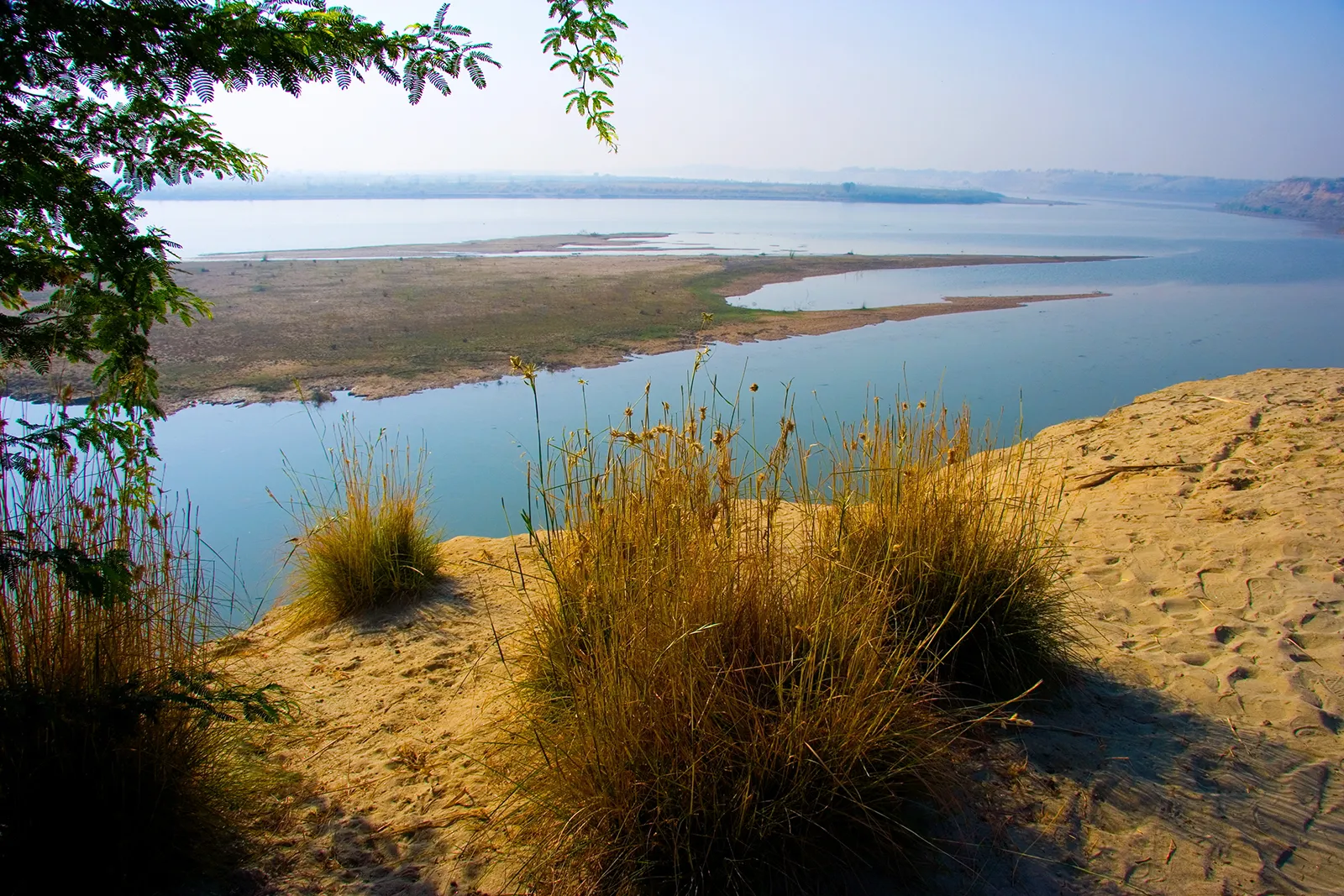
The Indus Waters Treaty (IWT) of 1960 has long been celebrated as one of the world’s most resilient transboundary water agreements, surviving three major wars and numerous border skirmishes. However, recent developments on the Chenab River signal a paradigm shift from technical disagreement to the weaponization of water. By holding the treaty in abeyance following the Pahalgam incident, India is moving beyond traditional diplomacy into the realm of coercive water politics.
This shift comes at a time when climate change is hitting the region with unprecedented severity, depleting glaciers and altering monsoon patterns. Mass level river diversions in this context do not just threaten human survival, they risk the total destruction of underpressure ecosystems that are already struggling to adapt. This strategy directly targets the bedrock of Pakistan’s existence: its agricultural sector and textile-led export economy. In a climate-stressed era, the transition from shared management to unilateral control is not merely a diplomatic friction, it is an existential threat to 250 million people and a catalyst for regional collapse.
Pakistan’s economy is fundamentally agrarian, and its most critical soft target is its irrigation system. By manipulating the flows of the Chenab, a river specifically allocated to Pakistan under the IWT, India is targeting the very foundation of Pakistan’s fiscal stability. To understand the gravity of this situation, one must look at the underlying economic data. In the fiscal year 2023-2024, Pakistan’s textile and agriculture sectors remained the primary drivers of foreign exchange. Textile exports reached approximately $18.1 billion, accounting for nearly 60% of total export earnings, while agro and food products achieved a record-breaking $8 billion, with rice exports alone crossing $3.8 billion. Cotton and wheat remain the twin pillars of rural livelihood. Cotton serves as the essential raw material for the textile industry, while wheat ensures national food security.
When India induces unannounced surges or threatens to refill dams to the point of zero flow, it disrupts the delicate sowing and harvesting cycles that these sectors depend on. A lack of water during the critical wheat-growing season or the cotton-sowing window does not just reduce yield, it destroys the quality of the produce, rendering it unfit for the competitive global market. By destabilizing these flows, India effectively places a stranglehold on Pakistan’s ability to earn foreign revenue, potentially triggering a state far more effectively than any conventional trade embargo.
Global security experts have long predicted that the great wars of the 21st century will be fought over blue gold. In South Asia, this is no longer a futuristic trope but a current reality, as the Indus Basin remains one of the most water-stressed regions on Earth. Experts from the various UN agencies note that water acts as a potent threat multiplier. In a region where 90% of agriculture depends on a single river system, water scarcity will lead to massive internal displacement. As rural Punjab and Sindh become unviable for farming, millions will be forced to migrate to already crumbling urban centers like Lahore and Karachi.
A country pushed into a corner is a country with nothing to lose. When a nuclear-armed state views its survival as being under direct threat from upstream water terrorism, the threshold for conventional or even non-conventional conflict lowers significantly.
Recent reports regarding the Chenab flow illustrate a systematic pattern of unilateral Indian actions following the suspension of the IWT. According to the Provincial Disaster Management Authority (PDMA), the flow in the Chenab River recently surged to 58,300 cusecs following a sudden water release from Indian dams. This surge followed significantly lower measurements of 31,000 cusecs at Marala, 17,000 at Khanki, 11,000 at Qadirabad, and 11,000 at Trimmu. While moderate rises are expected, the looming threat is the subsequent refilling of these dams, which experts warn could reduce the river’s flow to zero at the border. These abrupt operations, characterized by a lack of data sharing and disregard for treaty mechanisms, have destabilized Pakistan’s irrigation system and confirmed long-standing fears that upstream control is being used as a geopolitical weapon to harm agriculture.
The IWT’s greatest strength was the Permanent Indus Commission (PIC), which ensured the daily exchange of flow data. By suspending the treaty, India has effectively blinded Pakistan’s water managers. Without this critical data, Pakistan cannot plan its canal operations, manage its reservoirs like Mangla or Tarbela, or warn farmers of impending floods or droughts. This lack of transparency is a deliberate tool of psychological and economic warfare, intended to keep the downstream state in a perpetual state of emergency.
South Asia is home to over a quarter of the global population but possesses less than 5% of the world’s renewable water resources. Pushing a nation of 250 million people into a corner by threatening their water supply is a high-stakes gamble with unimaginable consequences. This pressure creates a dangerous domino effect, starting with a humanitarian catastrophe. Mass crop failure leads to hyper-inflation in food prices, which in turn sparks riots and civil unrest within Pakistan.
This economic despair becomes the primary breeding ground for radicalization. As the public perceives an existential threat to their survival, heightened radicalization can force the government to take extreme, irreversible steps to ensure national preservation. In such a scenario, the state itself may feel compelled to adopt a more aggressive and volatile posture to protect its dwindling resources. There is also the China factor to consider, as the ultimate upper riparian of the Indus and the Brahmaputra, China’s reaction to India’s unilateralism could involve similar coercive tactics on India’s own water security, creating a multi-front water cold war that would further destabilize the continent.
The Indus Waters Treaty was never just about water, it was about the integrity of the basin. Climate change has already made water availability erratic through glacial melt and shifting monsoons, and in this volatile environment, the treaty’s role as a stabilizer is more important than ever. India’s current trajectory of using rivers as a geopolitical weapon threatens to dismantle 65 years of conflict-resilient diplomacy. For Pakistan, the agricultural sector is the heart, and the Indus is the primary artery. If the artery is constricted, the heart fails. For the international community, the message is clear that the collapse of the Indus Waters Treaty is not a bilateral technical issue but a precursor to a regional catastrophe that could redefine the security architecture of South Asia forever. Stability in the region depends on returning to the table, restoring data transparency, and recognizing that in the age of climate stress, water must remain a bridge rather than a battlefield.




![US Embassy in Riyadh, Saudi Arabia, amid heightened regional tensions following the Iran crisis. [Image via AFP].](https://southasiatimes.org/wp-content/uploads/2026/03/image-3-3-scaled-1.webp)