Human rights are often described as the moral compass of our age, a set of universal values meant to safeguard dignity, liberty, and justice. Yet, in today’s geopolitical landscape, human rights are not only a shield for the vulnerable but increasingly a sword wielded in the service of hidden agendas. What should be a language of solidarity has too often become an instrument of subversion. Nowhere is this paradox more visible than in politically vulnerable states like Pakistan, where human rights rhetoric is frequently hijacked by foreign funded ideologies, separatists, ethno-fascists, and hostile actors. Far from serving the cause of justice, such activism exploits legitimate grievances to weaken state authority, fracture public trust, and destabilize national unity.
Human Rights as a Double-Edged Sword
The modern world has seen an explosion of non-governmental organizations, advocacy groups, and international platforms devoted to human rights. Many do commendable work, spotlighting abuses and pushing governments toward reform. Yet, these same mechanisms are increasingly misused. Across the globe, hostile intelligence agencies and extremist movements have learned to camouflage their agendas in the language of rights. By presenting themselves as victims or activists, they gain legitimacy, attract foreign patronage, and project their narratives globally. Once amplified by sympathetic media or international platforms, these narratives put states on the defensive, forcing them to justify every action while militants, terrorists, and separatists escape scrutiny.
Pakistan: A Case Study in the Weaponization of Rights
Pakistan’s fragile security environment, ethnic diversity, and geostrategic significance make it particularly vulnerable to this playbook. Genuine grievances, such as enforced disappearances or uneven development, are real and deserve attention. But when these grievances are monopolized by groups with hidden separatist or terrorist ties, the entire discourse becomes distorted.
The Missing Persons Narrative
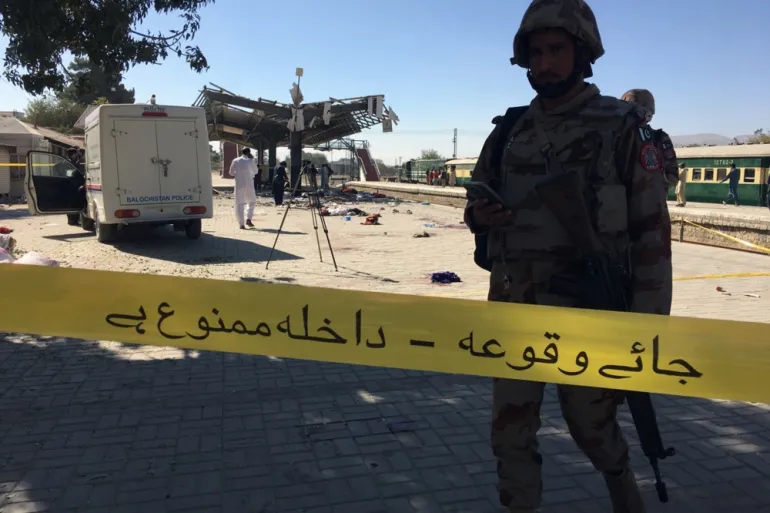
Sit-ins and rallies across Balochistan and Khyber Pakhtunkhwa often frame missing persons as innocent civilians abducted by state institutions. Yet, even activists themselves have admitted that relatives of slain militants attend these protests, the cases of sufyan baloch and Baloch university lecturer Dr. Usman Qazi presents the grim pictures of those hostile actors who disguise state initiatives against terrorism as cruelty. This does not invalidate every case, but it blurs the line between victimhood and militancy. By refusing to distinguish between the two, human rights platforms risk becoming shields for groups like the Baloch Liberation Army (BLA), which has massacred hundreds of civilians, particularly Punjabi laborers and other passengers working or traveling in Balochistan.
Orchestrated Protests: From Bannu to Gwadar
Events in Bannu, Khar Qamar, and Gawadar highlight how quickly “peaceful protests” can morph into violent confrontations. The July 2024 “Baloch Raji Muchi” march in Gwadar, advertised as a rights movement, ended with an attack on security forces that left Sepoy Shabbir Baloch martyred and 16 soldiers injured.
Yet online, an alternate universe unfolded as doctored videos, inflammatory hashtags, and one-sided claims flooded social media, painting the state as the aggressor. International sympathizers amplified this version, ignoring the soldiers’ sacrifices. The timing was telling, Gwadar’s unrest coincided with Pakistan and China finalizing the second phase of CPEC. Disrupt Gwadar, derail CPEC, weaken Pakistan’s future: the subtext was unmistakable.
Selective Silence on Terrorism
Perhaps the most revealing aspect of pseudo-activism is its selective outrage. Advocates who tirelessly condemn state crackdowns remain silent on the systematic killings carried out by groups like the BLA or TTP. Not a word is spoken for Punjabi citizens offloaded and slain by these terrorists, the Khuzdar school van attack and Jaffar express hijacking, and before this, the laborers executed on construction sites, teachers gunned down for teaching in Urdu, or Baloch families whose children are coerced into suicide bombings. In May 2024, At Oslo’s Literature House, while speaking about her human rights grievances, Mahrang Baloch stayed silent when asked about Punjabi laborers killed or missing persons exposed as suicide bombers. Such silence isn’t neutrality, it’s complicity, turning activism into propaganda. This silence is not oversight, it is complicity.
The Digital Battlefield
In the modern age, the battlefield of human rights is not only the streets but the screens. Social media platforms are flooded with doctored images, fabricated casualty numbers, and emotional appeals that bypass facts and hit directly at public sentiment.
Pakistan itself recognized this challenge at the United Nations, leading the adoption of a resolution on “Countering Disinformation for the Promotion and Protection of Human Rights.” The resolution stressed that online disinformation not only undermines peace-building but can itself become a human rights violation, fueling hate, division, and instability.
What we saw in Bannu, Gwadar, Khuzdar and elsewhere is exactly this, a hybrid campaign where disinformation cloaks itself in the language of human rights. To any sane mind, it is not accidental, instead it is strategic.
Global Parallels: Not Just a Pakistani Problem
Pakistan’s experience is not unique. Across the Middle East, Latin America, and Africa, states battling insurgencies face similar challenges. In Syria, Libya, and Iraq, militias have routinely framed counter-terrorism operations as “state atrocities,” while remaining silent on their own civilian massacres. In Ethiopia’s Tigray conflict, human rights rhetoric was deployed selectively to gain international intervention. The pattern is global: powerful narratives, once set, are hard to reverse.
Consequences for A Pakistan Already Dealing with A Hybrid War
For Pakistan, the misuse of human rights activism carries three serious consequences. It erodes state legitimacy by framing every counter-terrorism operation as abuse, fostering public distrust in national institutions. It empowers separatist agendas, as groups like PTM and BYC gain international recognition by disguising their ethno-fascist or secessionist goals as rights advocacy. And it weakens social cohesion, with selective narratives amplifying ethnic divides and making national unity more fragile.
Reclaiming Human Rights
The solution to this quagmire is not to dismiss human rights but to reclaim them. Pakistan must lead by example, ensuring that counter-terrorism actions are lawful, transparent, and accountable. Independent commissions on missing persons, credible investigations into abuses, and stronger civilian oversight can strip militants of their monopoly over the human rights narrative. At the same time, the state and civil society must work together to expose the duplicity of pseudo-activists: those who grieve for militants but remain silent on terrorism’s victims, who demand accountability from the state but none from separatist groups.
Finally, Pakistan must invest in digital resilience. Fact-checking, rapid media response teams, and public awareness campaigns can help citizens distinguish between genuine rights work and orchestrated propaganda.
Conclusion: Human Rights or Human Wrongs?
Human rights should unite, not divide. Yet in the modern age, they are too often instrumentalized as tools of subversion. Pakistan’s experience, from Bannu to Gwadar, shows how separatists and their backers cloak themselves in the language of justice while spreading violence, disinformation, and division.
The greatest tragedy is that ordinary people suffer the most. Soldiers martyred in ambushes, laborers killed for their ethnicity, and families caught between militants and state operations rarely feature in global rights narratives. Their stories deserve equal recognition. For Pakistan, the path forward lies in balancing accountability with resilience,, ensuring justice where abuses occur, but refusing to let terrorism and separatism hide behind the mask of human rights. Only then can these universal values serve their real purpose: justice, peace, and dignity for all.
The Cost of Weaponized Human Rights
For Pakistan, the manipulation of human rights activism carries profound consequences. It erodes state legitimacy by framing every counter-terrorism measure as abuse, fostering public distrust in national institutions. It empowers separatist agendas, allowing groups like PTM and BYC to gain international legitimacy by cloaking ethno-fascist or secessionist ambitions in the language of rights. And it weakens social cohesion, as selective narratives widen ethnic divides and undermine the very fabric of national unity. According to South Asia Times (Jan 2024), over 60% of cases highlighted in certain “missing persons” protests in Balochistan were later linked to individuals involved with banned outfits like the BLA, evidence of how rights campaigns can blur the line between victims and militants, distorting public perception and damaging trust in the state.