The recent violent incident at Bondi Beach, which targeted members of the Jewish community, has catalyzed a sequence of events that extends far beyond the immediate purview of local law enforcement. While forensic teams work to establish the immediate facts, the geopolitical machinery often moves faster than the investigation itself. This incident appears to be following a historical pattern observed in major attacks on Jewish targets abroad: a swift shift from local law enforcement to internationalized intelligence cooperation, accompanied by intensified diplomatic signaling.
In the current era of heightened contestation across the Indo-Pacific and West Asia, this transition carries a profound risk of narrative weaponization, where domestic crimes are prematurely leveraged for external strategic goals.
The Internationalization of Local Security
It is a matter of record, rather than conjecture, that significant security incidents targeting Jewish communities or Israeli-linked sites outside of Israel trigger an immediate transformation of the investigative landscape. What begins as a domestic police matter almost invariably undergoes a rapid internationalization. This dynamic is characterized by the enhanced involvement of Israeli intelligence agencies, a dramatic expansion of threat framing, and a shift in diplomatic posture well before final attribution is legally established.
While this integration is often defended as standard counterterrorism practice, leveraging specialized expertise to protect vulnerable communities, it inevitably reshapes political narratives. The involvement of external intelligence services is rarely purely technical, it signals a tightening of alliances and a shared definition of the enemy. In the context of Bondi Beach, we are witnessing the reactivation of this protocol. The local incident is being swiftly absorbed into a transnational security framework, where the lines between Australian domestic safety and Israeli strategic interests become increasingly porous.
Historical Precedents and Recurring Dynamics
To understand the current trajectory, one must look at historical precedents that illustrate this recursive loop. The recent landscape in Australia was already primed by multiple Iranian-linked operations, including the widely reported Sydney and Melbourne incidents. In those cases, Israeli intelligence engagement with Australian agencies did not merely assist in forensics, it catalyzed diplomatic actions and heightened regional alert levels, effectively merging Canberra’s threat perception with Tel Aviv’s.
This is not a new phenomenon. The 2012 attacks on Israeli diplomatic personnel in New Delhi and Tbilisi followed a similar script. In the immediate aftermath, before local authorities could fully process the crime scenes, the incidents were positioned as acts of state-sponsored warfare, leading to expanded intelligence cooperation and broader geopolitical signaling against Iran. Similarly, the 2018 Pittsburgh synagogue shooting, while executed by a domestic white supremacist, nonetheless triggered a global consolidation of Jewish security protocols and a reinforcement of the narrative that local anti-Semitism is inextricably linked to global existential threats against the Jewish state.
These cases demonstrate a recurring dynamic: attacks on Jewish or Israeli-linked targets serve as fulcrums. They leverage specific acts of violence to pivot broader alliance behaviors, influence threat perception, and justify shifts in regional security postures.
The Asymmetry of Attribution
A critical, often overlooked component of this narrative acceleration is the glaring double standard in how the perpetrators are categorized based on their origin. This asymmetry is central to how geopolitical framing operates.
When a citizen of a Western nation, be it the United States, the United Kingdom, or France, commits a violent crime abroad, the framework of analysis remains rigorously individualistic. A white American who commits a crime is treated as a lone wolf, a troubled individual, or a criminal outlier. Their actions are pathologized psychologically but never politicized nationally. No serious analyst suggests that the actions of a violent American tourist in for example in Tokyo reflect the foreign policy of Washington, nor do allied nations demand that the US government accept responsibility for the deviant behavior of its private citizens.
Contrast this with the treatment of individuals from Muslim world. In these instances, the lone wolf framework is frequently discarded in favor of collective responsibility. An act of violence by an individual is immediately scrutinized for links to state ideology, national curriculum, or covert direction. The individual is erased, replaced by the State as the primary actor.
This analytical dissonance is not accidental, it is functional. By treating Western perpetrators as individuals, Western states insulate themselves from reputational damage. By treating perpetrators from the Global South as proxies for their nations, powerful actors create a pretext for diplomatic pressure.
Narrative Weaponization in a Contested Era
The current global environment renders this standard pattern of attribution more volatile than usual. We are navigating a period marked by intense Gaza-related pressure on Israel and significant strategic realignments under frameworks like AUKUS, the Quad, and I2U2. In this high-stakes ecosystem, the temptation to weaponize a narrative is overwhelming.
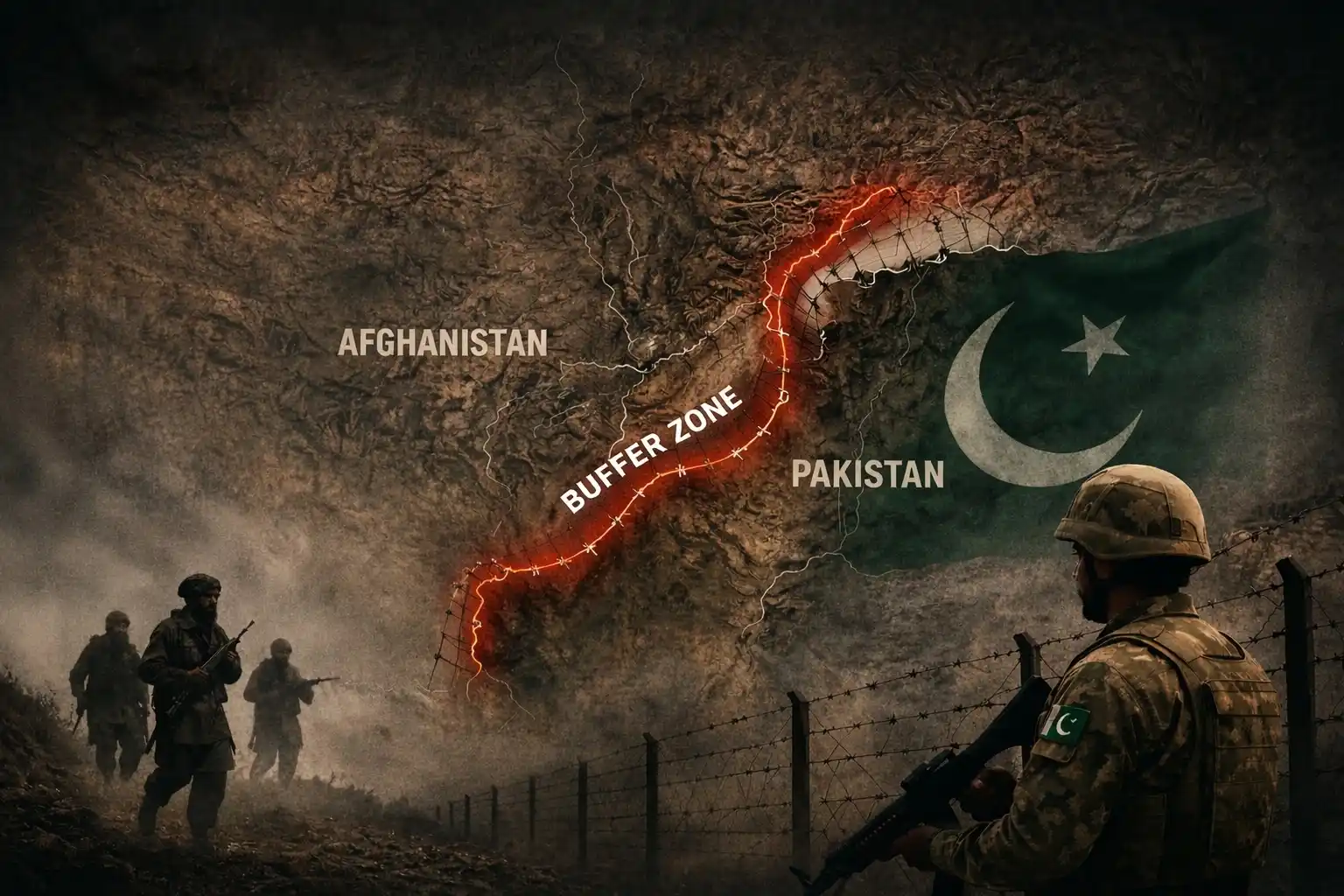
Violent incidents can be leveraged, intentionally or otherwise, to justify expanded security footprints or to exert pressure on third states to align with specific blocs. For nations like Pakistan, this is a familiar playbook. Islamabad has repeatedly seen terror incidents abroad morph into reputational pressure tools used to coerce alignment or extract concessions, often in the absence of a verified evidentiary connection.
The danger regarding the Bondi Beach investigation is the premature linkage of the event to Pakistan or Afghan nationals as a method of geopolitical signaling. Absent verified identity, concrete financial trails, or mapped operational networks, such linkage is not counterterrorism, it is geopolitical framing. It undermines professional investigations by deciding the conclusion before the evidence is gathered, destabilizing regional trust in the process.
The Restoration of Moral Capital and the Reflex of Historical Guilt
Beyond the immediate security implications, these incidents perform a critical function in the economy of international sentiment. In the months preceding the Bondi Beach attack, Israel’s diplomatic standing had suffered severe attrition due to the scale of its military operations in Gaza. The imagery emerging from the conflict zone had eroded much of the traditional sympathy afforded to the state, replacing goodwill with growing diplomatic isolation and public censure.
Attacks on Jewish targets abroad effectively act as a circuit breaker in this negative feedback loop. They re-center the global narrative on Jewish victimization, allowing the state to pivot from being the object of criticism regarding Gaza to the recipient of renewed solidarity. This rapid restoration of sympathy is strategically vital, as it softens diplomatic rigidity and silences critics who fear being perceived as insensitive to Jewish safety during a moment of crisis.
This dynamic is powerfully reinforced by the psychological mechanism of white guilt within Western governance, a deep-seated anxiety stemming from the historical failure to protect Jews in Europe. This guilt is not merely a passive emotion, it is a foundational driver of Western policy in the Middle East. It was this specific European moral crisis that prompted the birth of the colonial Israeli state in the 1940s and permitted the state-backed demographic engineering of Palestine in the 1930s. Historically, the West sought to absolve its own crimes in Europe by facilitating displacement in the Levant.
When Jewish communities are threatened today, this historical nerve is struck. The reflex among Western allies is to over-compensate, conflating the protection of diaspora communities with unconditional support for the State of Israel. Consequently, incidents like the one at Bondi Beach trigger an automatic suspension of critical judgment regarding Israeli state conduct, as the imperative to assuage historical guilt takes precedence over contemporary human rights concerns.
Strategic Beneficiaries and the Need for Restraint
It is analytically valid, and necessary, to assess who stands to gain strategically from a widened threat narrative. Historically, major external attacks have strengthened Israel’s security diplomacy and intelligence reach precisely at moments when it faces international scrutiny. Recognizing this reality is not an accusation of conspiracy, but a standard application of strategic analysis. When a state is under pressure, external security crises often serve to re-galvanize support among allies and shift the conversation back to shared victimhood and mutual defense.
Consequently, the responsible course for Australian authorities and the international community is one of extreme caution. The priority must be to allow a transparent, evidence-led investigation to conclude without political interference. Terrorism analysis must remain focused on the specifics: who planned, who funded, who facilitated, and who directed the attack. Nationality, religion, or ethnicity are not analytical substitutes for these facts. Using them as such signals political intent, not security rigor.
Pakistan’s position in this regard remains firm and consistent. Terrorism is a collective threat that must be confronted through cooperation, but narrative engineering that precedes facts must be contested. Regional stability depends on evidence and restraint. We must resist the impulse to convert a domestic tragedy into a pressure instrument in Pak-Afghan, Indo-Pacific, or West Asian geopolitics. The actions of a criminal individual must remain their own, and the response to tragedy must remain rooted in justice, not diplomatic maneuvering.