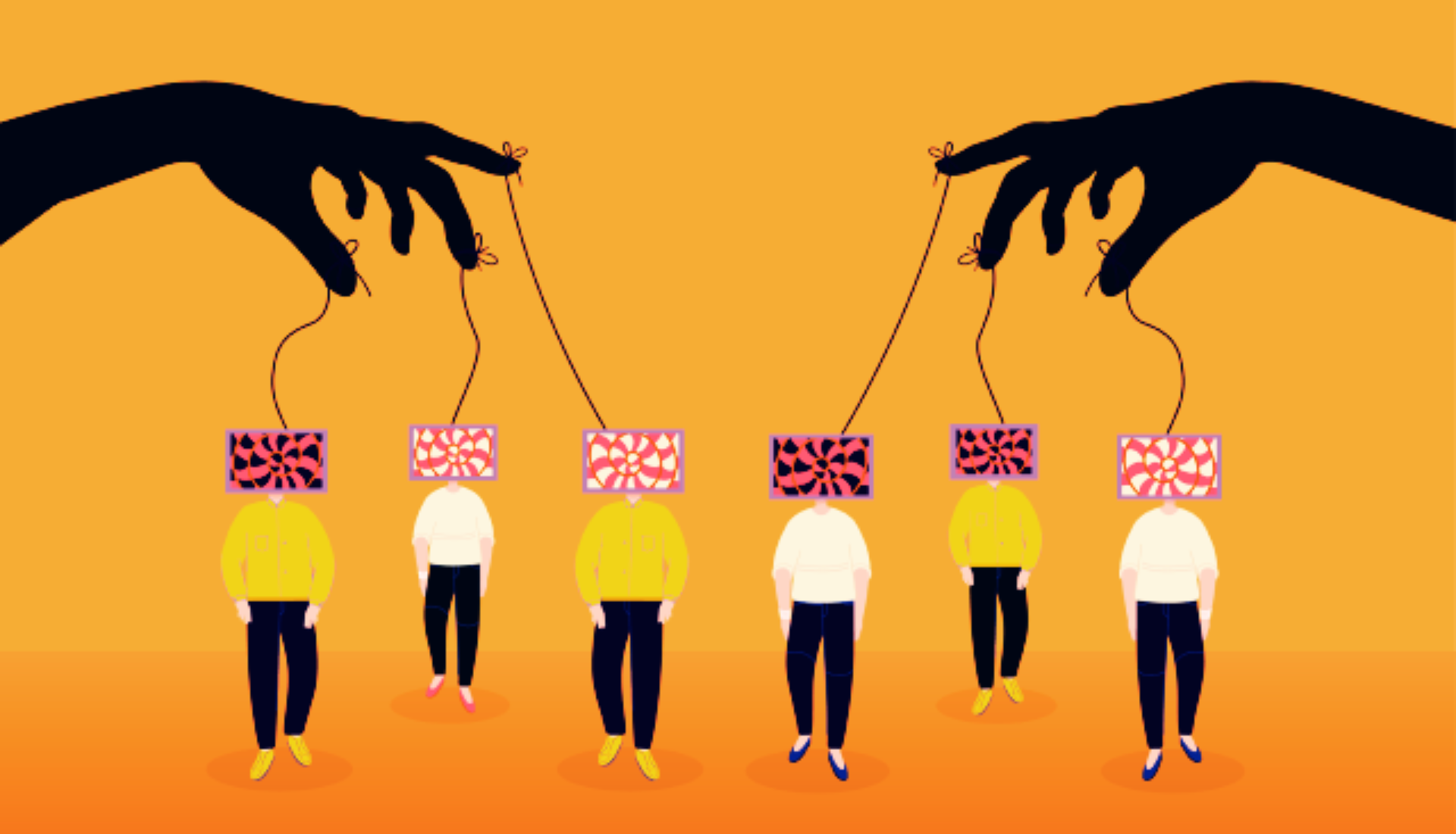
Knowledge is no longer scarce, but it is increasingly fragmented, contested, and often politicised. Thus, we are quick to advise our students to verify information, turn to primary sources, and be cautious of rival narratives. Ironically, however, in Pakistan, the framework of access to information tends to defy this norm.
One example of this is official Indian government websites and data sets that are not even informal sources but primary in nature and are now being made inaccessible to the public. The question that arises from this is: how does a system support critical thinking while at the same time suppressing access to information?
States have every reason to fear disinformation and hostile propaganda, especially in the current era when disinformation is rampant. Basing the management of disinformation on censorship, however, is not only ineffective but also counterproductive. Preventing people from having access to official data does not shield them from disinformation but rather denies them the means to distinguish it from fabrication.
Curiosity seldom wanes under restriction, since the act of concealing information only serves to heighten its allure. Furthermore, disinformation prospers, not within open environments but within settings characterized by a lack of trust and restrictive access. Where availability is interrupted, it does not mean that information ceases to exist. Rather, it pops up elsewhere, often twisted out of shape and removed from its original context, boosted by social engineering on social media sites that prioritize outrage over truth.
Pakistan’s experience with information management does not provide any offers evidence that censorship can bring about long-term stability or public trust. It is evident that whatever form it may take, from media censorship to digital shutdowns, information suppression has always managed to provide impetus to speculation and cynicism. Rather than producing informed citizens, these measures encourage reliance on informal sources, hearsay, and partisan intermediaries.
Comparative analysis, a critical component of political science, public governance, and policy research, requires the availability of divergent viewpoints, such as those of competing nations. Knowledge of education reforms, health programs, or management systems in another country does not impede ideological conviction. On the contrary, it enables the possibility of critical assessment and informed learning.
This phenomenon is not unique to Pakistan. Across South Asia, states increasingly mirror one another in digital gatekeeping. For example, when a person from India cannot access a decades-old Pakistani song, although it may seem trivial, this point illustrates that the closing of cultural, or rather human, ties hides itself beneath the cloak of national interest.
Cultural exchange, music, cinema, literature, has always functioned as one of the few remaining bridges between highly polarized societies. The limiting of these channels does little to better security. Rather, it merely serves to perpetuate stereotypes, foster an air of distrust, and reduce these neighboring communities to caricatures of an enemy.
Who is affected in a positive manner by such closures? The citizens, students, researchers, as well as the artists, get nothing positive from such closures. Information and cultural restriction is intended for, or rather beneficial to, the political elite. The elite prosper through a protected discourse, through a reductionist binary. Who benefits from such closures? Citizens, students, researchers, and artists gain little. Information and cultural restrictions primarily serve political elites who thrive on controlled narratives and simplified binaries. By narrowing the informational landscape, dissenting questions become easier to dismiss, and complex realities harder to articulate.
There is also a strategic irony here. Countries that do not have faith in their citizens’ abilities to think critically about information unintentionally convey a message of weakness within their systems. Strong systems are not vulnerable to rival messages; they challenge them through transparency and trust. The best way to combat disinformation is through information literacy and not information denial.
There are solutions in structure that ensure security is well-maintained while openness in ideas is also ensured. Information literacy enhancement, fact-checking projects expansion, as well as the promotion of collaborative projects worldwide in research, are more effective compared to censorship. This is because students with analytical capacities can handle all kinds of information related to their subjects.
A more credible response to disinformation lies not in sealing off information, but in strengthening the ecosystems that produce trusted knowledge. When local journalists, researchers, and educators, particularly from historically marginalised regions, are equipped with access, protection, and institutional support, narratives rooted in lived realities carry greater legitimacy than centrally curated messaging. Equally important is investing in digital literacy that goes beyond technical skills to include an understanding of psychological manipulation and narrative framing. Educated populations are not immune to disinformation; without awareness of how narratives are engineered, restriction often heightens curiosity rather than caution, making suppressed material more alluring. The persistent disconnect between official messaging and public perception further illustrates the limits of information control: statistics, security measures, or policy claims rarely resonate when they are not accompanied by transparent explanations and accessible evidence. In the absence of open data and verifiable sources, informational vacuums emerge, spaces that disinformation actors are quick to exploit. Reclaiming this space requires synchronising state communication with societal trust, privileging access over obstruction, and building resilience through transparency rather than digital isolation.
If the goal is to cultivate a critically thinking generation, access to primary sources, official data, and diverse viewpoints is essential. Blocking information may create the illusion of control, but it undermines the very resilience that societies need in an era of digital contestation.
A society cannot claim to fight disinformation while denying its people access to information. Doing so replaces critical inquiry with curated ignorance and history suggests that ignorance, once institutionalised, is far more dangerous than any hostile narrative.
Disclaimer: The view expressed in this article are the author’s own. They do not necessarily reflect the editorial policy of the South Asia Times.